Various Artists
The Blues of the Indian Ocean (LP)
Tracked express shipping from Italy, no customs or import VAT in the EU. Shipping costs
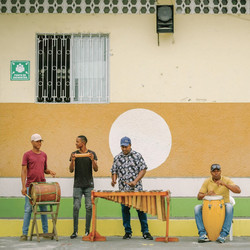
The islands of the Indian Ocean witnessed a rapid and chaotic mixing of cultures: Africans kidnapped from different regions of the continent, the indentured labourers from Africa and India and settlers from the Middle East and China. The infinite creativity of humans confronted with the hardship of colonial capitalist reality gave rise to a new form of music that – just like creole language – had not existed before. New instruments were created: the ravann – a form of frame drum, and the maravann – a shaken idiophone made of cane flower stems (originally iron plates) filled with small stones or canna seeds. To add a high-pitched sound, the sugarcane field workers hit their machetes or tapped a bottle with a coin, which has mostly been replaced by the triangle these days. The jerican (creole for ‘jerrycan’) also served as an improvised, widely available supplement to the rhythm section. On the isolated island of Rodrigues, the drumming is complemented by DIY instruments: mayos –two flat pieces of wood for clapping, and tin – two tuna cans scraped against each other.
Just like blues music, the Indian Ocean sega also developed over time. Closely related to the resistance movement, it soon became mainstream. Sega singers began to sing about day-to-day life, its joys and sorrows, and of course also about love. From the 1960s onwards, sega music became mostly entertainment, purged of the deep therapeutic potential that had been its core element until then. Independence finally came, but many marginalised black communities – such as the Chagossians evicted from the Diego Garcia atoll by the British military – struggled in the suburbs of Porlwi (creole for Port Louis) and other cities on Mauritius. This original form of sega music, carried forward by charismatic figures like Ti Frere, Fan Fan or Josianne Cassambo-Nankoo, is now thriving again in response to the challenges of the modern world. This society that never healed its wounds is now saddled with inequality, alienation, violence and drug problems. But sega is far from a museum artefact irrelevant to the current generation. New groups are being formed, lyrics are expressing the issues of the present day, and a new generation of musicians is reworking the genre. You can see examples of this at jujusounds.com – vibrant house parties, festivals, new album releases, cultural work with children, and multigenerational family groups playing sega together. The culture is relevant and alive.