Various Artists
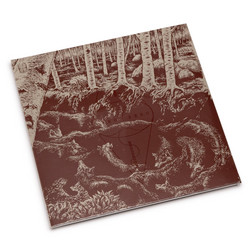
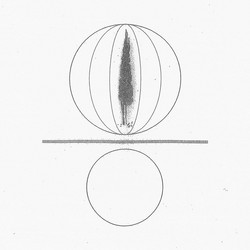
XKatedral Anthology Series III (2LP)
Tracked express shipping from Italy, no customs or import VAT in the EU. Shipping costs
Tip Tip Tip! XKatedral Anthology Series III is the third installment in the label’s ongoing archival series, and it arrives as both a celebration and a statement of intent. Marking ten years of XKatedral, this double‑vinyl set gathers works composed between 2014 and 2025 by artists who treat harmony and timbre as slow‑moving terrains rather than backdrops. Synthetic and acoustic sources, algorithmic procedures and close‑mic’d performance all serve a common aim: precise, patient work in the realm of spectral exploration, where the smallest shifts in tuning, colour and overtone carry the weight of form.
The anthology opens with My Falling Sinks by Kali Malone, a spare, descending melody written in septimal just intonation for organ, cello and acoustic guitar, featuring Lucy Railton and Stephen O’Malley. Composed in 2021 on an experimental tuning organ at La Temple de La Tour‑de‑Peilz during a residency at La Becque, the piece feels like a compositional sketch in the purest sense: a single line traced downward through a precisely tuned space, each step revealing new beating patterns between strings, pipes and frets. The interplay of just intervals and sustained tones draws attention to decay and resonance as much as to pitch itself, inviting the listener into the architecture of the tuning system.
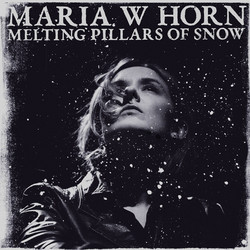
With Empyrean Flare, Maria W Horn approaches luminosity from another angle. Written in 2022 for choreographer Stina Nyberg’s The Dawn Chorus, the piece applies Arvo Pärt’s tintinnabuli technique to four supersaw oscillators, animating them in slow diatonic arpeggios around a minor tonic triad. Glissandi continually destabilise the harmonic frame, blurring discrete notes into sliding clusters, while analog tape saturation thickens and welds the sound into a bright, grainy mass. The result is a kind of electronic bell‑ringing: austere in concept, yet sensuous in execution, with overtones that seem to hang in the air long after each figure passes.
David Granström’s Tessellation, composed in the summer of 2017, pushes generative synthesis into a gently paradoxical zone. Built from fixed synthesised tape loops, the piece lets musical periodicity and harmonic movement emerge as secondary phenomena: patterns arise from the interaction of pre‑set fragments, opening a space “between antithetical worlds.” Repetition and drift coexist; what begins as seemingly mechanical soon feels organic, as overlaps and phase relations produce subtle swells, dips and harmonic mirages. It is music that appears to assemble itself in front of the listener, even as its underlying parameters remain firmly defined.
To Whoever Shall Inherit the Earth by Jessica Ekomane stands as the anthology’s most fragile apparition. Described by the composer as her first solo work, it was recorded late one night a decade ago and, in her words, “came together almost by accident.” Preserved exactly as it happened, the piece captures a fleeting, unrepeatable confluence of decisions: a particular balance of levels, a specific trajectory of sound that could not be reconstructed after the fact. That sense of contingency gives the work a diaristic quality; it feels less like a polished artefact than like a moment of discovery caught on tape and left untouched.
On Smoking Mother, Stephen O’Malley channels his long‑standing interest in sustained tone and ritual form into a piece composed for Gisèle Vienne’s staging of Robert Walser’s Der Teich / L’Etang. Created during a residency at the SMEM synthesis archive in Fribourg in 2018 and produced at EMS in 2020, the work draws explicit inspiration from Zia Mohiuddin Dagar, Krzysztof Penderecki and Popol Vuh while probing the roots of minimalism. Long, darkly glowing tones stack and shift with orchestral thickness, while subtle dissonances and colour changes slowly work on the listener’s perception. It is music that moves with the gravity of a procession, more concerned with carving out a space than with arriving anywhere in particular.
Mats Erlandsson’s Att böja själarna, composed in 2018 and first issued in the cassette‑and‑text box On Eternity (Irrlicht Förlag, 2021), brings the anthology into a more explicitly chamber‑like register. Featuring Gaianeh Pilossian on violin and Sara Fors on voice, the piece folds bowed lines and sustained vocal tones into a quietly glowing texture, treating acoustic instruments as sources of slowly bending spectral content. As pitches lean into each other and timbres braid, the work lives up to its title’s suggestion of “bending souls”: what seems stable at first gradually reveals itself as a field of continuous, delicate inflection.
In This will be my last piece for organ, composed in 2025, Theodor Kentros uses electronics to emulate, and complicate, the experience of detuning. Groups of clustered oscillators are sent through resonant feedback paths to synthesise the fluctuating frequencies that wander through physical space when an organ is pulled slightly out of tune. The piece focuses less on the “notes” themselves than on the ghost frequencies that bloom between them – the slow beating, the wandering interference patterns that make a room feel alive. It is an organ work without pipes, yet saturated with the sensation of standing near a vast, breathing instrument.
The anthology closes with Fault Lines by Daniel M Karlsson, composed with generative methods but fixed into a deterministic, finite outcome for this release. Vocal performances by Sara Fors, Ansis Bētiņš and Artūrs Čukurs thread through the piece, sometimes foregrounded, sometimes submerged in the texture, as if human presence were continually slipping in and out of an algorithmic environment. The title hints at underlying tensions: between chance and control, between speech and pure sound, between the stability of a composed work and the restless undercurrents of its making.
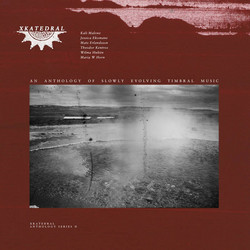
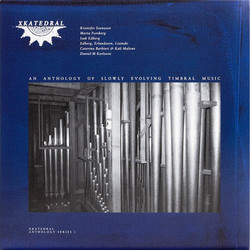
Released alongside reissues of XKatedral Anthology Series I–II, this third volume functions as both an overview and a promise. It sketches a decennial map of the label’s core concerns – slowly evolving harmony, timbral focus, the meeting of algorithm and gesture – while pointing forward to further iterations of the same questions. Across eight distinct voices, XKatedral Anthology Series III offers not a survey of a “scene” but a set of carefully tuned environments, each asking the listener to linger long enough for its inner structure to come into view.