We use cookies on our website to provide you with the best experience. Most of these are essential and already present.
We do require your explicit consent to save your cart and browsing history between visits. Read about cookies we use here.
Your cart and preferences will not be saved if you leave the site.
play

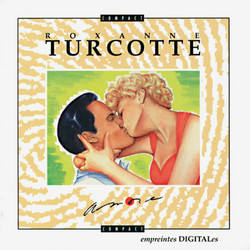
Roxanne Turcotte

Sillages (CD-R)

Label: empreintes DIGITALes

Format: CD-R

Genre: Electronic

In process of stocking

€11.80
VAT exempt
+
-
Roxanne Turcotte’s “sonic archeology”: electroacoustic works mixing everyday objects, field recordings from Tokyo, the Seychelles and New Zealand, and sounds of Jean-François Laporte’s invented instruments, dedicated to her late colleagues and mentors. CD-R.

Sillages (Wakes) is a new album by Roxanne Turcotte, presented as a search for artifacts. Her starting point is experimental archaeology, which rebuilds old objects the way they were made in order to understand the people who used them; here the archaeology is musical, a way of locating places, movements, memories and objects, and also the mental burden that weighs on a life. Real, organic sounds of the immediate surroundings are mixed with synthetic ones for texture and contrast, and the pieces were assembled from improvisations later edited and treated as a kind of musical drama about human behaviour. Turcotte calls her approach “cinemasonics”: sound that outdoes the image through immersion, with dense multitrack polyphonies she compares to hyperlink cinema.

Gradation draws on a databank of recordings of the siren organ and the Babel table, two instruments invented by Jean-François Laporte of Totem contemporain. Haïku is a short sound poem built from environments recorded in and around Tokyo in 2025. Artéfacts camouflages sounds of everyday objects, living beings and recordings made on travels to the Seychelles and New Zealand, and Réel / Irréel takes its cue from the Sampo of Finnish mythology. The performers on the album are Laurent Fléchier, Michel Dubeau, Julien Grégoire, Claire Marchand and Guy Pelletier.

The album is dedicated to Serge Arcuri and Chantal Dumas and to Turcotte’s mentors, among them Marcelle Deschênes, Francis Dhomont, José Evangelista, Serge Garant and Louise Gariépy.

CD-R edition in OGpak, empreintes DIGITALes IMED 26202, 2026.
Details
Cat. number: IMED 26202
Year: 2026
In between, the lengthy composition Artéfacts serves as the central pivot of the entire work…Read more

La prima donna a ottenere nel 1988 un diploma di composizione elettroacustica all’università di Montréal, Roxanne Turcotte nel corso della sua carriera artistica ha composto musica per la televisione, il cinema, la radio e il teatro, oltre a operare nel campo delle installazioni site specific. Nuovo capitolo di una carriera artistica già ampiamente documentata sin dal 1994 in varie pubblicazioni della empreintes DIGITALes, Sillages spazia dalle esotiche registrazioni ambientali di Tokyo in Haïku al duo di clarinetti “immaginari” il cui suono viene modificato da un software d’emulazione in Réel / Irréel, dalle note malinconiche del duduk (aerofono a doppia ancia della tradizione armena) che nella fragile tessitura di L’heure dorée esorcizza gli orrori di guerre e povertà al dialogo fra un quartetto di musicisti (ocarina, percussioni e doppio flauto) e il canto degli uccelli in Forêt boréale. Nel mezzo, la lunga composizione Artéfacts appare come il perno centrale dell’intero lavoro, assemblaggio dinamico e mutevole di suoni provenienti da oggetti di uso quotidiano, registrazioni effettuate durante viaggi alle Seychelles e in Nuova Zelanda e citazioni tratte da opere teatrali di autori sconosciuti, affidate al recitativo di un attore.

Roxanne Turcotte bringt Anfang Oktober ein neues Album heraus. Das elektroakustisch ausgerichtete Sillages verbindet Umgebungsgeräusche mit in der Hauptsache elektronisch erzeugten Klangmaterialien.Read more

Roxanne Turcotte bringt Anfang Oktober ein neues Album heraus. Das elektroakustisch ausgerichtete Sillages verbindet Umgebungsgeräusche mit in der Hauptsache elektronisch erzeugten Klangmaterialien. Im Zentrum, so erfährt man, steht eine Form von akustischer Archäologie, in der Alltagsobjekte, Tierstimmen, Erinnerungen, Aufnahmen von Reisen und historische Sprachfragmente zu vielschichtigen Kompositionen verarbeitet werden.

Zwischen Sirenenorgel, Vogelstimmen, japanischen Stadt- und Naturgeräuschen, Duduk, Percussion und elektronischen Bearbeitungen entstehen Stücke, die zwischen kontemplativer Ruhe, rhythmischer Dynamik und klanglicher Irritation wechseln. Turcotte bezeichnet ihre Arbeitsweise als “Cinemasonics”, wobei sich die Musik aus überlagerten Klangschichten und einer ausgeprägten räumlichen Dramaturgie entwickelt. Als Interpretinnen und Interpreten beteiligt an dem Werl sind Michel Dubeau (Ocarina, Flöte mit Shakuhachi-Mundstück), Julien Grégoire (Percussion), Claire Marchand (Flöte) und Guy Pelletier (Flöte).