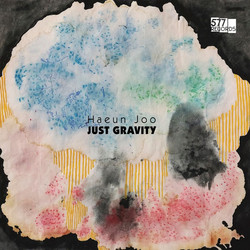
*100 copies limited edition* Some ensembles begin with a repertoire. Others begin with a community. Airlft emerged in Philadelphia in 2022 as an ongoing monthly gathering initiated by drummer and percussionist Kevin Diehl: a space where composers, improvisers and listeners could meet in an open process of experimentation. Over the course of four years, that process gradually evolved into a shared musical language, one shaped less by fixed personnel than by sustained collaboration. Spatial Recognition, Airlft's debut recording for 577 Records, documents the first mature statement of that collective practice.
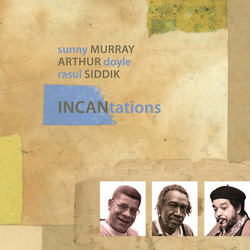
The music resists easy categorization. Throughout its two-part, hour-long sequence, composed material and spontaneous invention exist without hierarchy. Graphic scores, rigorously notated works, conducted improvisations and open-form performances unfold alongside one another, allowing structure and intuition to continually exchange roles. Rather than presenting a single aesthetic, Spatial Recognition traces multiple paths through a common landscape, where density gives way to silence, rhythmic propulsion dissolves into abstraction, and collective sound becomes the principal compositional voice. Diehl's own artistic background informs this openness. A longtime student of the late Sunny Murray and the founder of Philadelphia's Sonic Liberation Front, his work has consistently explored intersections between free improvisation, African diasporic rhythmic traditions and collaborative composition. Recent projects—including the percussion ensemble Onilu with Joe Chambers, recordings with Marshall Allen, and work with Ashé Mystics and the Instant Arts Quartet—have all reflected a similar commitment to collective creation. Airlft extends that philosophy into a larger, evolving ensemble.
The recording brings together musicians whose individual histories span several generations of creative music. The core ensemble features saxophonists Terry Lawson and Elliott Levin, trumpeter and clarinetist Matt Lavelle, guitarists DM Hotep and Joshua Marquez, bassist Pete Dennis, percussionist Tom Lowery and Diehl on drums and Afro-Cuban percussion. Each musician arrives with a distinct vocabulary. Lawson has long been a central figure within Philadelphia's creative music tradition. Levin's intensely physical improvisations and poetic sensibility occupy a singular place within the city's experimental community. Lavelle's work bridges decades of New York's avant-garde lineage, while Hotep contributes the expansive perspective developed through more than two decades with the Sun Ra Arkestra. Marquez brings a contemporary compositional practice rooted equally in experimental notation and improvisation, and Dennis and Lowery complete the ensemble with deeply collaborative approaches shaped through years of work across creative music, rhythm traditions and interdisciplinary performance.
What binds these voices is not stylistic agreement but attentiveness—to sound, to space and to one another. Airlft developed through repeated encounters rather than predetermined outcomes, allowing a repertoire to emerge organically through performance. The result is music that values listening as highly as gesture, embracing friction and clarity with equal conviction. The album's title reflects this shared orientation. Where facial recognition identifies the singular features of an individual, Spatial Recognition suggests an awareness of place—an ability to navigate changing sonic environments collectively. The ensemble responds less to predetermined form than to the constantly shifting relationships created in performance, discovering direction through presence and interaction.
The double album is divided into two complementary chapters. Spatial explores the ensemble's compositional breadth, moving between graphic notation, structured works and free improvisation. Recognition turns toward collective pulse, sustained grooves and the immersive qualities of ensemble playing. Together they present not two separate statements, but two perspectives on the same evolving practice. Rather than documenting a finished project, Spatial Recognition captures an ensemble in motion—musicians listening closely, responding in real time, and discovering form through shared experience. It offers a portrait of Philadelphia's creative music community not as a fixed scene, but as a living conversation.