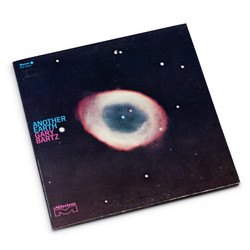
2LP version. Saturday, 7 July 1973, Montreux Jazz Festival. Gary Bartz walks on with a quartet and plays for close to forty-four minutes without a pause. Six pieces, no breaks, two full sides of vinyl. Then he sings Langston Hughes.
Bartz was 32. He had come up through the bands of Max Roach and Art Blakey, and had spent 1970 and 1971 as the alto voice in Miles Davis's electric group, the one heard on Live-Evil and the Cellar Door tapes. The NTU Troop, formed in 1970, ran alongside all of that. On Harlem Bush Music, Juju Street Songs and Follow, the Medicine Man the group folded Black consciousness, street song and funk into post-Coltrane jazz, usually with Andy Bey at the microphone. At Montreux there is no Bey. Bartz sings himself, and the band is stripped to Hubert Eaves on acoustic and electric piano, Stafford James on acoustic and electric bass, and Howard King on drums. Orrin Keepnews supervised the recording for Prestige.
The opening suite starts with Nommo - The Majick Song, a blues chant, and moves through Sifa Zote (Swahili for "all praises") and the eleven-minute Jujuman before handing over to the sidemen's tunes, James's Bertha Baptist and Eaves's Mama's Soul, with Don't Fight That Feeling between them. The physical bands on the record are a convenience: the music never stops. The quartet is loose and hard at once. Eaves switches between Rhodes shimmer and gospel-weighted acoustic piano, James moves from upright to electric as the pieces demand, King keeps the floor moving, and Bartz's alto and soprano go from song-like statement to long, unguarded improvisation and back. Side three opens with I've Known Rivers, adapted from Hughes's The Negro Speaks of Rivers, the poem he wrote at seventeen while crossing the Mississippi and published in The Crisis in 1921. Bartz sets it to a rolling groove and sings it plainly, without any vocalist's polish, which is exactly why it works. It became his signature piece - he was still playing it at NPR's Tiny Desk in 2024 - and this is the recording where it begins. The Warriors' Song, the brief Uhuru Sassa ("freedom now"), the ten-minute Dr. Follow's Dance and the closing Peace and Love complete the concert.
Prestige issued it as a double LP, P-66001. A Japanese pressing followed in 1974, an Italian one in 1975, and then nothing on vinyl. The 2003 CD had to trim Sifa Zote to fit the running time onto one disc. Jazz Dispensary's Top Shelf edition, part of the label's tenth anniversary programme, is cut all-analog from the original master tapes by Kevin Gray at Cohearent Audio, pressed on 180-gram vinyl at Fidelity Record Pressing and housed in a tip-on jacket. Fifty-one years is a long time for a record this loved to be out of print.