Bennie Maupin
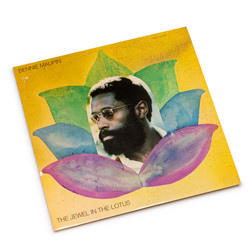
The Jewel In The Lotus
CD version. The Jewel In The Lotus is the first album under his own name by Bennie Maupin, the reed player heard on Miles Davis's Bitches Brew and in Herbie Hancock's Mwandishi band. ECM released it in 1974. Instead of a blowing session it offers eight compositions built from texture, drones and open time.
It was recorded in March 1974 at the Record Plant in New York, with Dennis Ferrante as recording engineer and Manfred Eicher producing. The players came from Hancock's circle of the time: Hancock on piano and electric piano, Buster Williams on bass, and two drummers, Billy Hart on the right channel and Freddie Waits (also on marimba) on the left. Bill Summers adds percussion, including a water-filled garbage can, and Charles Sullivan plays trumpet on two pieces. Maupin plays reeds, glockenspiel and voice. The title translates the Buddhist mantra Om mani padme hum, and Jazz Journal notes that Williams had introduced Maupin to Buddhism.
Ensenada opens out of silence on a two-note bass figure, with flute, bells and marimba gathering around it before the piano enters. On Excursion Maupin chants wordlessly and turns to bass clarinet, while the percussion grows dense around him. The ten-minute title piece puts his soprano saxophone, mostly in single lines, over pulsing electric piano and bowed bass. Short interludes such as Winds Of Change separate the longer pieces, and Past Is Past closes with bass clarinet against Hancock's piano.
Down Beat gave it four stars in 1975: "A more selfless album is hard to imagine." Reviewing the first CD issue in The Guardian in 2007, John Fordham heard Maupin as "far more of an enabler and a colourist than a flat-out soloist". He also found the music more acoustic than most fusion of its day. Pitchfork later called it an unsung modernist classic, and Brian Payne in Jazz Journal (2019) placed it among the classic spiritual jazz albums of the 1970s.
This CD edition of ECM 1043, first released in 1974, was reissued on 17 May 2019 in a cardboard sleeve in the Touchstones series, which ECM started in 2008 to bring key catalogue albums back. The album had first appeared on CD in 2007, remastered by Eicher and Jan Erik Kongshaug.