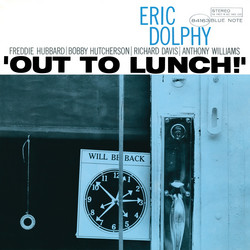
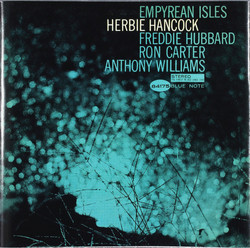
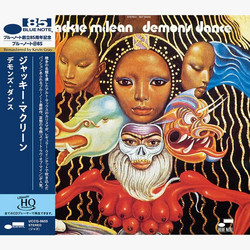
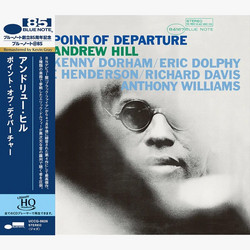
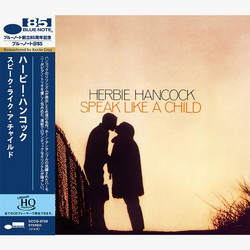
** Special Time-Limited Offer ** Tony Williams Spring represents the drummer-composer at a crucial moment in his artistic trajectory. By 1965, Williams had already participated in landmark Blue Note sessions - Herbie Hancock's Empyrean Isles, Eric Dolphy's Out To Lunch, Andrew Hill's Point Of Departure, Jackie McLean's One Step Beyond. Despite barely being in his twenties, he had already established himself as a musician capable of listening at the highest level, responding to ensemble dynamics with rare sensitivity.
Spring documents Williams' second album as a leader, recorded at Van Gelder Studio. The ensemble he assembled speaks to his artistic vision: Wayne Shorter on tenor sax, Sam Rivers on tenor sax, Herbie Hancock on piano, Gary Peacock on bass. Each musician represented serious thinking about harmonic possibility and formal innovation. Shorter was developing compositional approaches that defied conventional harmonic analysis. Rivers brought geometric precision to free playing. Hancock was already demonstrating innovative approaches to the piano's possibilities. Peacock provided responsive bass work capable of suggesting rather than stating harmonic direction.
Williams presented five original compositions: Extras, Echo, From Before, Love Song, Tee. Each offered what the Blue Note documentation describes as "spacious realms in which to go exploring." This framing suggests Williams understood ensemble music not as predetermined statement but as environment for investigation. The compositions create frameworks allowing musicians genuine freedom within structure - a sophisticated understanding of how post-bop thinking should function. The session documented here captures Williams' approach to drumming that would define his work with Miles Davis in the coming years: playing that implies beat rather than stating it explicitly, responsive rather than driving, listening-based rather than time-keeping. Williams understood the drummer's role as fundamentally conversational - responding to harmonic suggestion from other musicians, creating space for collective thinking rather than imposing predetermined rhythmic direction. Spring captures ambitious musical thinking from musicians at the peak of creative engagement. The ensemble configuration - two tenor saxophonists creating harmonic interplay around Hancock's innovative piano - represents a specific moment in jazz history.
This is documentation of musicians extending post-bop vocabulary while maintaining connection to its fundamental principles: serious ensemble listening, compositional sophistication, harmonic exploration pursued through improvisation.