Rupert Hine
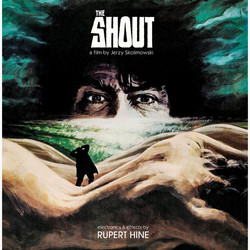
The Shout
Released in 1978 and adapted from a Robert Graves short story, The Shout sits at a charged intersection of British folk-horror, art cinema and electronic experiment, and it is Rupert Hine’s score that binds those elements into something uniquely disquieting. Working with director Jerzy Skolimowski and producer Jeremy Thomas, Hine approached the film not as a backdrop for orchestral themes but as an opportunity to reimagine the entire soundtrack as a laboratory. The result is a work frequently cited as one of the great films about sound itself: a drama in which tape, synthesis and noise are as central to the narrative as the actors on screen.
Hine’s music moves between experimental electroacoustic textures, eerie synthesiser voicings and haunted organ figures that seep into the film’s rural settings. Using tools such as the EMS VCS3 and Yamaha CS-80 alongside outboard units like the Eventide harmoniser and Roland Space Echo, he built reels of material that blurred the line between score and sound design. The grain of those machines - their unstable pitches, smeared delays and unpredictable feedback - becomes a character in its own right, lending the film a sonic instability that mirrors its psychological fissures. Listeners sensitive to the era’s avant-garde will hear resonances with Brian Eno’s work for Derek Jarman and Peter Greenaway, yet Hine’s approach is more feral, less meditative: the electronics feel as if they might snap at any moment.
Central to the mythology of The Shout is, of course, the shout itself: the lethal cry unleashed by Alan Bates’ character Crossley, capable of killing any living creature within earshot. Hine was tasked with making that concept believable, and his solution is a collage of human vocalisation, processed terror and environmental distortion that lands somewhere between a scream, a wind shear and a tearing of the auditory field. It functions not only as a special effect but as the score’s dark nucleus, the sound from which all other tensions radiate. Around it, Hine constructs a web of musique concrète for John Hurt’s studio scenes - tape manipulations, prepared sounds, and abstracted foley - that grounds the film’s more mystical claims in the very practical, very material world of recording technology.
Limited turquoise vinyl LP initially packaged with A5 sized poster, 2" pin badge, sticker and postcard.