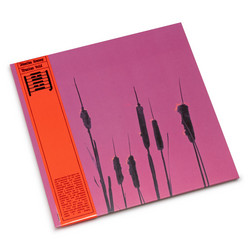
White Morning, recorded in 1989 at Biwa Studio, captures Fumio Miyashita at the point where his music becomes less a sequence of notes and more a sustained state of being. Active through the late 1980s and early 1990s as a composer, arranger and multi‑instrumentalist, Miyashita carved out a singular niche between healing music, environmental sound and meditative ambient. While many contemporaries busied themselves mapping forests, cities and weather systems in tone, Miyashita turned inward. His pieces were designed explicitly for the body as much as the ear: music for rest, focus, presence, created to support breathing, posture and attention rather than to decorate a room.
White Morning distils that vision into its purest form. The album consists of two extended works, 目覚め (See The Light) and 朝の祈り (Morning Prayer), each close to twenty‑five minutes in length. Built from soft synthesizer layers and delicate acoustic textures, they move with a slowness that feels less composed than discovered, as if Miyashita had patiently tuned himself to a particular inner frequency and simply stayed there. Harmonic changes are subtle, almost subliminal; motifs appear and dissolve without insisting on themselves. This is music that refuses to impose – no sharp edges, no dramatic arcs, just a gentle continuity of tone that invites the listener to sink, breathe and notice.
In 目覚め (See The Light), bright but gauzy synth overtones suggest the first wash of morning illumination, a cautious opening of the eyes. Underneath, quieter figures pulse with the regularity of a resting heartbeat. The piece doesn’t build toward a climax; instead, it slightly increases its luminosity over time, like a room gradually filling with daylight. 朝の祈り (Morning Prayer) feels even more interior. Here, acoustic colours – faint chimes, possible string or flute traces – thread through the electronic bed, offering points of focus within the ongoing drone. The atmosphere is devotional without belonging to a specific faith: a sense of quietly held intention, of gratitude or petition expressed in sustained tone rather than in words.
Originally released on CD in 1991, White Morning circulated quietly among devotees of kankyo ongaku and Japanese new age, passed hand to hand and mentioned in hushed tones alongside favourites by Hiroshi Yoshimura, Satoshi Ashikawa or Klaus Wiese. Unlike many environmental records designed explicitly around place – gardens, galleries, corporate lobbies – Miyashita’s work seems to address the interior “room” of the listener: the nervous system, the breath, the mind’s tendency to wander. That inward focus gives White Morning a particular intimacy. Even at low volume, you sense it re‑tuning the background; at higher levels, it can feel like stepping into a bath of sound.
For its third release, Ambient Sans turns to this quietly beloved cornerstone of Japanese ambient, finally bringing White Morning to vinyl after decades of digital and CD‑only existence. The format shift underscores the album’s status as more than functional audio. As a physical object – a record you handle, place on a turntable, flip between sides of dawn and prayer – it becomes a ritual artefact, a tool for framing time at the beginning of a day or at any moment when the listener needs to withdraw without closing off. Essential for anyone drawn to Yoshimura’s environmental lightness, Ashikawa’s meditative depth or Wiese’s healing drones, White Morning stands as one of Miyashita’s most resonant offerings: music that stays, gently, until you’re ready to carry its stillness back into the rest of your life.