Reissues

Dove Va La Tua Strada?
A road that waited fifty-two years to be walked. Recorded in Trieste in 1973 and never released, Dove Va La Tua Strada? is the lone document of Exit - a band that vanished without leaving an official trace, now resurfacing through Black Widow Records in a highly limited edition of 400 copies. This is Italian prog archaeology of the purest kind: not a reissue, but a first appearance, half a century late.
The story of its recovery has something novelistic about it. In the summer of 2021, at the Tr…

The Beating of Wings
The 40th anniversary edition of Andrew Poppy’s The Beating of Wings, originally released on ZTT Records. Hailed as “a major landmark in pop-classical genre-blending and post-minimalism” (Robert Davidson, Topology) and “… ahead of his time … he’d fit right in with the Max Richters and Nils Frahms of today” (Steven Wilson; Porcupine Tree, The Album Years podcast). Composed and produced by Andrew Poppy and performed by his bespoke ensembles, The Beating of Wings contains four mesmeric tracks that m…

Resonance
"Japanese pianist Yumiko Morioka initially released Resonance, her first and only solo recording, on Akira Ito's Green & Water imprint in 1987. Whilst by no means a commercial failure, the album was mostly found in the background of Japanese TV documentaries, maternity clinics and healing shops before drifting into relative obscurity. By 1994, Morioka had relocated to America and her solo music career had given way to the joys of starting a family and her new life in California. It was, and stil…

But Not For Me
First vinyl reissue since 1978 of Masabumi Kikuchi's percussion-laden New York session for Flying Disk. Gary Peacock, Al Foster, Badal Roy, and Brazilian and North African percussion surround the pianist's spare modal phrasing. Limited edition with obi and insert

Kel Tamasheq
Studio album from Bamako-based Tuareg band Amanar de Kidal. "Kel Tamasheq” is years in the making, a self produced DIY album, recorded in the small studios of the Malian capital over the past few years.
Carrying on in the tradition of assouf, the Northern Malian style of Tuareg guitar popularized by artists like Tinariwen, Amanar pushes the sound forward into tight upbeat groove and kinetic rhythms, reflecting the rich diversity of Mali and the energy of the capital. The band takes its name from…

Jazz In Britain '68-'69
*2026 repress* John Surman's Jazz in Britain '68-'69 is an overview disc of his '60s band and one of the more enjoyable vintage British jazz records. These tunes come from several different sessions recorded in the late sixties, as evidenced by the alternate drummers - Alan Jackson and Tony Oxley - and the use of different instrumentation, like the three-horn modal piece "Bouquet Garni," from 1968 that places Surman in the company of only two other horn players - Alan Skidmore and Mike Osborne -…

Live Rope
Originally released in November 2024 as a physical only, limited edition physical boxset, Swans’ Live Rope is now being made on CD at retail. A document of the band’s US/EU 2023-24 live tours, this material laid the blueprint for the band’s most recent studio album, Birthing, released May 2025. Spanning almost 3 hours of trance-inducing melodies that morph into dense walls of sound, the album is anchored by Gira’s unmistakable vocals and crafted with longtime collaborators on lap steel, bass, Me…

Elis & Tom
Elis & Tom is a bossa nova album, released in 1974, recorded by Brazilian singer Elis Regina and singer-songwriter Antônio Carlos Jobim. Recorded over a 16-day period at MGM Studios in Los Angeles, California, the album was an old wish of Regina, who always wanted to record a full album of Jobim's songs with him. This finally came true in 1974, when Elis was celebrating her 10th anniversary as an artist of Philips Records. The label approved the project as a gift for her.
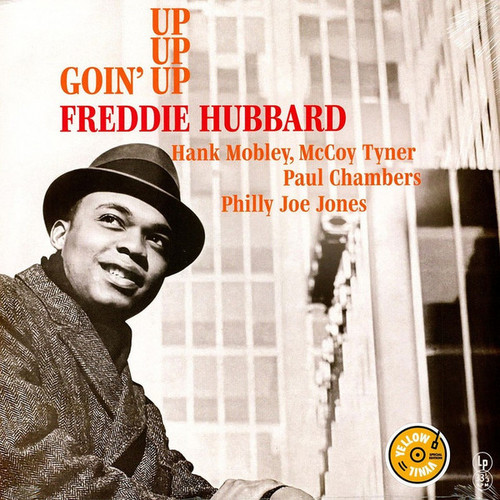
Goin' Up
Freddie Hubbard’s Goin’ Up brings listeners into motion from the very first notes—an electrifying statement of swing, power, and musical imagination. Brimming with bold improvisations and masterful ensemble interplay, the album captures the spirit of jazz at full throttle, showcasing Hubbard’s unmistakable brilliance and the kind of creative urgency that turns every track into a journey. From its confident opening to its most uplifting moments, Goin’ Up is a celebration of sound and swing: preci…

Leeway
Celebrated as a standout in the jazz canon, Lee Morgan’s “Lee-Way” returns with fresh momentum, reaffirming its power to thrill with its melodic immediacy, rhythmic drive, and unmistakable personality. The album showcases Morgan at the peak of his craft: a trumpet voice that cuts through with clarity, confidence, and emotion, guiding every performance with purpose.
On “Lee-Way,” the ensemble moves with precision and swing, balancing tight musical interplay with a sense of spontaneity that keep…

Tiga Trombone
Habibi Funk’s new sister label Audible Beauty Records debut release: A landmark collection retelling the untold story of Malaysian jazz featuring 11 songs from the legendary composer, arranger and pianist Alfonso Soliano, originally recorded for Radio Television Malaysia (RTM) and only released in a run of a few dozen copies for radio broadcast. Widely regarded as one of the foundational figures of Malaysian music, Soliano blended jazz, Latin influences and traditional Malay musical forms into a…
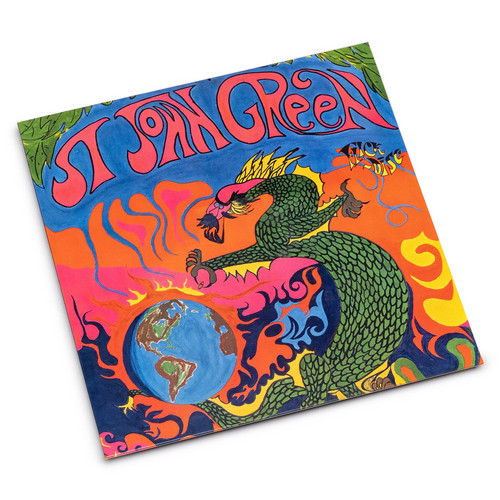
St. John Green
The album “St. John Green” is the only release by the American band of the same name, and is regarded as a minor cult classic of 1960s psychedelia. It was released in 1968 by the small label Flick-disc. Released at the height of the flower power era, the record perfectly captures the musical and cultural atmosphere of the late 1960s. The album blends various elements typical of psychedelia with sonic experimentation, garage lysergic influences and a free-spirited approach to songwriting.

A Journey Through Sound, Silence and Return (Monograph) (Book)
Few figures in experimental music embody rupture as completely as Maurizio Bianchi. A Journey Through Sound, Silence and Return traces his arc from ferocious early industrial extremism to a radical withdrawal and enigmatic comeback, revealing an artistic ethic where creation, renunciation and re-emergence form one continuous, troubling gesture.

Everyone I Love Is Sleeping And I Love Them So So Much
Yara Asmar’s new album, “everyone I love is sleeping and I love them so so much”, presents 11 pieces recorded over the past year between the small town of Alfred in upstate New York and Beirut. These sometimes fragile and tentative sound sketches reflect the times as Yara steps out, as if onto ice, into a new life on a new continent. She works with unfamiliar instruments, new materials and new sounds to build on her intimate style; homemade mechanical music boxes and a personal archive of family…

Celestial Ocean
*2026 repress* 1973s brilliant Celestial Ocean, by the legendary Swiss krautrock band Brainticket, is a concept album that details an ancient pharoahs journey into the afterlife (substitute the word "journey" for "trip" and youll get what they were driving at). However, Brainticket were not mere products of their time, they explored some truly compelling musical territory and produced a superlative blanket of sound-featuring a pioneering mix of early synthesizers, flute, zither, sitar, and male …

Joao Gilberto
*2026 repress* Joao Gilberto's self titled third album, is the fruit of the collaboration between Gilberto and the great composer and arranger Antonio Carlos Jobim and Walter Wanderley and his ensemble. This is one of the greatest pieces of work in the field of Brazilian music. Gilberto's delicate singing moves on top of extremely subtle, elegant orchestral arrangements of various songs from the classic repertoire, "Samba da Minha Terra" and "Saudade da Bahia" (Dorival Caymmi), "O Barquinho" (Ro…

Warm World Of Joao Gilberto
*2026 repress* Brazilian singer, poet, guitarist Joao Gilberto made his 1959 debut with the now legendary LP, 'Chega de Saudade', a new sound and acknowledge as the first bossa nova album, a genre that swept the world in popularity and taken up by such artists as Stan Getz, Charly Byrd, Astrud Gilberto, Frank Sinatra, Quincy Jones, and countless others. Presented here is essentially a themed compilation of some of his best songs, including tracks from his acclaimed debut LP, 'Chega de Saudade'.

Exile
"Drift was a relatively short-lived project created by Gabriele Giuliani. Better known through his notorious nom de plume, Dead Body Love. Within the course of only a few short years, Drift released a dozen sought after releases on such legendary imprints as Slaughter, Old Europa Cafe, SSSM, Harmonie, and his own Less Than Zero, before fading behind the curtains Exile was not only the debut release by Drift, but also the beginning to a trilogy of cassettes released on Slaughter Productions. It …

The Beyond
"Second in the trilogy of Drift albums released on SlaughterProductions, The Beyond takes on a minimal yet darker approach, sheding the dense cavernous aspect of the preceding album, Exile. Replaced, is a more introspective Autumnal Dark Ambient style, which will become Drift's trademark on following releases. However, Gabrielle Giuliani never abandons the isolationist atmosphere he previously established. The result is a masterwork in Ambient Industrial Noise.
Winds howl, rain soaked leaves ar…

Earthquake
"On Earthquake, the third and final cassette released on Slaughter Productions, Drift takes on a slightly different angle to the previous two cassettes. Where as The Beyond and Exile were firmly planted in pitch black ambient territory, the desolation on Earthquake is Saharan. Bright, Sirocco, and sun scorched. Afterall, who said Dark Ambient needs to be cold? In a sense, the listener is transported to an abandoned archaeogical dig while faint middle eastern tones waver in and out of the surfac…