Music from Austria
Beissel
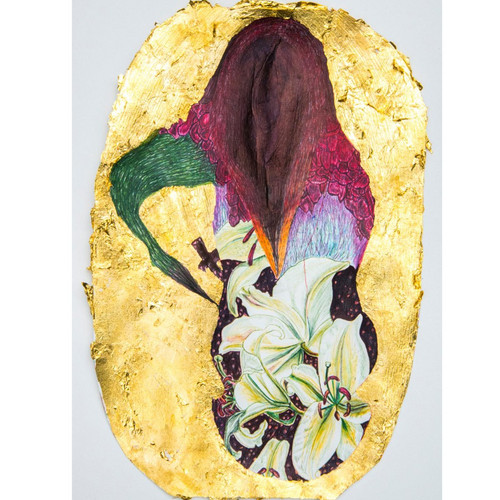
Beissel is the fruit of a remarkable alliance between Austrian composer Klaus Lang and the Australian ensemble Golden Fur - Samuel Dunscombe (clarinet), Judith Hamann (cello), and James Rushford (keyboards). Conceived for the distinctive resonance of a church setting, the music deploys organ, winds, and strings in a patient unfolding where the boundaries between composition and collective improvisation gently blur. Lang, celebrated for his quietly radical music, draws inspiration from eccentric …
Jazz At Auditorium
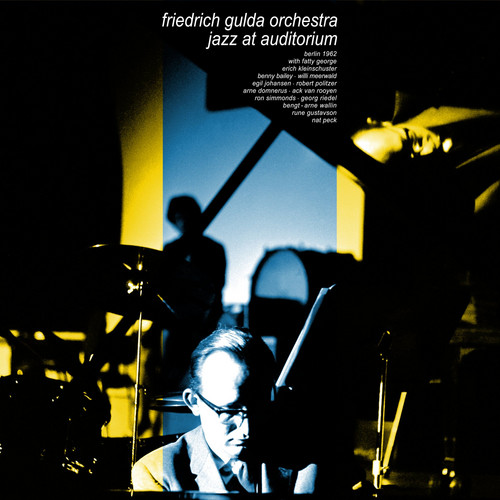
Today it is well known that Austrian pianist and composer Friedrich Gulda was at home in two different worlds: classical music and jazz. He once mentioned “There are so many great musicians alive, but none of them was able to tear down the border that was created by the music industry, which is the border between classical music and popular music. Jazz is still considered to be something deserving less respect.” Gulda was one of the few who tried to cross that border, working in both realms, wit…

Differenz/Wiederholung 2
Bernhard Lang's Differenz/Wiederholung 2 is a multi-media piece for amplified ensemble, three voices and video installation. While the music is filled with rocking-and-rolling, anti-grooving sound slaps, "scored free jazz", and crippled repetitions, three vocalists present texts (including rap) from Gilles Deleuze, William Burroughs and Christian Loidl, commenting on usual repetitive human habits and its nonsense. If Captain Beefheart's Trout Mask Replica (1969) is a milestone of avant-rock, …
Dw16 / Songbook
DW is an on-going cycle of Bernhard Lang's pieces, where composer explorespossibilities of loops and repetitions, which became his compositional trademark. Songbook I is another piece where Lang highly involves his patterns from Jazz and Pop music, transformed through “damaged beats”. "For many years one of my main influences beside the work of Philip Jeck were the movies of Martin Arnold: they more or less became the trigger for the series of pieces called Difference/Repetition

Organ Works Vol. 2
The second instalment of Klaus Lang's organ works and once again, two monumental works that span over two vinyl sides. "ABD" - contemporary vision of sacral chord progressions. "Melrose abbey" - perverse art of mourning music. Ultimate drone. Absolute torment.

Tables are turned
project by Bernhard Lang and Alter Ego with Philip Jeck for turntables and amplified ensemble, based on the song by Amon Duul. Tables Are Turned is the first collaboration between one of the most significant austrian composers of today, Bernhard Lang, and prominent english turntablist Philip Jeck. There is no doubt that mutual interested in loop technique, led to the musical colaboration between two artists, connecting the worlds of academic philosophy with underground aesthetic. Unlike his prev…

Monadologie XII
For the second time, rocked Bernhard Lang basis of GODrec, delivering his ultimate piece from Monadologie series –Monadologie XII, for ensemble. Unlike the previous release (TablesAreTurned, with Philip Jeck), Monadologie XII is nothing less than a blast: a three-part concerto for ensemble with occasional saxophone solos and terrific drum parts (watch your ears on the second side of the vinyl!). And all that, in astonishing performance of Klangforum Wien, under the direction of genius Johannes K…
Organ Works Vol. 1
I put my music into the space. I don’t want to send any messages, I think of nothing and I don’t want to purport any meanings. The listeners hear what they hear and behave to the music as they feel.
Austrian composer, Klaus Lang, describes himself as observer of tones. As stated himself, his roots belong to Gregorian tradition and his music definitely represents abstract way of perceiving it.
Though abstraction (of form and content), he is interested in clarity and truth.
His work includes piec…

Electroacoustic Works
Sensational archival release!! This is the first official digital release of Anestis Logothetis, who has to be considered one of the most prominent figures in electronic music and graphic musical notation. This fantastic CD contains the 'legendary' Fantasmata, that is the first tonal composition created in Austria, realized in 1960 at the, back then, newly established Institute of Electroacoustic Music at the Vienna Academy of Music and the Performing Arts with the assistance of recording direct…
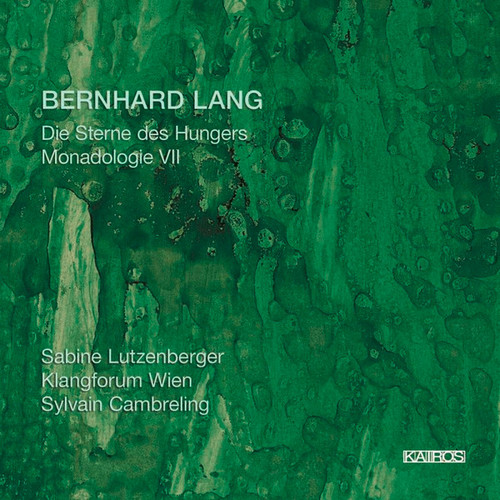
Die Sterne des Hungers
The Stars of Hunger, was composed in 2007. It is based on three poems by the Austrian poet Christine Lavant: “Im rueckgrat aufwaerts glimmt ein licht,” “So also geht erleuchtung vor,” “Zeig an mir die kräuter welche bestärken” and “Lösch aus mein gesicht und führe mich blind.” Rather than set the poems themselves to music, Lang used the text generation program Abulafia to produce from them a cut-up in the tradition of William S. Burroughs. The composition contains only fragments of the po…
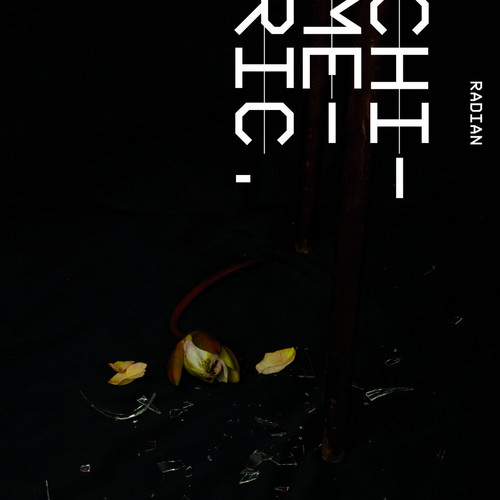
Chimeric
"Which brings me to Radian with long player 'Chimeric'. The post rock button has genuinely been pushed. This record offers a lot to bearded, stand with your arms folded at gigs nodding types. They have quite a claustrophobic quality.With vibraphone and introverted samples dominating proceedings, but does not seem to move above brooding pace, which gives it a soundtrack effect. The cover is really poncey as well its a broken vase with dying flower petals strewn about the place.Its probably meant …
missa beati pauperes spiritu
In cooperation with IEM Graz and musikprotokoll 2005 (steirischer herbst, ORF). Excursion into the Middle Ages: Klaus Lang’s latest composition breathes new life into Gregorian chant more than a thousand years old. One hears the traditional sequence of the mass movements, but newly composed material gives it a new interpretation. Klaus Lang does not wish to evoke images in his listeners but rather empty and impoverish their minds.
Musica Viva 10
“The first pieces of the Differenz/Wiederholungs-Serie were composed by transcribing loop techniques of different turntable lists and filmmakers … What appealed to me especially was the concept of erratic, asymmetric loops corresponding to the crack in the groove or to the trembling of a malfunctioning CD player.” This idea has already spawned many parts of the DW, which bring to the fore a great variety of different phenomena of our noisy, sound-generating lives. In DW 8, the orchestra, “like t…
DW 17: Doubles / Schatten II
The unfolding of the differences is succeeded by ever new ramifications, versions, series. DW 17 Doubles/Schatten II as a new phase in the DW-Kosmos.
Jugendlieder - Songs From The Youth
Berg's early lieder owe their existence largely to the young composer's great interest in literature; nevertheless it was his friend Hermann Watznauer, who actually inspired him to embark on composing his first lieder around 1900/01. And Berg enjoyed himself so much that he continued along the same lines until 1903, completing another 30 lieder; even Arnold Schönberg was essentially fascinated by them: "Berg's earliest compositions, however clumsy they may have been, already reveal two qualities…

„Hör!-spiel” / Necrologlog 1961 / Fantasmata 1960
i have a stipulation in my concert-rider that reads thusly: ‘If the promoters of the show take me to a record store wherein I find one of my personal “Holy Grail” LPs for a reasonable price, I will perform that evening for free. Because of this, people are always asking me about my “Holy Grail” records and offering advice (“French & German electronic music from the 50s through 70s? You mean J.M. Jarre & Tangerine Dream?”, or “Pierre Henry? have you heard this really obscure one; ‘Messe Po…
Serenade op. 24
Arnold Schoenberg's Serenade op. 24 for seven instruments and low male voice, conducted by Pierre Boulez with bass Louis-Jacques Rondeleux, recorded in Paris in 1961 and reissued in Wergo's studio reihe series.
Einfalt. stille.
Austrian composer in a work for flute, viola, percussion, and voice aboout the inner state and flow we perceive when listening and concentrating on a piece of music.
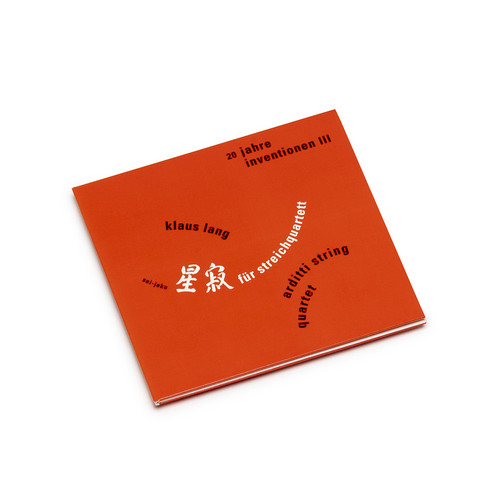
Sei-jaku für Streichquartett
Documentation '20 Years Inventionen', CD III. The string quartet 'sei-jaku' by German composer Klaus Lang, documented on this CD, was performed on 6/30/2002 in the Großer Sendesaal of the SFB Berlin by the Arditti String Quartet during the festival Inventionen 2002.

Trauermusiken
Two compositions by the young Austrian composer/organist Klaus Lang who currently lives in Berlin/Germany. Der Wind und das Meer for viola (Barbara Konrad, viola) The Sea of Despair for String Quartet (Amras Streichquartett)