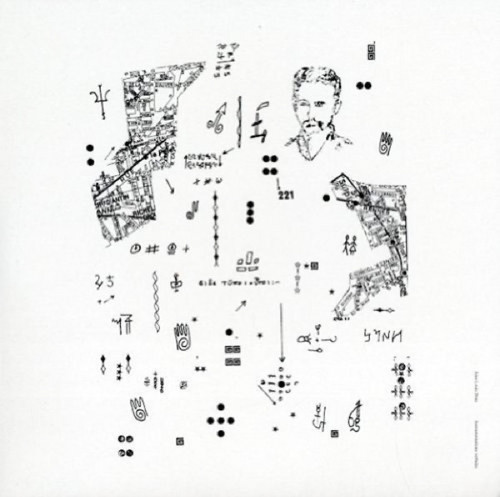
Instrumentations verbales
After releasing the first LPs ever published by Isidore Isou, Gil J Wolman, Hidlago & Marchetti’s ZAJ… here is another historical premiere, or the first LP ever issued by French pre-situationist Jean-Louis Brau.Jean-Louis Brau (1930-1985) at the age of 20 joined along with Gil J Wolman, Isidore Isou's Lettrist group, creating in this context (the same of Wolman's “mégapneums”, Dufrêne's “crirythmes”, Lemaître's “hyperphonies” and Isou's “poèmes ciselants”) what he called “instrumentations verba…
Hinaus:: In den, Wald
In 1986, SPK's Graeme Revell released an album entitled "Necropolis, Amphibians and Reptiles". The recordings were based on the work of Swiss art brut artist and mental patient Adolf Wölfli. Some 15 years later, Austrian composer Bernhard Gal used Wöfli's poems as the basis for a sound installation at modern art museum Essl near Vienna. Now, in 2004, Klanggalerie are proud to present you a CD version of this outstanding composition. There are male and female voices bordering between meanin…
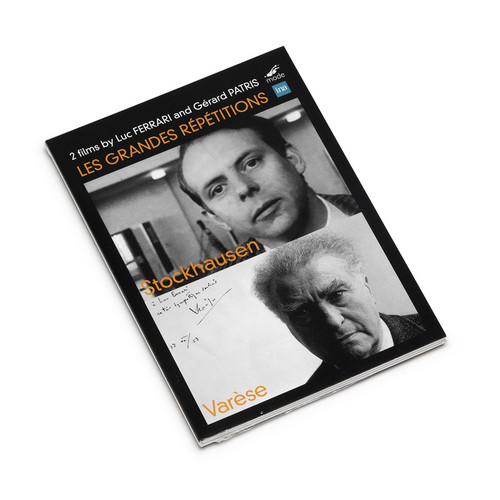
Les Grandes Répétitions
Two films, part of a series made for French television in the mid 1960s, of concert rehearsals. In the earlier film it’s Stockhausen’s Momente that’s being rehearsed (with long sections of performance) interspersed with KS speaking about himself and his work and the thinking behind his work. Just buy it. It’s completely exceptional, in every way. Stockhausen himself is both eloquent and profound, and speaks as he composes, with thought behind every word. His intensity at work, which is gripping,…
Radio Imitat
The piece “Radio-Imitat (Radio Imitation)” by the German artists and musicians collective Insitut fuer Feinmotorik was produced in 2009 for the monthly radio show “Radio Arthur” on Radio LoRa. In addition to its reconstruction of advertising, music and jingles, imaginative room is also made available for talk and discussion. A facsimile of radio is thus painstakingly manufactured, as if by someone who for cared very much less for sense and signification than they did for the weird flow of sound …
Man Leaving Harbour On a Ship (In a Room)
** Private edition, only a handful available. ** Man Leaving Harbour On a Ship (In a Room) is the title of a sound installation (for record player, vinyl record, speakers, found photograph, steel wires) by Vittorio Santoro to be presented in June 2010 at La BF15 Contemporary Art Space in Lyon. For the art installation of this sound piece, side A of the LP record (titled 'Commencement') is played over and over for a whole day. The organizers will take care that the side B (titled 'Conclusion') is…
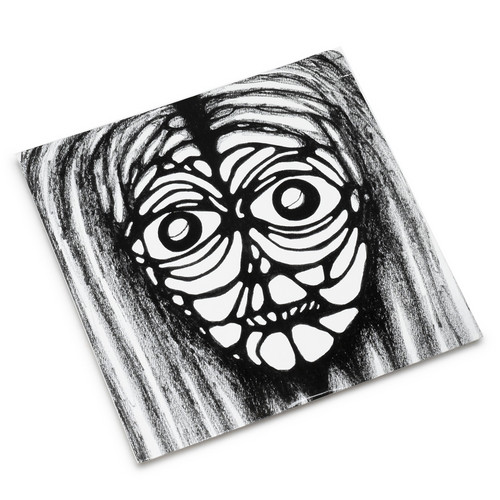
An Attempt To Record Coincidence
Pictured in all its tantalizing, eye-popping glory in Hans Pokora's 1001 Record Collector Dreams, this hellishly-rare Austrian avant garde LP from 1972 is nothing short of astonishing. There are no instruments, but rather varying configurations of solo, duo and ensemble vocal improvisations, presumably informed by the aforementioned (and nearly impenetrable) code (or "charts"). Although this might be seen as part of an interesting continuum, this unique and prescient music will stun even the mos…
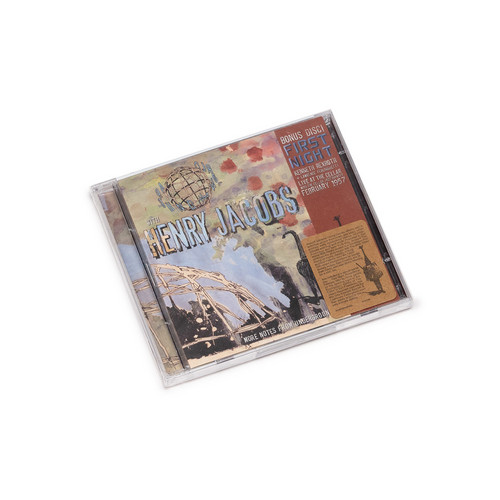
Around The World With Henry Jacobs
Absurd folklorist Henry Jacobs returns with a selection of rare interviews, odd loops, sales pitches, early synthesizer demos, an ether-infused evening, and more! Produced in San Francisco and New York City, Around The World With Henry Jacobs is a travelogue that continues the story begun with The Wide Weird World of Henry Jacobs, mixing archival material from the 1950s with recent improvisations by Jacobs. Guests include Stan Freberg and Dr. Irwin Corey, with Alan Watts returning for a visit, t…
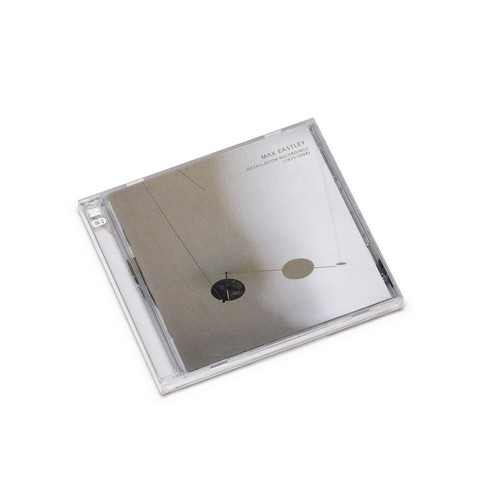
Installation Recordings (1973-2008) 2Cd
This 2CD is essentially a retrospective of Max Eastley's Installation work. As such, it updates and adds many new examples to the 1975 release 'New and Rediscovered Musical Instruments', which was released as a split LP with David Toop on Brian Eno's Obscure Records. This is Eastley's first solo CD. Of the 35 tracks, only the last 2 have any guests or 'playing' (the most virtuosic moment being George Lewis playing a grass blade). All the other pieces are either powered by the natural forces of w…
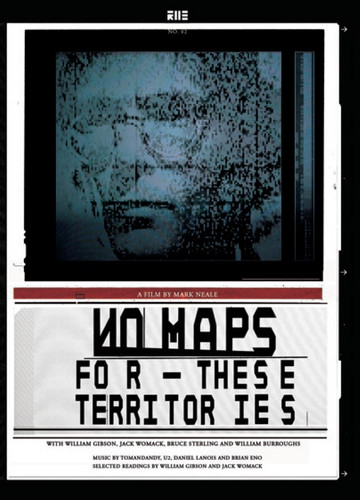
No Maps for These Territories
William Gibson recounts his life and the meaning of his work in contemplative fashion throughout this film and the insight gained is well worth whatever work one may need to do in order to seek this out....On an overcast morning in April 1999, William Gibson, the man who coined the word ‘cyberspace’, walked out of LAX Terminal 2 and steps into a limousine in LA and sets off on a road trip around North America, from West to East and South to North, from Los Angeles to New York, from Virginia to V…
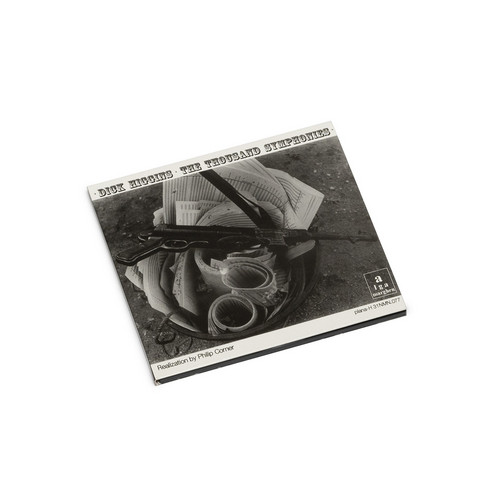
The Thousand Symphonies
2010 release. Alga Marghen presents the first edition ever issued of Dick Higgins' music. Fluxus founding member, in 1958 Dick Higgins studied Composition and Experimental Music with John Cage in his class at the New School for Social Research in New York together with, among others, La Monte Young, Richard Maxfield, Toshi Ichiyanagi, George Brecht, Allan Kaprow, Al Hansen, and Jackson Mac Low. In the Spring of 1968, Geoffrey Hendricks and Robert Watts told Dick Higgins of a project that was afo…
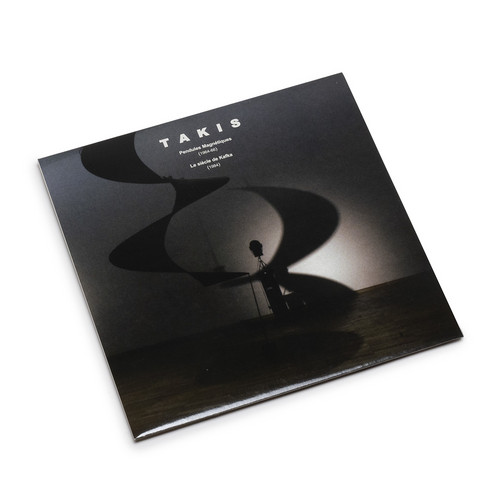
Pendules magntiques / Le siecle de Kafka
Beautiful edition! Takis was born in 1925 in Athens. Preferring, as a matter of principle, to teach himself rather study in a institution, he left Greece in 1954 and lived as a citizen of the world, traveling through Europe and the USA. Some of his earliest manifestations in the 1940s consisted of explosions carried out in open places. His first Signals date from 1954: they were rods consisting of piano wires which created musical vibrations as they stuck against each other in the wind. In fact …
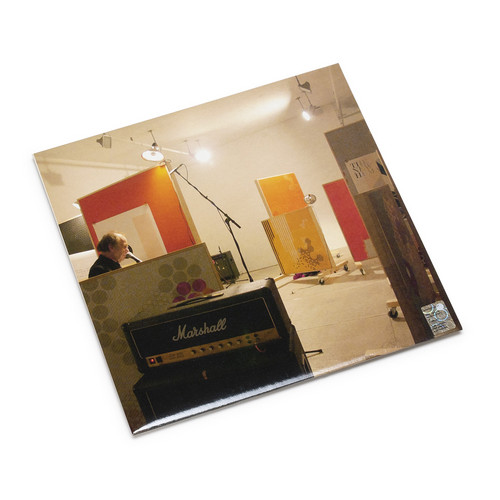
Disallow
Disallow is a unique encounter between legendary conceptual artist Vito Acconci and the experimental group New Humans, merging spoken word, noise, and performance art in the vein of Laurie Anderson and Glenn Branca.
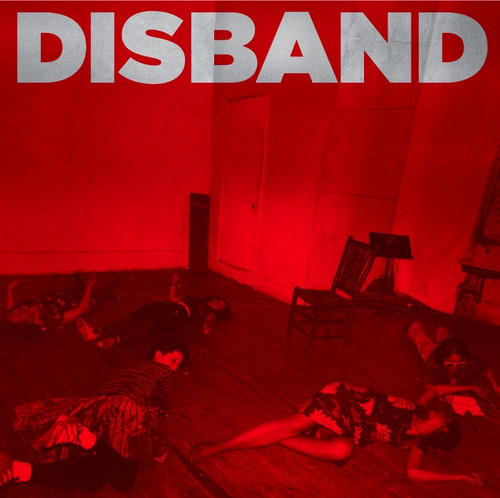
Disband
Long-lost recordings culled from performances between 1979 and 1982 from the loose group of feminist performers known as Disband. Ilona Granet, Donna Henes, Barbara Kruger, Ingrid Sischy, Diane Torr, and Martha Wilson screamed, shouted, sang, and stomped through the heyday of New York City's new- and no-wave scenes, blurring the line between performance art and live music. Mirroring the chaos and temporarity of that time, the band split up in 1982 having never produced a record. This is the firs…
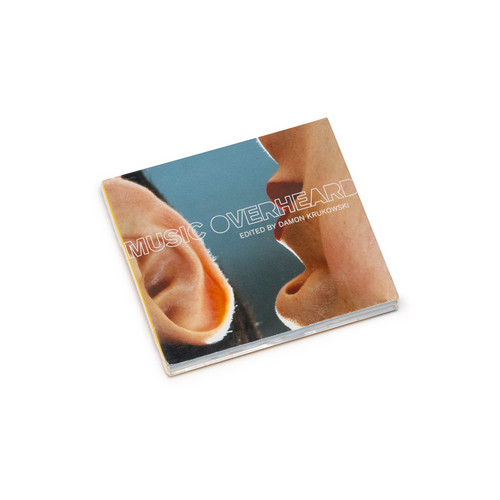
Music Overheard
Music Overheard is an audio response to the Super Vision exhibition, curated by Kenneth Goldsmith (Ubiweb) back in 2006. As visual artists respond to the enormous changes—scientific and cultural—caused by new vision technologies, music overheard poses an analogous question to musicians and sound artists: what are we hearing now that we didn’t hear before? With Henri Chopin, Taku Unami, Chris Corsano, Ellen Fullman, John Duncan, Christof Migone and many more
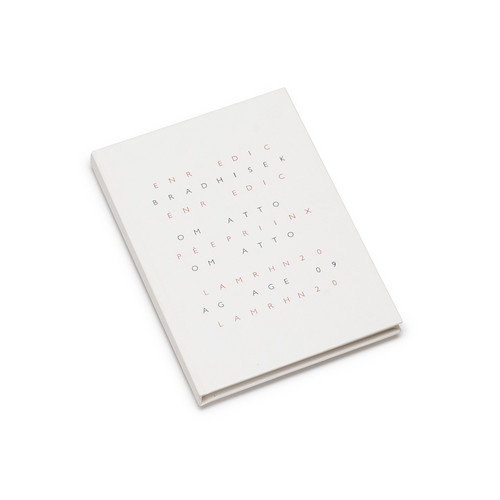
Poeme-Partition X
Alga Marghen is proud to now present this new edition of "Poème-Partition X", extended to the CD format and included in a luxury 96 pages hardbound book, limited to 350 numbered copies. The book reproduces for the first time the complete score, a visual wonder and a major experimental printed work. Bernard Heidsieck memories of an historic lecture at the Jean Tinguely atelier is included as an introduction, as well as his testimony on Ian Sommerville and Brion Gysin's "Dream Machine". Also on th…
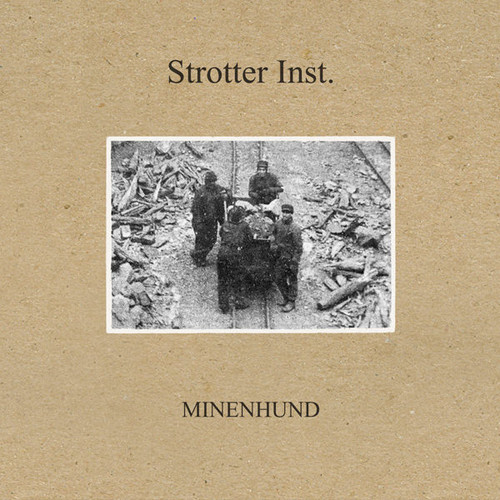
Minenhund
Music created through the use of old, modified, Lenco turntables, modified and manipulated in countless ways. But it has more in common with the anti-electronica of Pan Sonic or the early minimalism of Steve Reich, than to other experimental turntablists.
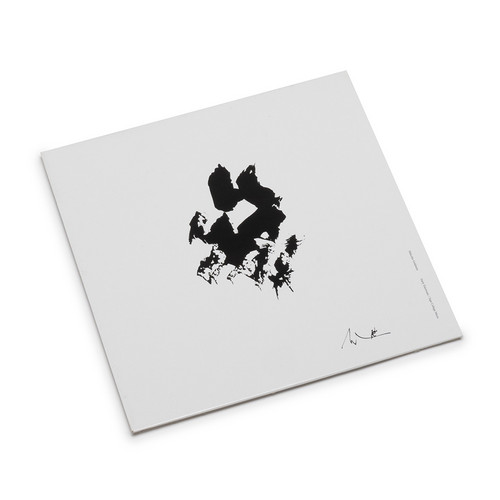
Early Electronic / Tape Collage Music
* 350 copies * Alga Marghen proudly presents an LP edition including some of the seminal electronic/tape collage pieces by Malcolm Goldstein, created in close connection to the sulphuric New York pre-Fluxus environment of the early 1960s. The 1960s downtown New York City, rich with activities, doors opening upon a world fertile with possibilities: the delightful unknown. Malcolm Goldstein first worked at the Columbia-Princeton Electronic Music Center, then joined the Judson Dance Theater with da…
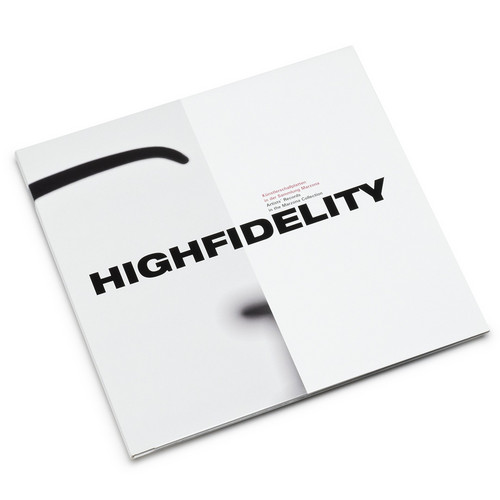
High Fidelity
Housed in a gatefold sleeve with a 36-page catalogue. The first LP is John Cage Speaks MUREAU by John Cage, its title assembled from the first syllable of the word "music" and the author's name "Thoreau." Malte Hubrig writes "The performance of Mureau -- its letters, syllables and words read by John Cage in a uniform intonation of the voice -- frees language of its meaning and opens it to sound." The second LP is Terry Fox's Culvert, a performance that took place at the University of Montana in …
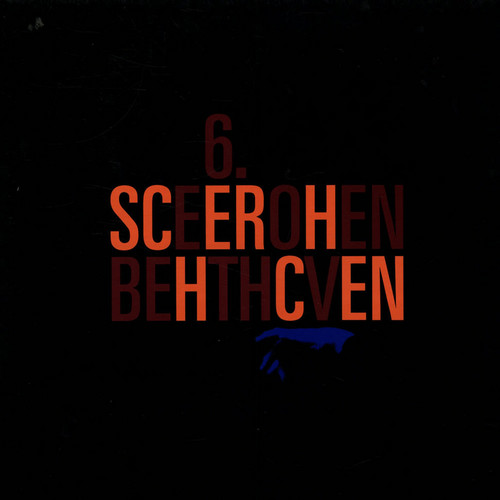
Orchesterproben Ludwig Van Beethoven 6. Sinfonie
This is a blast! Another of Edition RZ’s great early issues comes up again, presenting pioneering early 20th century conductor and modernist champion Herman Scherchen leading rehearsals for performances of Beethoven’s 4th, 5th, 6th, 7th, 8th and 9th symphonies in Lugano, Switzerland, 1965.As fate would have it, these recordings of Scherchen sniping orders at the RTSI Orchestra (Radiotelevisione della Svizzera Italiana) during rehearsals were spontaneously recorded by sound engineer Dr. Ermanno B…
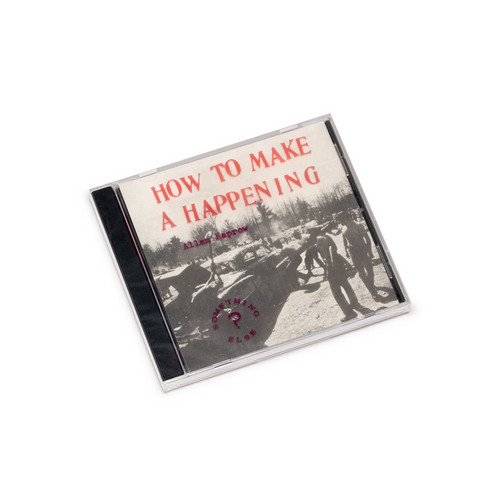
How to Make a Happening
Historic release. Originally released as an LP in 1966 by Mass Art, this is Allen Kaprow, father of The Happening explaining how to do it, and what is - and is not - a Happening. Simple in construction, yet profound in context, How to Make a Happening is Allan Kaprow delivering 11 rules on how, and how not, to make a Happening, an movement begun by Kaprow in the late fifties that is known for its unpredictability, open scores, and constantly-evolving form. On the first track, Kaprow speaks plain…