Karlheinz Stockhausen
Mikrophonie I / Mikrophonie II (LP)
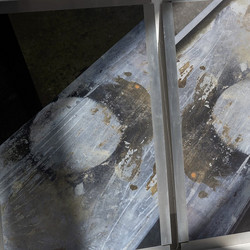
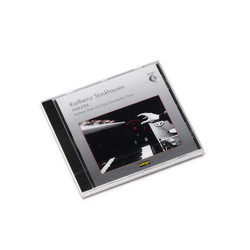
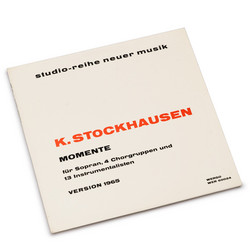
condition (record/cover): NM / VG+ (light wear) | Microphonie I (work no. 15), composed in 1964 is a six player work undertaken after completing "Mixtur" (for orchestra and ring-modulators) using an eight foot Paiste tam-tam (a large suspended gong) he had previously used on "Momente" and set up in his garden (see the DG LP cover). Preliminary tam-tam experiments started out with Karlheinz Stockhausen applying glass, cardboard, metal, rubber, plastic, etc. recorded through a directional microphone-electrical filter-potentiometer-loudspeaker set up while a collaborator changed filter settings and dynamic levels, improvising and recording onto tape. The score written after this contemplates two players exiting the tam-tam (notoriously described to be in the fashion of "a doctor probing a body with a stethoscope"), two others scanning it with microphones, and finally two others operating the filters and potentiometers. Notation indicates the distance between the microphone and the gong, of the mic to the point of excitation, as well as the microphone movement, leading to three reciprocally in/dependent and simultaneous sounds surging into each other.
A crucial stretch of sorts, I would say. The second piece is a different animal altogether, as in "a synthesis of vocal and electronic music", with twelve singers split into four groups facing a microphone each, a conductor, a timer and a Hammond organ plugged into four ring-modulators modulating each other. This is then channeled into potentiometers ending up in four loudspeakers. This is how the natural sound of the choir and the organ are mixed with the modulated sounds.