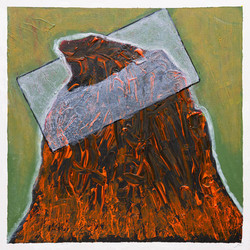
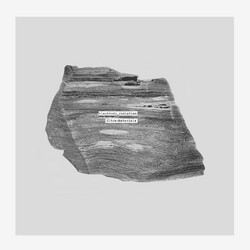
Enrico Coniglio, Andrea Porcu
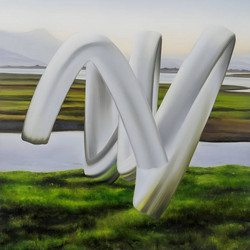
Onda ~ Particella (CDr)
Tracked express shipping from Italy, no customs or import VAT in the EU. Shipping costs
*70 copies limited edition* Music, in its deepest essence, has always represented a means of inquiry into reality—a sensitive way of questioning the world. A way of observing, deconstructing, and reassembling reality through an imaginative lens. A reality that is never given once and for all, but instead presents itself as a process in constant flux, as a shifting appearance. Music, understood in this way, is not something separate from reality, but a transfigured emanation of it, capable of transcending it and returning it in an "other" form. Each note, each pause, originates from the observation of the world around us and proposes an alternative. In this sense, making music is undoubtedly a speculative act that moves beyond rationality, though not in opposition to it. It is a way of knowing—not through linear logic, but through intuitive thought that unfolds by resonance, analogy, and tension.
The theme of perceiving reality has always been central in the history of human thought. From ancient Greece to Eastern mysticism, to contemporary physics and neuroscience, humankind has constantly questioned what it is that we truly experience through the senses. Plato, through the allegory of the cave, showed how what we believe to be real may be only a projection; Buddhist philosophers spoke of phenomenal reality as Maya, an impermanent illusion; today, contemporary neuropsychology seems to confirm that the act of perception is not a neutral window onto the world, but an active, dynamic, and fallible construct.
In the twentieth century, with the birth of quantum mechanics, these insights found a surprising echo in physics. The double-slit experiment—originally conceived by Thomas Young in 1801 to demonstrate the wave nature of light, and later replicated with particles such as electrons by Clinton Davisson and Lester Germer in 1927—challenged the very concept of objectivity. A particle, when unobserved, behaves like a wave, generating interference patterns; but the moment one attempts to measure it, it manifests as a particle, with a definite behavior. It is as if reality exists in a multiplicity of potential states, which become concrete only upon observation.
This principle, known as "quantum superposition," is one of the most enigmatic aspects of modern physics. In recent years, physics has attempted to go beyond this dualism by introducing the concept of the "field"—as in the Standard Model, where particles are considered local excitations of a quantum field. Yet even the "field" remains a theoretical construct, a mathematical metaphor. As Gregory Bateson would say: the map is not the territory, just as mathematics is not nature. In other words, we still do not know with certainty what the ultimate reality of matter is made of.
It is within this ontological uncertainty, this space of indeterminacy and potential, that the present reflection is situated. A composition is never merely a sound architecture, but a subjective attempt to resonate with this foundational oscillation of reality. Like quantum particles, music also exists in a state of possibility until it is played, written, or recorded. Each piece exists in potential, in the mind of the composer, as a field of probabilities—of forms, rhythms, harmonies not yet determined. Only the poetic act (from the ancient Greek "to create") causes a collapse, a crystallization of form. Composition is thus an event of measurement: it determines one expression among many possible ones, withdrawing it from potential indeterminacy, just as happens with the wave function upon observation.
The analogy with the physics of the infinitely small is not a romantic overreach: it is a parallel that allows us to perceive how musical intuition can reflect a deep structure of the universe. Just as quantum mechanics teaches us that the world is not made of objects with fixed properties, but of probabilistic events that manifest only in relation to an observer, so too does music arise from a potential field of forms, colors, emotions—and becomes real only in the creative act.
In this light, music can be a divertissement, but in the noblest sense of the term: a serious game, an imaginative laboratory, an intuitive path to understanding. If it is true, as Heisenberg states, that “What we observe is not nature itself, but nature exposed to our method of questioning” (Physics and Philosophy, 1958), then music too can be considered a method of inquiry—albeit one without scientific pretensions. In a universe where objectivity dissolves and matter appears as a web of possibilities, music becomes one of the keys humankind possesses to approach—not through reason, but through intuition—the ultimate substance of being. Not to say what the world is, but to celebrate its infinite possibilities.
Release notes
{"version":"0.21.2","artist":{"value":"Enrico Coniglio , Andrea Porcu","artists":[{"name":"Enrico Coniglio","join":","},{"name":"Andrea Porcu","join":""}]},"title":"Onda ~ Particella","label":"Lᴏɴᴛᴀɴᴏ Series","format":{"fileType":["FLAC","WAV","MP3"],"qty":"1","description":"Album","freeText":["16-bit/44.1kHz","320 kbps","128 kbps"]},"country":"Worldwide","released":{"publishedDate":"2025-11-21","modifiedDate":"2025-12-04"},"tracklist":"","credits":{"text":"Music by: Enrico Coniglio, Andrea…
| 1 | Onda ~ Particella | 31:00 |
- Enrico Coniglio
- Music By
- Andrea Porcu
- Music By, Mastered By