Ben Vida
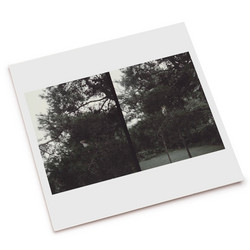
Oblivion Seekers (LP)
Tracked express shipping from Italy, no customs or import VAT in the EU. Shipping costs
Tip! Oblivion Seekers begins from a simple but overwhelming fact: to listen attentively to the contemporary world is to be drenched in language. Voices leak from headphones, radios, sidewalks, checkout lines; words pile up on screens and pages, wanted and unwanted, mundane and profound. Composer and musician Ben Vida has been fascinated by this superabundance for years, and on his new album he treats it not as background noise but as raw material. Gently and playfully, he erodes the old hierarchy that sets “meaning” above “sound”, until the two coexist on equal footing and the voice can be heard as both semantic carrier and pure instrument.
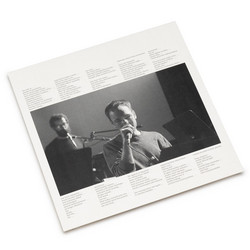
Working in a mode developed on his 2023 collaboration with Yarn/Wire, The Beat My Head Hit, Vida structures Oblivion Seekers around tightly coordinated duets of spoken word delivered in a neutral tone. The cadences of the text - accelerations, hesitations, overlaps - generate intricate internal rhythms, like a kind of verbal counterpoint. His own voice is joined by Nina Dante, Christina Vantzou, John Also Bennett and Félicia Atkinson, woven together into a composite timbre that is neither wholly theirs nor his. Gender, accent and diction blur into a single, fluid presence, soft but precise, that glides over and through the music rather than sitting on top of it.
Underneath, a small ensemble traces an understated, conversational understory. Vida plays keyboards, vibraphone, guitar and more, with Dante on harp, Bennett on bass flute, Matt Bauder and Will Epstein on saxophones, Henry Fraser on acoustic bass, Cleek Schrey on violin and Booker Stardrum on percussion. Their parts rarely push the form forward in conventional ways; instead, they offer a lattice for the text to thread through, aligning with downbeats at times and drifting freely at others. The overall temperament is tranquil and focused, as if the entire record were a single long mantra that never quite cycles back to its starting point. The effect is paradoxical - equally soporific and gripping, suggesting repetition without ever repeating exactly.
Across the album’s four pieces, the instrumentation shifts while the vocal approach remains constant. “Be Yr Own Abyss” is marked by wave‑like saxophone counterpoint and contains a kind of thesis, dropped without emphasis: “Her tongue was out to kill her / all hail this mental space / constructing ambiguity / and the endless stream.” The title track “Oblivion Seekers” shimmers with ambiguous vibraphone chimes, while Fraser’s swelling bass provides one of the record’s few overtly dramatic entrances. Throughout, the text continually redefines the shape and movement of each composition, even as the music maintains its otherworldly glow.
Vida’s words are built from fragments gathered over time: supermarket mumblings, striking phrases from novels, lingering impressions of records on his turntable. These small, otherwise insignificant details accrete not into a linear narrative but into an impression of how meaning is actually made day to day. Characters and scenes flicker at the edges, recur briefly, then vanish; lines that seem to demand interpretation drift by without resolution. Twice, in different contexts, the listener is told that waves are heading our way, a motif that feels by turns ominous and calming.
The album sits in a long lineage of experiments at the confluence of music and speech. Vida’s love of Robert Ashley is well known, but he also cites Mark E. Smith and The Fall, the spoken verses of Neil Tennant with Pet Shop Boys, the entire history of hip hop and the work of Meredith Monk as touchstones. In all these cases, the delivery of the words matters as much as the words themselves; inflection and timing become structural forces. Oblivion Seekers embraces that insight while pushing it into more abstract territory, using non‑narrative text construction to highlight and gently subvert our expectations about what speech in music should do.
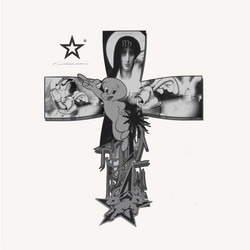
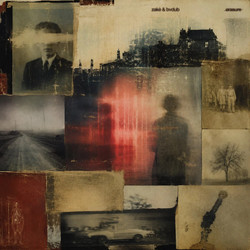
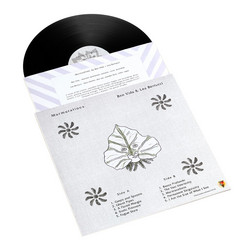
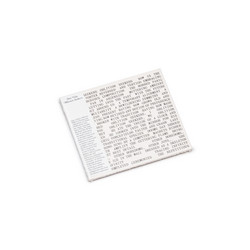
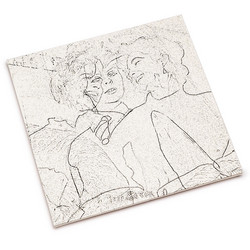
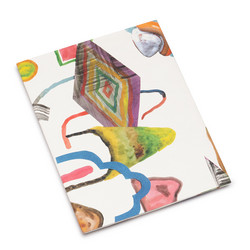
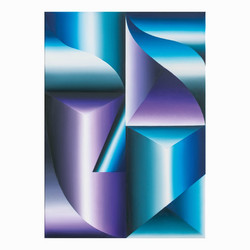
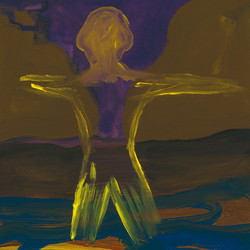
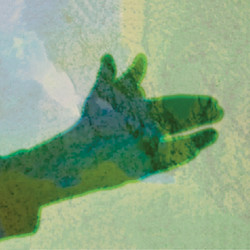
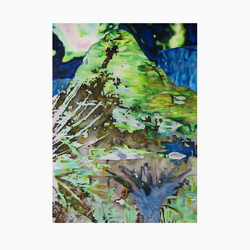
Recorded at multiple locations in the Hudson River Valley, with additional sessions in Athens (Greece), Welches (Oregon), New York City and Normandy, the album was mixed in Shady, NY and mastered by Stephan Mathieu. Vibraphone was recorded by Joey Weiss, and the visual layout is by Bartolomé Sanson. Released under the Bird Show (ASCAP) banner, Oblivion Seekers takes the omnidirectional din of contemporary language as its marble and chips away just enough to let us glimpse how we turn that endless stream into a world we can live in. Its triumph is that, even as it clarifies that process, it preserves the strange, beautiful mystery of how words bridge the gap between what surrounds us and what we carry inside.