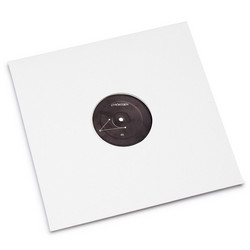
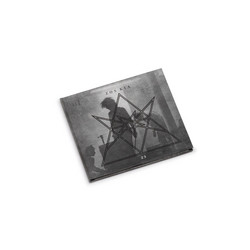
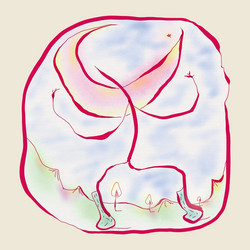
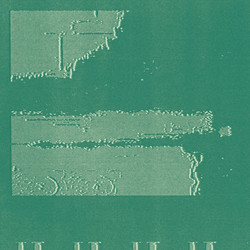
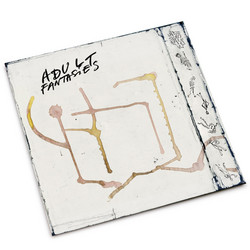
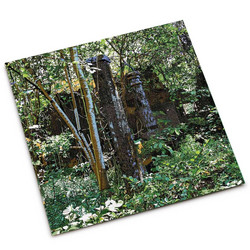
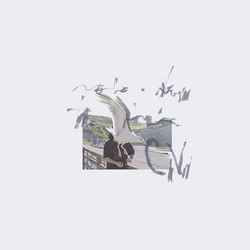
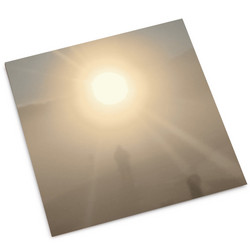
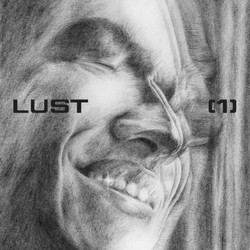
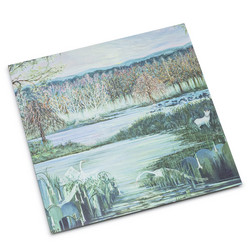
**2026 repress** Spoki (“Ghosts”) documents Ingus Bauskenieks doing what so few artists truly manage: putting his inner world to tape without smoothing it to fit anyone else’s taste. Conceived, arranged and produced by Bauskenieks himself, the album feels like an extended experiment in seeing how far one person can push both their own imagination and the technology at hand to realise the music in their head. It’s not a studio‑polished grand statement so much as an intimate laboratory, full of strange hooks, unexpected turns and sounds that seem to have wandered in from other rooms of his life.
Bauskenieks has always stood slightly apart from his peers, and Spoki makes that stance explicit. “My own world differs a little from my friends’ tastes,” he says, invoking his father’s blunt maxim: “the collective art is not art at all.” The record takes that idea seriously. There is no committee smoothing the edges here, no genre‑council deciding what belongs. Instead, we hear one voice following its own logic, bending synths, drum machines, guitars and tape tricks into patterns that feel idiosyncratic yet strangely inevitable once you’re inside them. The “ghosts” of the title read as both presences in the songs and traces of the private obsessions, memories and aesthetic hunches that drive them.
Although Spoki is fundamentally a solo vision, it’s not hermetic. Female vocals on A2, A3 and B3 come from Edīte Baušķeniece, whose presence adds a welcome counterweight to Ingus’s own lines. Her voice threads through the arrangements like a second point of view, sometimes shadowing melodies, sometimes cutting across them with a different emotional colour. Everywhere else, all instruments and male vocals are handled by Bauskenieks himself, underscoring just how fully he inhabits his creation. You can hear him in the textures as much as in the singing: in the particular way a rhythm is fractionally off‑centre, in the choice of keyboard sound that’s slightly too brittle or too sweet, in the willingness to let a part run a little longer than convention might allow.