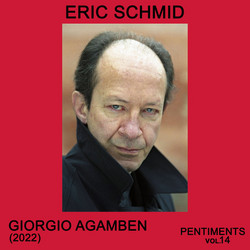
In Transcendental Mathematics, Eric Schmid confronts the fundamental epistemological problem that has haunted philosophy since Kant's fourfold division of knowledge into analytic a priori, synthetic a priori, synthetic a posteriori, and the notoriously empty fourth cell of analytic a posteriori, a schema whose boundaries have been successively contested throughout analytic philosophy, from Carnap's logical empiricism (which sought to collapse the synthetic a priori into the analytic a priori through linguistic convention) through Quine's holistic dissolution of the analytic-synthetic distinction altogether, to Per Martin-Löf's constructive type theory, which, as Neil Tennant documents in The Taming of the True, reconstitutes the synthetic a priori through a meaning-theoretic framework where mathematical truth emerges through judgment acts rather than abstract correspondence.
Schmid argues that homotopy type theory provides the technical apparatus to reconcile the perennial tension between Platonist mathematical realism (mathematics as the discourse on being qua being, independent of mind) and Husserlian phenomenology (mathematical objects as constituted through intentional acts of categorial intuition), positions that seemed irreconcilable yet both partially correct. The work's significance is precisely this: where Kant bequeathed philosophy the problem of how mathematical knowledge could be both necessary and ampliative, and where twentieth-century philosophy either eliminated the synthetic a priori (Quine) or absorbed it into the analytic (Carnap), Schmid's "transcendental mathematics" shows that identity types interpreted as paths, and the univalence axiom equating equivalence with identity, ground the synthetic a priori in homotopy-invariant structure, so that mathematical objects are simultaneously constructed through constitutive activity (the phenomenological moment of proof and judgment) and objectively constrained by the geometry of type space (the realist moment of path structure), making the conditions of mathematical thought transcendentally necessary in virtue of the intrinsic homotopical character of identity itself.