
Parientes De La Vida
577 Records is proud to welcome the adventurous Japanese ensemble K Trio to the label's roster with their remarkable new album, Parientes De La Vida. K Trio reminds us what experimental music can be at its most vital: pure risk, pure discovery, pure adventure. On Parientes De La Vida, poetry and improvised sound meet in a work that continuously reshapes the listener's sense of space, language, and perception.
The album serves as an acoustic document in which poetry reading and spontaneous music…
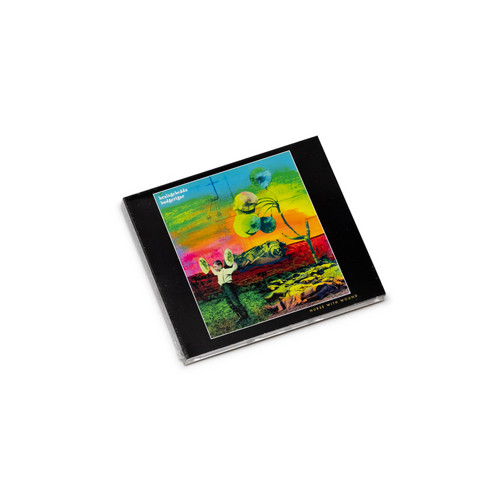
Healsgebedda Budgerigar
On Healsgebedda Budgerigar, Nurse With Wound turn memory itself into a delirious tape loop: three long, sample‑swollen excursions where pet chatter, phantom TV themes and street detritus melt into a woozy, psychedelic netherworld of half‑remembered sound.

Splayed Werks
Tyondai Braxton’s Splayed Werks (his first full-length since the 2022 Telekinesis sessions) opens a new chapter: over 70 minutes of electronics and detailed sound design spread across 15 tracks, most under five minutes, favoring shorter forms over his previous long-format work. The album merges recent compositions with pieces written across the last decade—reworked, remastered by Matt Colton, and sequenced into a single continuous statement that reads less like a compilation and more like a real…
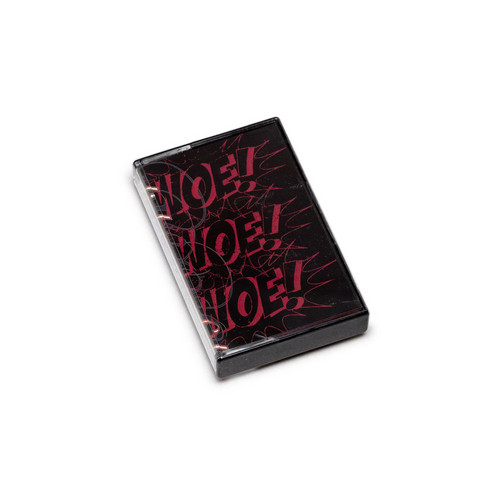
Woe
*30 copies limited edition* Horrid horns loops'n'drones. A long-awaited debut album by the legendary Dislessnessful, who only now finally has a full-length work released as an 80-minute long tape by Nazlo Records. Pro-dubbed hi-quality red tapes and 2-sided printed j-card, limited to 30 copies only.
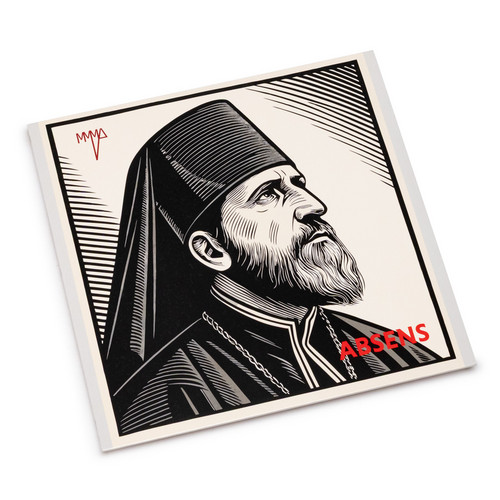
Absens
MMMD returns with Absens, a commanding new album that expands their deep monolithic sound into a darker, more intimate terrain: across nine tracks, the record fuses subterranean low frequencies, complex inter‑modulations and brooding textures with distant threads of folk, all rendered through custom‑made instruments and meticulous sound design. Absens is an exploration of absence and presence, where physical weight meets spectral intimacy — MMMD assemble these elements into an immersive work tha…

Nuó Xiǎng
On Nuó Xiǎng, Camilo Ángeles and Qiujiang Levi Lu forge an electroacoustic ritual: custom DSP, live processing, extended voice and augmented flute merge into abstract yet visceral soundscapes, echoing ancient Nuó ceremony while stepping beyond any fixed genre.
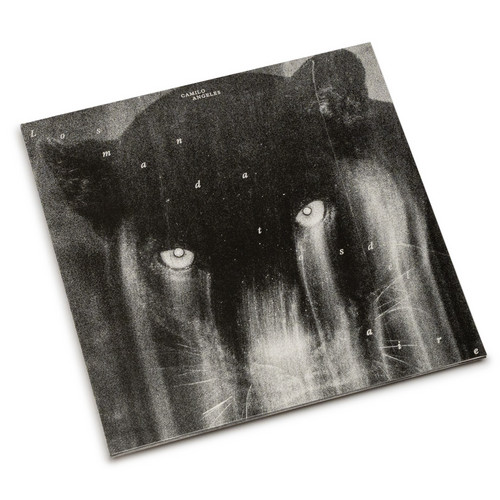
Los Mandatos del Aire
On Los Mandatos del Aire, Peruvian flautist Camilo Ángeles deconstructs his instrument into a bridge between worlds, channeling Amazonian cosmology and ayahuasca visions through extended techniques, microtonalities, analog processing and reverb‑chamber acoustics in dialogue with Musuk Nolte's photography.

Automaginary + Totality
On Automaginary + Totality, Natural Information Society & Bitchin Bajas meet across two studio sessions separated by a decade, weaving rhythm, gravity and invisible force into organic convergences now united on CD for the first time - separate arcs made whole.
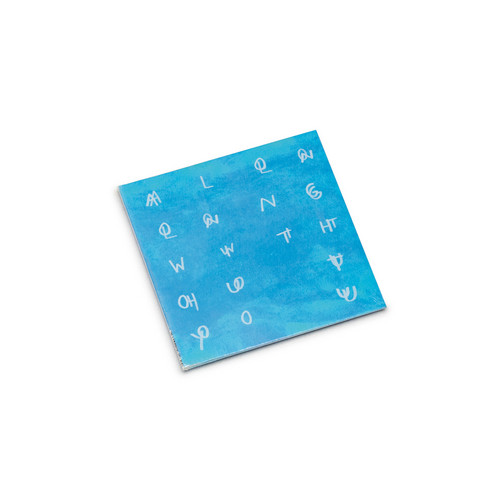
I Get Along Without You Very Well
*2026 stock* Ellen Arkbro and Johan Graden embody the limitless curiosity and fearless innovation of the Swedish and Berlin new music scenes they inhabit. Arkbro is a composer and musician whose work has been presented around the globe at prestigious institutions such as the Barbican in London, GRM in Paris and the Kölner Philharmonie in Köln. Graden is one of Sweden’s most sought-after pianists, moving freely between classical music and the European contemporary jazz scene. Currently living in …
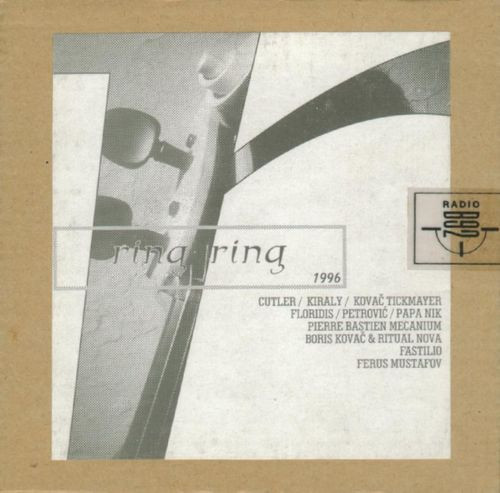
Ring Ring 1996
1997 release (seal cut - light storage wear) ** Special cardboard sleeve. Featuring: Pierre Bastien, Erno Kiraly - Stevan Tickmayer - Chris Cutler, Boris Kovacs, Fastilio, Ferus Mustavof, Floridis - Petrovic - Papa Nik.
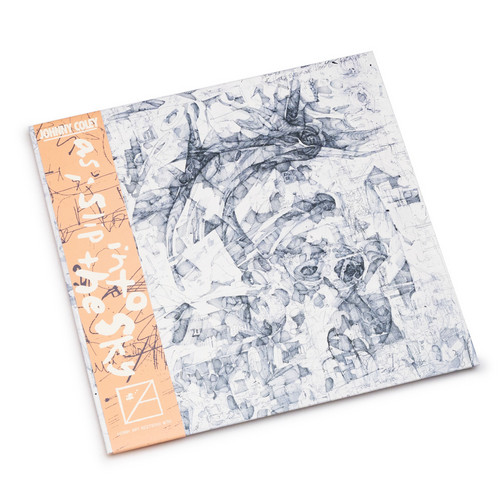
As I Slip into the Sky
As I Slip Into the Sky reflects a particularly small sliver of time compared to Where the Smoke Goes, with recordings taking place in early 2025, while Johnny Coley was bed-bound in an assisted living facility with multiple sclerosis. Alabama born, Portland based artist Joel Nelson helms the nearly entirely electronic backdrop, posing a new canvas for Johnny, with Buchla music easel bubbling up between Johnny’s lines. This album captures Johnny in a remarkably tender and emotive form. Love and a…
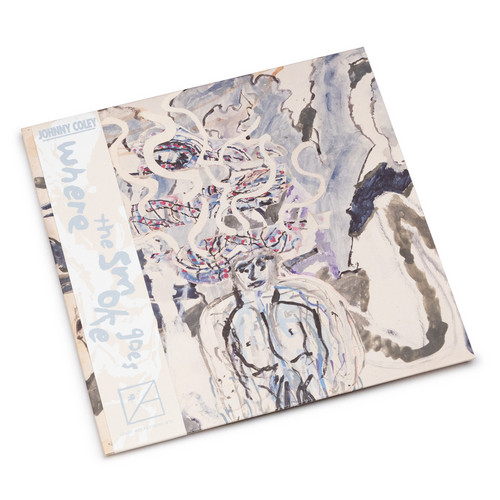
Where the Smoke Goes
We are honored to present the final two LPs from the late Birmingham, AL-based queer poet and artist Johnny Coley, who passed away in 2025 at the age of 76. Tender, lucid, and slippery poems unspool in Johnny’s signature drawl, charting oblique journeys through the sidereal and mundane. He composes painterly landscapes of his beloved Alabama and imagines waking up in the crowded streets of London. This is Southern Surreal story-telling where each new word opens a door to the familiar unexpected.…
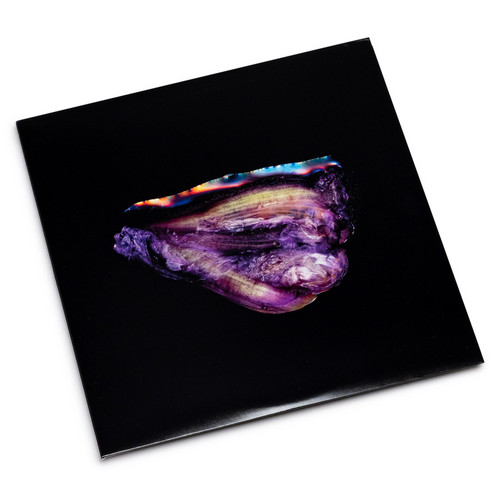
A Fine Chance for Permanence
*100 copies limited edition* A Fine Chance for Permanence captures a pivotal moment in contemporary improvisation, where a new generation of musicians reshapes the language of spontaneous music in response to an increasingly fragmented, hyper-connected world. Drawing from decades of experimental traditions—from 1960s free music to the reductionist movements of the early 2000s—the album proposes a fluid, “both/and” aesthetic that resists fixed ideologies in favor of multiplicity, dialogue, and sh…
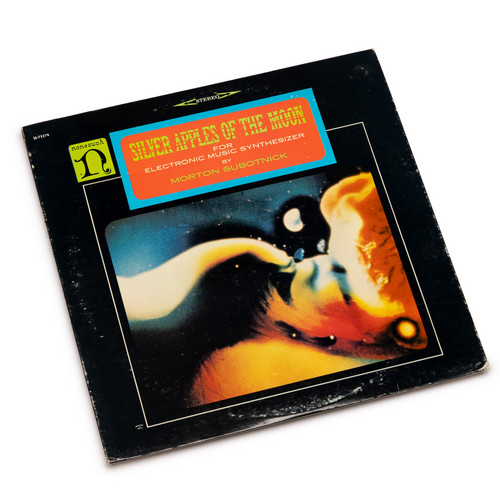
Silver Apples Of The Moon (LP)
'The' Buchla synthesizer album and a seminal and influential timeless electronic music classic, released by Nonesuch in 1967. Essential. Allentown pressing.
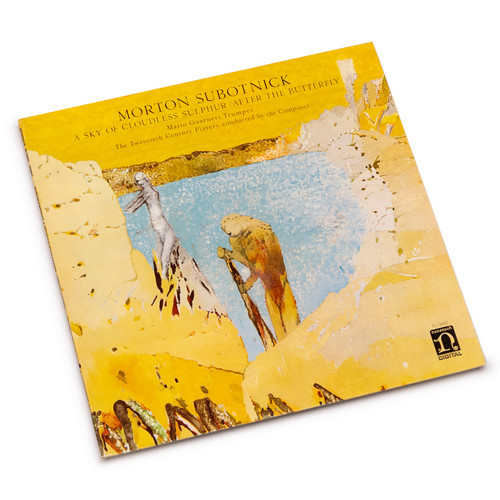
A Sky Of Cloudless Sulphur / After The Butterfly (LP)
Excellent 1980 LP on Nonesuch pairing two compositions from the late 1970's: a full electronic synthesizer/tape piece and composition for trumpet with ensemble and live electronics (the "electronic ghost score").
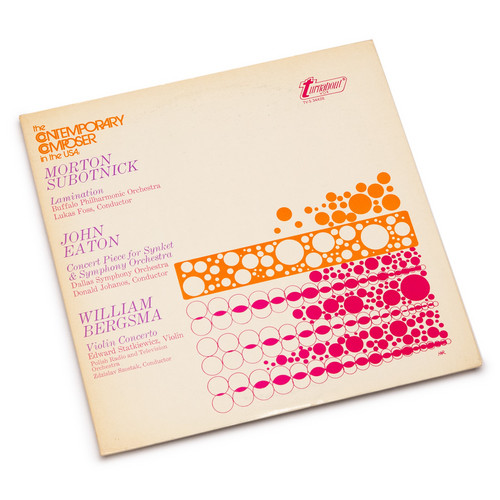
Laminations / Concert Piece For Synket & Symphony Orchestra / Violin Concerto (LP)
1971 LP on Turnabout's great "The Contemporary Composer In The USA" series presenting two compositions for orchestra and electronics/synthesizer (the mighty Synket) and a violin concerto.
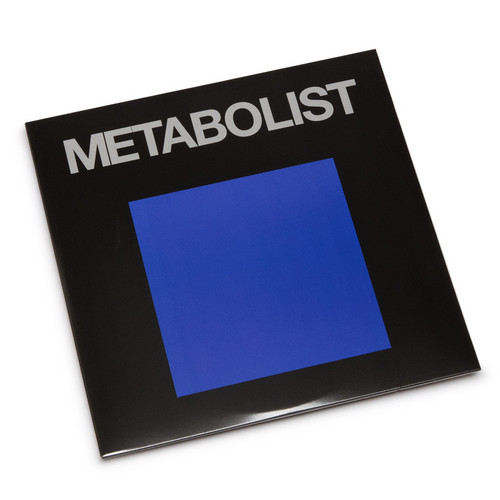
Hansten Klork
Originally released in 1980 and long regarded as one of the most avant‑garde statements of its era, Hansten Klork captures Metabolist at the intersection of post‑punk restlessness and uncompromising experimentalism. The album’s stark textures, motoric rhythms, and hypnotic minimalism reveal a band equally indebted to kraut‑rock repetition, post‑industrial atmospheres, and the austere clarity of minimalism—creating a distinct, unsettling sound that still sounds contemporary today.
This reissue re…
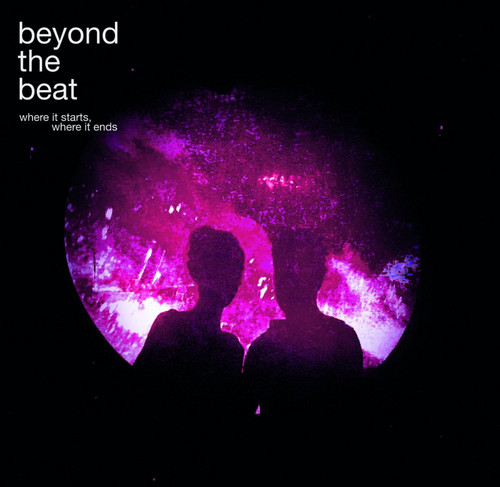
Where It Starts, Where It Ends
Beyond the Beat is the debut album of Arthur Fussy/Modular Synthesizer and Judith Schwarz/Extended Drums. Both make up 2/3 of the group Other:M:Other whose debut album was released on Klanggalerie, and whose second album will follow here soon. Arthur also works a lot for the theatre, and Judith plays in many bands, amongst others Gina Schwarz's Pannonica, Mel*E, PRCDR with Manu Mayr (another Klanggalerie release), ChuffDrone (new album coming on Klang in autumn) and Little Rosies Kindergarten.
…
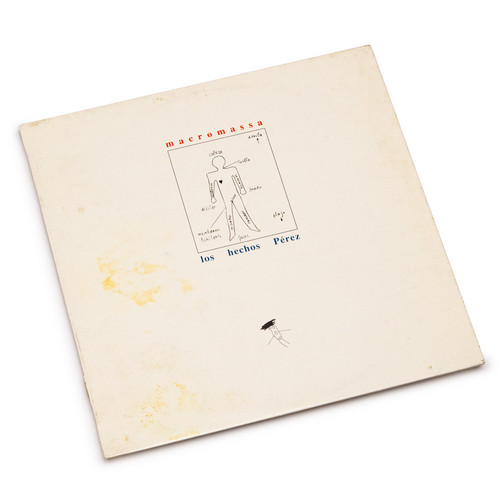
Los Hechos Pérez (LP)
1998 CD re-issue of the 1991 cassette with live electronic improvisations by British super-group featuring Adam Bohman, Clive Graham, Michael Prime, Roger Sutherland and Ron Briefel.
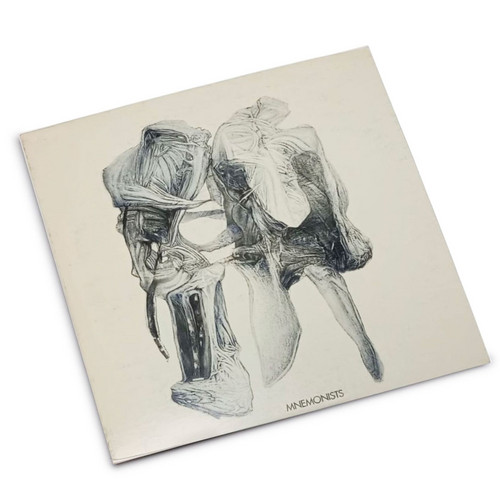
Horde (LP)
Original edition of the superb third album by the American audio-visual project, with fantastic electro-acoustic music with massive studio processing and a marvellous portfolio of images to accompany it, self-released on Dys in 1981 in an edition of 1000 copies. One of the most beautifully produced album of that era. With portfolio.