Jazz /
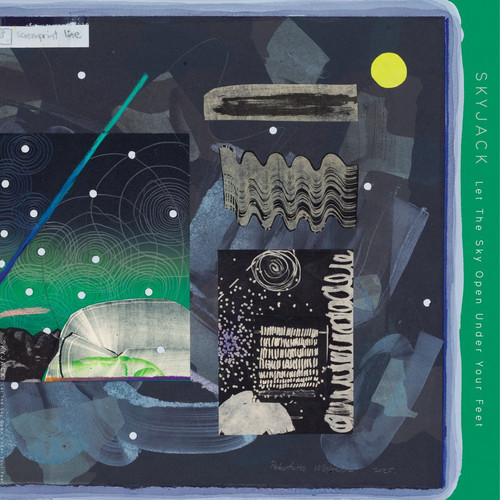
Let the Sky Open Under Your Feet
On Let the Sky Open Under Your Feet, Skyjack fuse South African groove, European improv and chamber‑level detail into a live‑wired suite of cosmic jazz, where deep‑rooted rhythms and free flights feel like earth and atmosphere trading places.
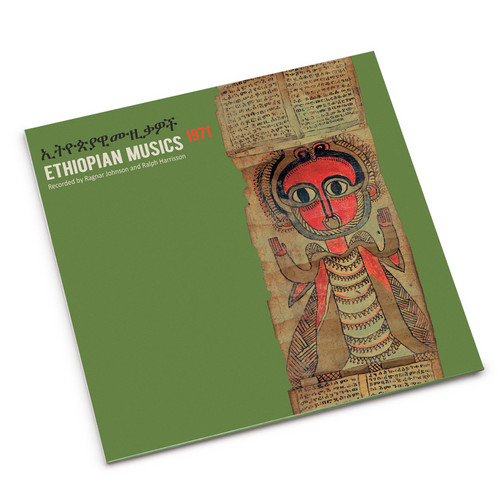
Ethiopian Musics 1971
Taking a slight deviation from the widely celebrated path through experimental sounds that has largely defined their efforts over the years, the venerable Sub Rosa returns with rare and essential dive into the world of ethnomusicology with ‘Ethiopian Musics 1971’, their third release dedicated to the recordings of Ragnar Johnson and the second devoted to the groundbreaking recordings he made in Ethiopia with Ralph Harrisson during the summer of 1971. Belonging to a larger body of recordings dedi…
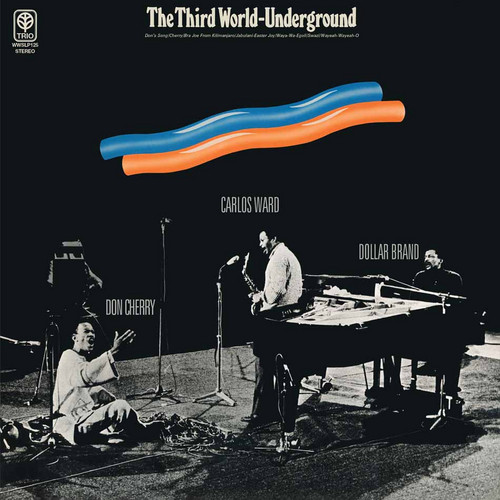
The Third World-Underground
CD edition. A title like a manifesto, and music with the conviction to carry it. For a few nights at the close of 1972, the Jazzhus Montmartre in Copenhagen held a trio that would barely survive the season. Abdullah Ibrahim - then still recording as Dollar Brand - sat at the piano; Don Cherry stood with his trumpet; Carlos Ward raised his alto. From the performance of November 14 came The Third World-Underground, a record that surfaced only in Japan, on Trio Records' Nadja imprint in 1974, and t…
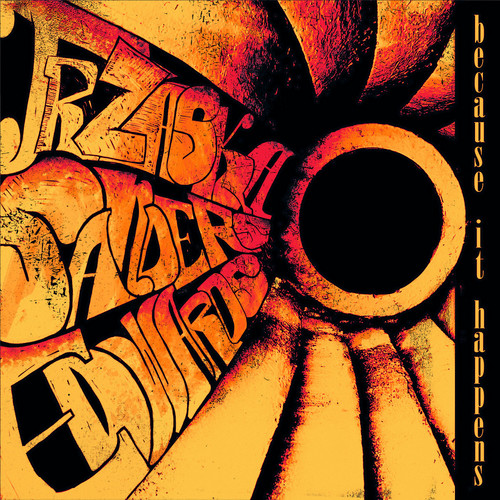
Because It Happens
„Not So Late / Because it Happens“ on CD and „Because it Happens“ on LP is the material recorded live on August 5th 2025 in London at legendary Cafe OTO. Three masters of improvisation: Mikołaj Trzaska on saxophone, John Edwards on double bass and Mark Sanders on drums. They don't use the term "improvisation," preferring instead to speak of "live composition" and the audience, who are an essential component of the concert ritual. The community created by the performers and the audience's attenti…
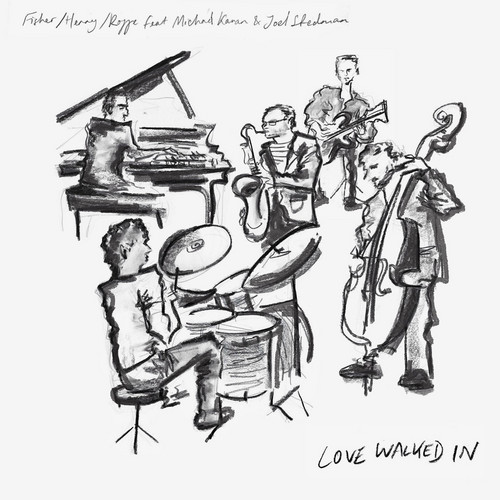
Love Walked In
There is a particular kind of record that only happens when a visiting player drops into a local scene and everyone raises their game. Love Walked In is one of those. For a short run of dates in 2024 the New York pianist Michael Kanan joined the Leeds trio of Alex Fisher, Simon Henry and Elliot Roffe, and the group carried that chemistry into a small hillside studio above Keighley, in West Yorkshire, to commit it to tape. The result is a single, unrepeatable meeting of veteran New York swing and…

at Studio Pelto
Over the past decade Helsinki has quietly become one of Europe's busiest cities for young jazz players, and few labels have done more to document that activity than Jazzaggression. Uusi Jazzi Klubi - the loose collective that bills itself as the city's underground jazz club - return with their second album, recorded across two days in the spring of 2024 at the label's own Pelto Studio. Nothing here was written in advance. Drummer Aleksi Tanhuala gathered the players, set the tape rolling, and le…
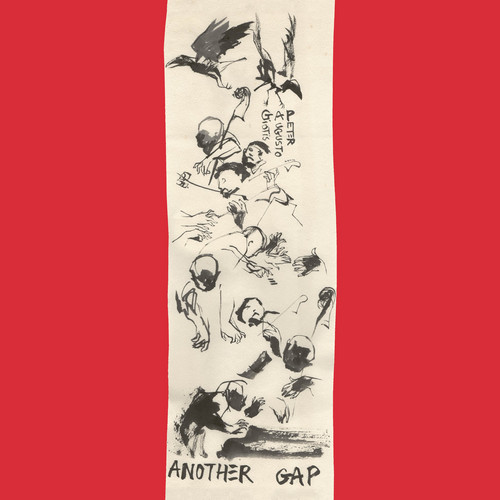
Another Gap
Recorded at Studio Grez, Brussels, on March 10th, 2025, by Augusto Pirodda and Giotis DamianidisMixed by Augusto PiroddaMastered by Titos Kariotakis at Royal Alzheimer HallArtwork by Peter Jacquemyn Design by Jeroen Wille
A Decent Run
Tip! *100 copies limited edition* "A Decent Run is the result of a journey that began in 2000 and was recorded in 2024, seven years after the death of Tom Raworth, whose poems I used as the basis for ten tracks—ten songs—to which I added two pieces by Steve Lacy. It is a journey through many different kinds of music, lyrics, images, and sounds, yet one shaped by a single principle: the idea of music and improvisation as a collective, choral process, in which space and prominence are given to ind…
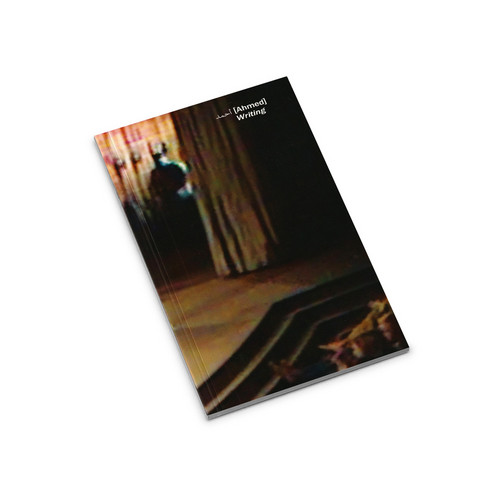
Writing (Book)
With Writing, Ahmed - the quartet of Pat Thomas, Joel Grip, Antonin Gerbal and Seymour Wright - turn a decade of notes, essays and sleeve texts into a woven chorus, mapping how their deep dive into Ahmed Abdul‑Malik becomes a living method for making future music.
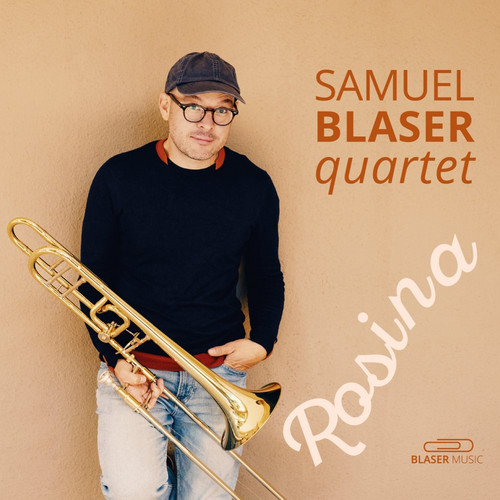
Rosina
Trombonist-composer Samuel Blaser is one of jazz's most prolific voices, with 34 recordings as a leader or co-leader since 2008. On Rosina, he delivers his most personal album yet — eight originals drawing on Italian folk melodies and a deep reconnection with his family roots in Emilia-Romagna.
The album takes its name from his maternal grandmother, Rosina Pierina Scarpioni — a wartime Resistance fighter who later moved to Switzerland, and a woman he never had the chance to meet. Reconnecting wi…
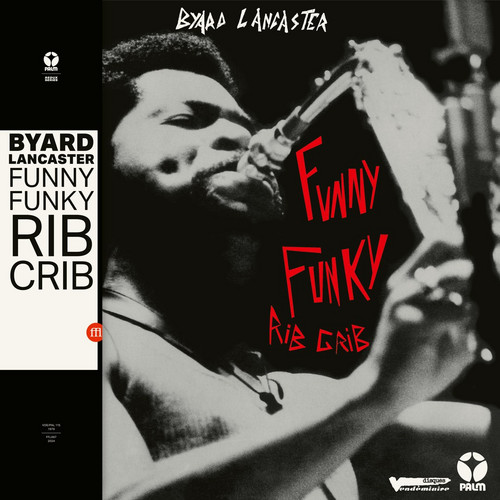
Funny Funky Rib Crib
*2026 repress* Souffle Continu records is thrilled to present Byard Lancaster – Funny Funky Rib Crib, one of his 4 legendary albums released on Jef Gilson’s Palm Records in the 1970s. At the beginning of the 1960s, at the Berklee College of Music, Byard Lancaster met some feisty friends: Sonny Sharrock, Dave Burrell and Ted Daniel. It is easy to see why he rapidly became involved in free jazz. Once he was settled in New York, he appeared on Sunny Murray Quintet, recorded under the leadership of …
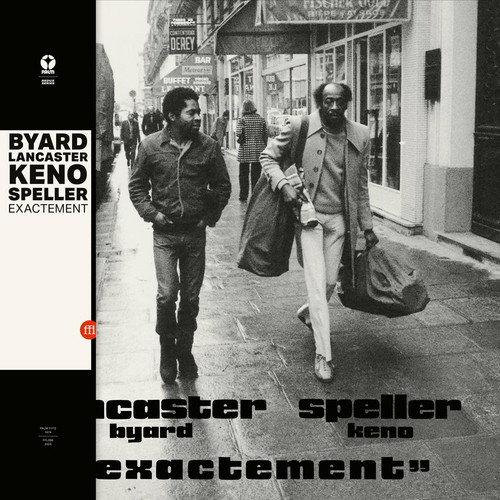
Exactement
*2026 repress* Souffle Continu records is thrilled to present Byard Lancaster – Exactement, one of his 4 legendary albums released on Jef Gilson’s Palm Records in the 1970s. At the beginning of the 1960s, at the Berklee College of Music, Byard Lancaster met some feisty friends: Sonny Sharrock, Dave Burrell and Ted Daniel. It is easy to see why he rapidly became involved in free jazz. Once he was settled in New York, he appeared on Sunny Murray Quintet, recorded under the leadership of the drum c…
May Spring Last a Lifetime
'May Spring Last a Lifetime’ is the first duo release from improvising tenor saxophonists Tom Challenger and Evan Parker. The album emerged after years of informal practice sessions; then, following two live performances, the duo recorded this session at Arco Barco in Ramsgate. The album is Evan Parker’s fifth appearance on the False Walls label. Evan: “Duo is the simplest form of group playing. And so it’s the simplest, the purest in a certain sense, and the most challenging. There’s nowhere to…
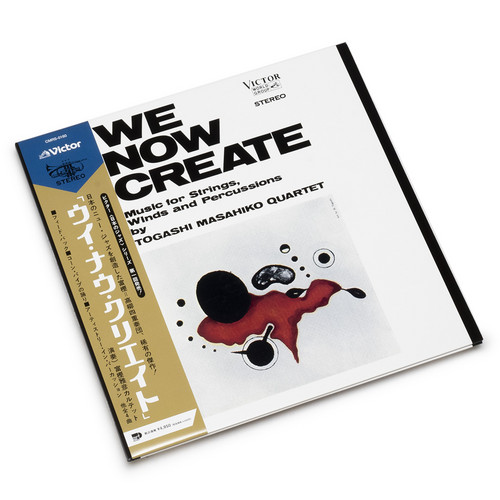
We Now Create - Music For Strings, Winds And Percussion
A pivotal masterpiece by Masahiko Togashi, Masayuki Takayanagi, Mototeru Takagi, and Motoharu Yoshizawa is set to be reissued as the eighth release in the Spin This Now! series
Five Nights in the Midwest
*100 copies limited edition* Five Nights in the Midwest is a new three-CD release from the improvising trio of bass clarinetist Jason Stein, double bassist Damon Smith, and drummer Adam Shead. Recorded during a December 2025 tour across the American Midwest, the album presents seven extended performances exactly as they occurred—without edits or cuts—allowing listeners to experience the full arc of the tour as it unfolded night by night. The December 2025 run marked the trio’s first tour since 2…
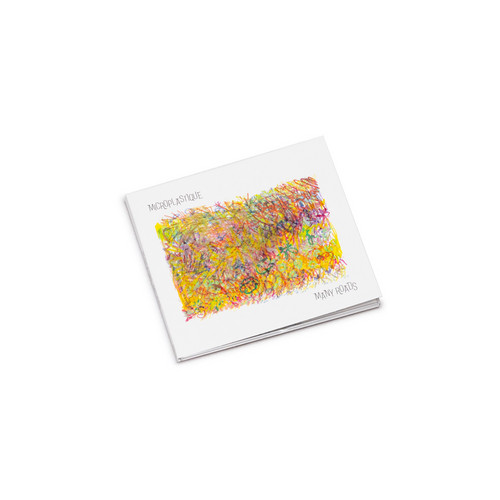
Many Roads
*200 copies limited edition* On Many Roads, their second full-length album, microplastique expands its playful yet rigorous commitment to instant composition, deepening an ethos that treats sound itself as both material and meeting ground. Recorded live across the ensemble’s 15-concert June 2025 U.S. tour, the album functions less as a polished artifact than as a document of encounter—capturing how place, audience, and momentary circumstance all shape what this quartet becomes onstage. Seven tra…
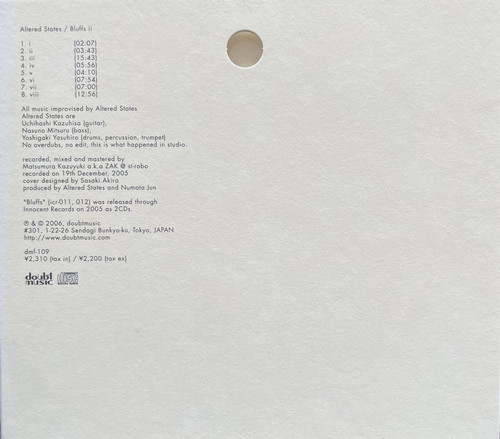
Bluffs II
*2006 release, 2026 stock* This is a work that proves the worth of the trio that kept the group alive for 16 years, and at the same time captures a miraculous performance that’s hard to believe was entirely improvised — they went into the studio with no plan and made everything on the spot. Of course there were no overdubs or edits. It might convey the nuance better to call it composition while playing rather than pure improvisation. A series of acoustic treatments by ZAK fully preserves the stu…
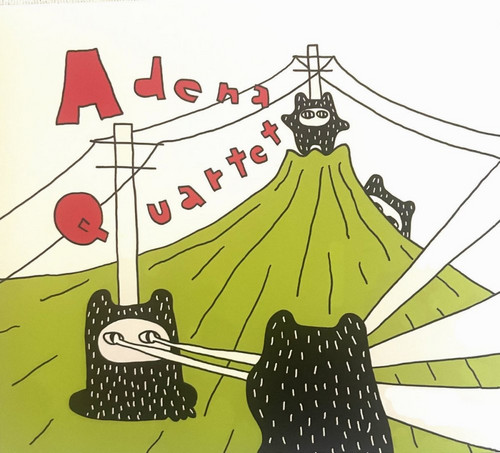
Adena Quartet
*2026 stock* Very special quartet of Kazuhisa Uchihashi, Keisuke Ohta, Shinobu Kawai, Akira Sotoyama. This is real free music from Japan.
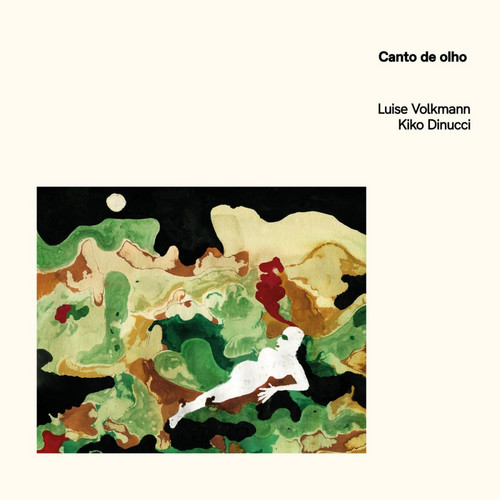
Canto de Olho
German saxophonist Luise Volkmann and Brazilian guitarist / vocalist Kiko Dinucci return with intimate, devotional new album Canto de Olho.
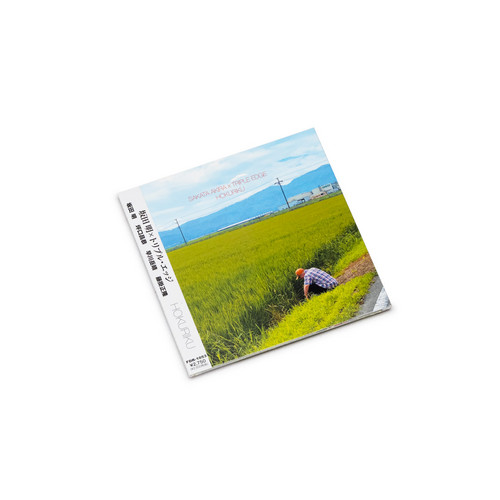
Hokuriku
*2026 stock* The third album of the quartet "Akira Sakata x Triple Edge," in which Masayasu Tsuboguchi, Takeharu Hayakawa, and Masataka Fujikake gather to create a rare improvised world with dynamism as if diverse organisms were wriggling under Akira Sakata, a giant tree several thousand years old.