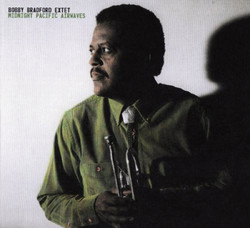
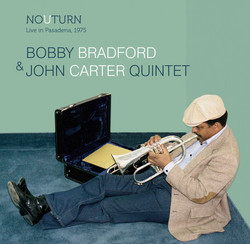
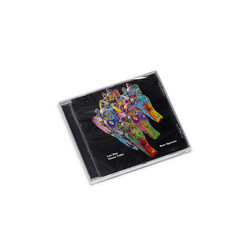
Sonic House Reunion catches three musicians who long ago learned how to share the same air reconvening in a freshly electrified room. Bobby Bradford, a cornetist whose history runs from Ornette Coleman and the New Art Jazz Ensemble through decades of under‑documented small groups, stands at one corner of the triangle. Opposite him is Mark Dresser, a five‑string bassist whose expanded techniques and compositional sense have made him one of the most resourceful low‑end thinkers of the last forty years. Completing the triad is Hafez Modirzadeh, here on his idiosyncratic b’kongofon and reeds, folding in his long exploration of “chromodal” tuning and Iranian‑inflected phrasing. The album’s very title - Sonic House Reunion - signals both a coming‑back‑together and a kind of architectural project: these pieces are rooms they build and move through in real time, plotted but never rigid.
Across five pieces - “Intrio”, “She Reflected”, “Crooked Variations”, “Sonic House” and “Outrio” - the trio treat composition and improvisation as edges of the same object. “Intrio” functions as both prelude and thesis: a spare opening where breath, single notes and silence sketch out the building’s frame. Bradford’s cornet tone is burnished but unsentimental, carrying the clean, singing lines and oblique blues of his work since the 1960s; he can state a theme in a handful of notes and then worry its intervals from the inside. Dresser moves between grounded pizzicato and harmonics that whistle and groan, occasionally bowing to pull ghost‑chords out of the air. Modirzadeh’s b’kongofon lines slant just off the twelve‑tone grid, their microtonal inflections creating slight, productive frictions against Bradford’s more tempered pitch. The effect is of a familiar free‑jazz language subtly detuned, asked to inhabit a slightly skewed acoustic space.
“She Reflected” and “Crooked Variations” push further into that space. The former feels like a slow‑motion interior monologue: phrases that curl back on themselves, three voices circling the same handful of pitches from different angles, register shifts that act like changes of light. Without ever tipping into abstraction for its own sake, the trio let the tune’s reflection pool deepen, revealing how much emotion can be loaded into small bends and timbral shadings. “Crooked Variations” is more overtly knotty, as the title promises: short motifs appear, get inverted, stretched, rhythmically displaced, passed between cornet, bass and b’kongofon. Here Dresser’s command of odd‑meter pulse and elastic time comes to the fore, giving the music a sense of forward motion even when bar‑lines are constantly being teased apart. Modirzadeh answers with lines that dart between speech‑like declamation and long, melismatic runs; Bradford threads through them with the calm authority of someone who has been playing this kind of open‑form music since before it had stable names.
The centrepiece, “Sonic House”, is where the title’s metaphor becomes most literal. Over an extended span, the trio move through clearly differentiated “rooms”: a bare, almost percussionless passage where breaths and key‑clicks are as important as pitch; a more songlike section where a loose head coalesces and dissolves; a stretch where Dresser’s bass takes the spotlight, using the extra low string to anchor droning pedal points under high, glassy harmonics. Bradford, never a showboat, treats the cornet as a way to change the density of the air: a single held note can shift the harmonic weather of the entire ensemble. Modirzadeh acts at times as a second horn, at times as a destabilising architectural element, his altered intervals subtly re‑tuning the house from within. By the time “Outrio” arrives, there’s a sense of having walked through a complete structure and emerged back outside: the closing piece echoes the openness of the beginning, but now every gesture feels charged with the memory of what’s just been built and dismantled.
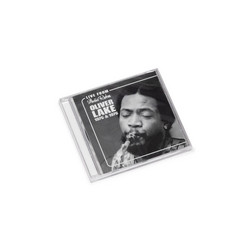
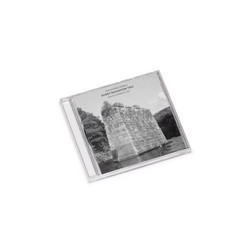
Released by NoBusiness Records, Sonic House Reunion also extends a thread the label has been nurturing with earlier Bradford–Modirzadeh–Dresser documents such as Live at the Open Gate and Live at the Magic Triangle. Those albums placed the trio in front of audiences on either coast; here, the focus is on the studio as an instrument, a controlled environment where the trio’s long acquaintance can be heard in the smallest details of timing and touch. The sound is intimate but not dry: you hear fingers on strings, valve‑clicks, breath noise, the slight ring of the room around a held cornet note. It’s music that trusts nuance as much as catharsis, reminding you that “reunion” is not just about nostalgia, but about discovering what three long careers still have to say to one another when the house is theirs alone and the microphones are finally rolling.