Morton Feldman
Morton Feldman (1926 to 1987), born in New York, was a major figure of twentieth century music and, with John Cage, Christian Wolff and Earle Brown, a member of the New York School. An early experiment with graphic notation gave the performers freedom over pitch, but he soon returned to precisely notated music of extreme quietness and slowness. His work is defined by soft dynamics, floating chords and, in the last years, enormous length: the String Quartet No. 2 runs some six hours, For Philip Guston past four.
Morton Feldman in Middelburg: Words on Music
Massive! English-German Edition in two volumes 906 pages. These lectures, discussions were within the last years of Feldman's life, he died in September 1987, these were 1985 to 1987, for the "Nieuwe Muziek" in Middleburg, and the topics, subject mat…
Essays
**Original 1985 edition, few copies in stock** Morton Feldman was a big, brusque Jewish guy from Woodside, Queens—the son of a manufacturer of children’s coats. He worked in the family business until he was forty-four years old, and he later became a…
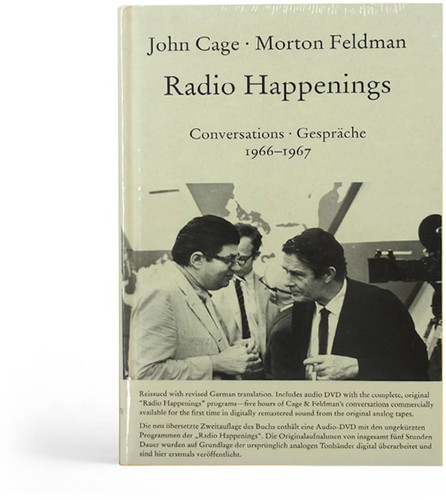
Radio Happenings
** 224-page hardcover book with audio DVD of the complete 5-hours of audio from the radio broadcasts** In 1966-67, radio station WBAI in New York City invited composers John Cage and Morton Feldman to make 5 one-hour radio conversations. Unscripted …
Desert Plants
Facsimile reprint of Walter Zimmermann's book Desert Plants, his interviews with American experimental composers from a 1976 trip to America
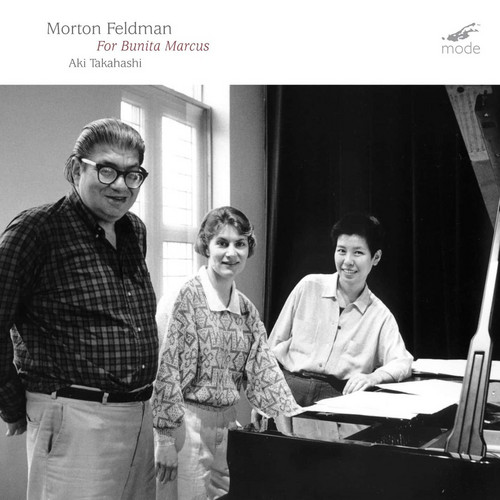
For Bunita Marcus
Morton Feldman's For Bunita Marcus (1985), an hour-long solo piano work, played by Aki Takahashi, for whom Feldman wrote all his piano music after Triadic Memories.
Sold Out

Morton Feldman Piano
Philip Thomas presents a major 5CD collection of virtually all of Morton Feldman's music for piano, the most extensive survey of Feldman's piano music to date. Released by Another Timbre in September 2019, exactly 20 years after John Tilbury's pionee…
Chamber Music: Alvin Lucier & Morton Feldman
Anthony Burr and Charles Curtis present a collection of curated compositions from Alvin Lucier and Morton Feldman. Two Lucier pieces, "August Moon" and "Trio For Clarinet, Cello & Tuba" are presented here for the first time. Liner notes are excerpted…
We, Like Salangan Swallows...: A Choral Gallery of Morton Feldma
The intense individuality of Morton Feldman's (1926?1987) art and its 'painterly' aspect have tended to push his rich output of works into a zone all of their own, surrounded by a moat of stillness. This recording attempts the reverse process -- to b…
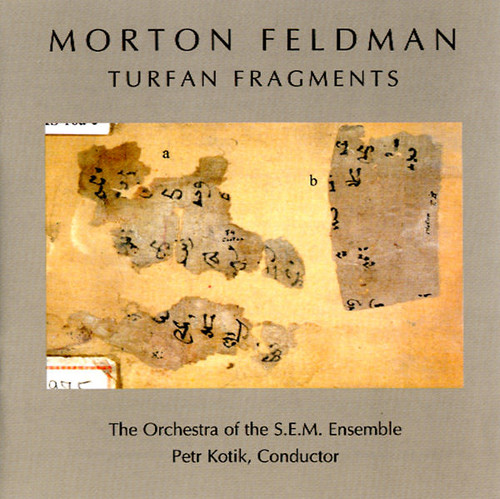
Turfan Fragments
Originally released in 2001 by the Dog W/A Bone label, this release features these 2 long pieces: For Samuel Beckett and The Turfan Fragments. Performed by: The Orchestra of the S.E.M. Ensemble, with Petr Kotik, conductor. For Samuel Beckett and The …
Sold Out
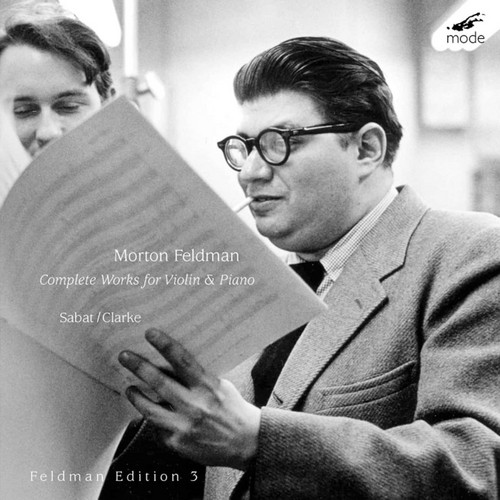
Complete Music For Violin & Piano
Morton Feldman's complete music for violin and piano, from Piece for Violin and Piano (1950) to For John Cage (1982), which spans both discs, played by Marc Sabat and Stephen Clarke.
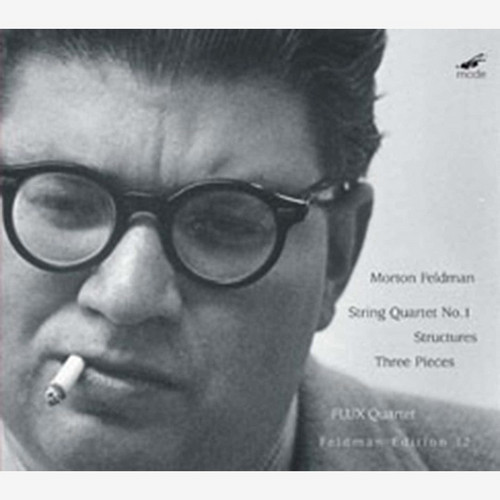
String Quartet No. 1
Morton Feldman's String Quartet No. 1 in the longest recorded performance, with Structures and Three Pieces for String Quartet, played by the Flux Quartet. Two CDs plus a bonus DVD of the uninterrupted 90-minute audio.
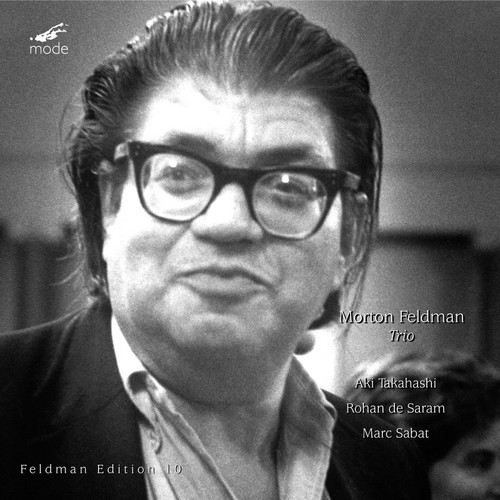
Trio
Morton Feldman's Trio for violin, cello and piano, lasting one hour, 45 minutes, in a recording with Aki Takahashi, Marc Sabat and Rohan de Saram, two of whom worked closely with the composer.
Sold Out
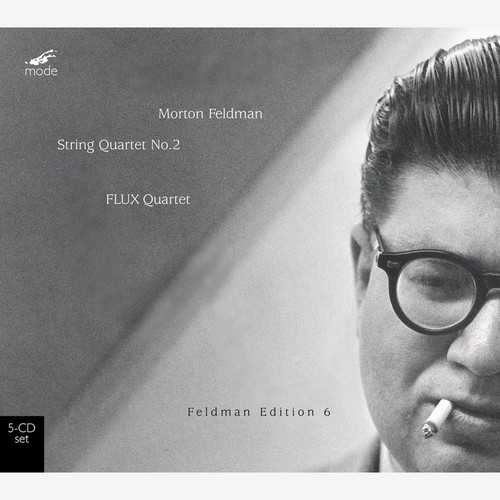
String Quartet No. 2
Morton Feldman's String Quartet No. 2, a work of more than six hours, played by the FLUX Quartet on a deluxe five-CD box with liner notes by Christian Wolff and FLUX founder Tom Chiu.
Piano, Violin, Viola, Cello
“Another Timbre has been contributing excellent recordings to the rapidly expanding universe of what might still be called “Classical” music, and nowhere more convincingly than in the shimmering beautiful tapestries woven by Morton Feldman. The label…
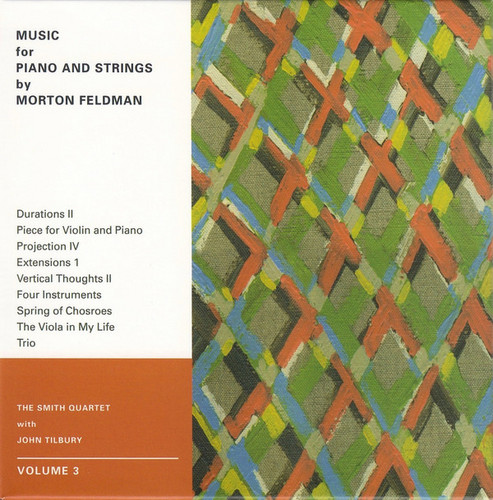
Music for Piano and Strings by Morton Feldman. Volume 3
At its best Feldman's music can take our breath away, providing a revelatory experience, a transparency which has no need of argument. Thinking back to Piano and String Quartet there are moments of extraordinary beauty when, through a sudden chang…

For Samuel Beckett
1999 release - For fifty-five minutes the great American composer Morton Feldman weaves his tapestry of sounds, a pattern always the same and yet never the same, an iridescent, thick fabric, full of details, although these never distract the listener…
Clarinet and String Quartet
Saltern returns with a gorgeous new recording of Morton Feldman's Clarinet and String Quartet (1983) performed by Anthony Burr (clarinet), Graeme Jennings (violin), Gascia Ouzounian (violin), Che-Yen Chen (viola) and Charles Curtis (cello). This perf…
Two pianos and other pieces, 1953-1969
A double CD of music for multiple pianos from what is arguably the most experimental and interesting period of Morton Feldman's development as a composer. Some of the pieces have been very rarely performed or recorded, and have probably never been in…
The American Avant-Garde in the 20th Century
Following on from our popular primer A Young Person's Guide to the Avant-Garde, LTM now offers a more comprehensive overview of American avant-garde music in the 20th century.Commencing with early pioneers Charles Ives and George Antheil (including t…
Violin & Orchestra
Carolin Widmann’s widely acclaimed ECM recordings have traversed a broad arc of music – from Schubert to Xenakis. Here she turns her attention to one of the pivotal compositions of Morton Feldman. Violin and Orchestra, composed in 1979, marked a n…
Morton Feldman / Earle Brown
Finally back in print. This rare Morton Feldman /Earle Brown split LP was originally released in 1962 on the small NY-based Time Records and features Feldman's 'Durations I-IV' on side A and Brown's 'Hodograph I,' 'Music for Violin, Cello and Piano' …
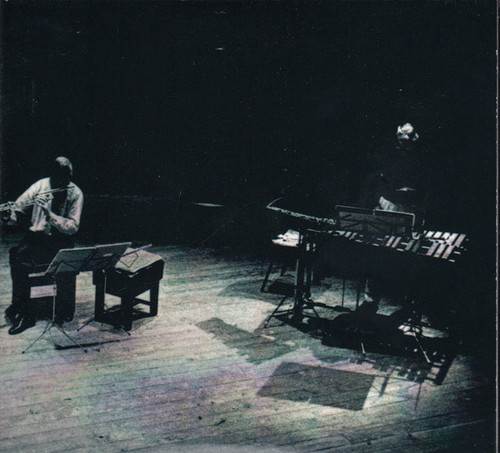
Crippled Symmetry, live at June in Buffalo
Restocked. In 2000, Eberhard Blum (flute, alto flute, bass flute), Nils Vigeland (glockenspiel, vibraphone) and Jan Williams (piano, celesta), American composer Morton Feldman's close friends and collaborators, came together once more as The Feldman …
Neither
Neither has been identified by some as an opera (it was commissioned by the Rome Opera) but it makes use of none of the conventions of traditional opera. There is no story, no mise-en-scene. The intensity results from emotional/aesthetic tension,…
Sold Out
Music for Piano and Strings by Morton Feldman. Volume 2
The 2nd volume of "Music for Piano and Strings" by Morton Feldman is performed by The Smith Quartet with John Tilbury, presenting "Patterns In a Chromatic Field", and "Piano, violin, Viola, Cello", on DVD audio to allow for the length of these large …
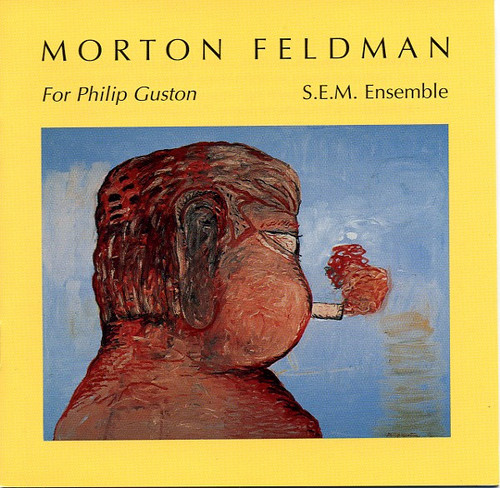
For Philip Guston
Originally released in 2000. Looking for just one Morton Feldman CD to give to someone that you like more than yourself? There's more than one correct answer to this elusive question, but this overwhelming set (closing in on 300 total minutes) is …
Sold Out
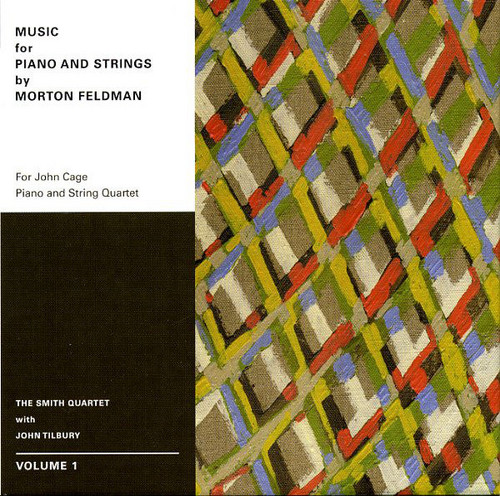
Music for Piano and Strings by Morton Feldman. Volume 1
The Smith Quartet with pianist John Tilbury perform two long works by Morton Feldman: "For John Cage" (1982) and "Piano and String Quartet" (1985) on DVD Audio. Several lifetimes ago, when I was nineteen, I was interviewed by Wilfrid Mellers for a pl…
Crippled Symmetry
orton Feldman's music continues to exert its fascination on listeners and record companies alike. After releasing its highly successful recording of the more than three-hour-long For Philip Guston, Bridge once again returns to the California EAR Unit…
Sold Out
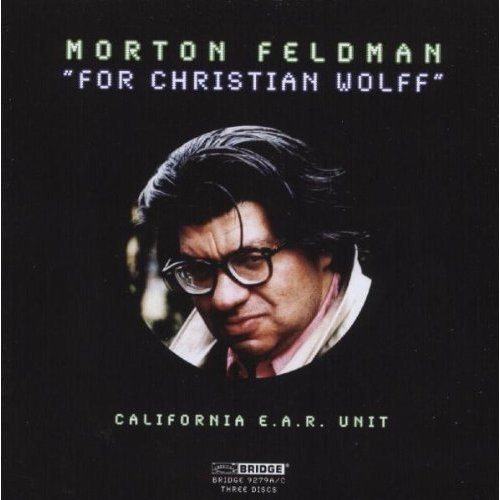
For Christian Wolff
For Christian Wolff is one of Morton Feldman's final compositions, and stands alongside the four-hours-plus For Philip Guston, the 70-minute For John Cage, and the six-hour String Quartet II. Writing about hearing this work, Christian Wolff says that…
Three Voices
This piece is sung by the Swiss “deep voice”, Marianne Schuppe in trio with herself, a feat made possible by playing back recordings of her own voice. This is not minimal music; melodic lines arise, sensual, beautiful, and undoctored, swaying like a …
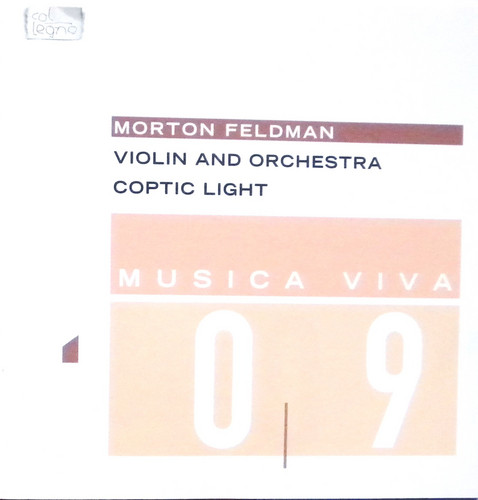
Violin and Orchestra / Coptic Light
Morton Feldman dedicated a whole series of compositions to the relationship between solo instruments and the orchestra: after Cello and Orchestra (1972), Piano and Orchestra (1975), Oboe and Orchestra (1976) and Flute and Orchestra (1977/78) his Viol…
Orchestral Works & Chamber Music
In the early 1970s Feldman increasingly turned his attention to works for orchestra, in most cases combined with a solo instrument, like Piano and Orchestra (1975). One aspect that was important to him in all of these works was a research into sound,…
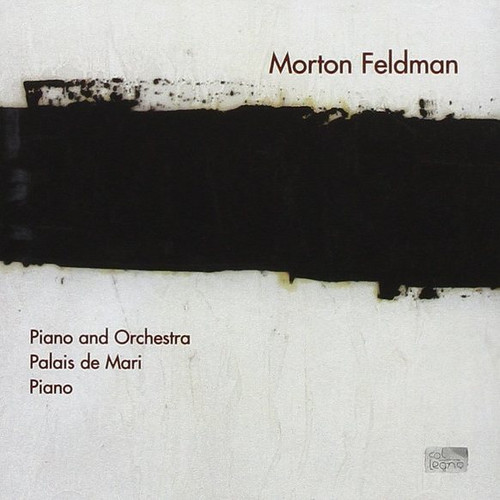
Piano and Orchestra, Palais de Mari, Piano
In the early 1970s, Feldman increasingly turned his attention to works for orchestra, in most cases combined with a solo instrument. The compositions dating from this period include, among many others, Cello and Orchestra (1972) or Oboe and Orchestra…
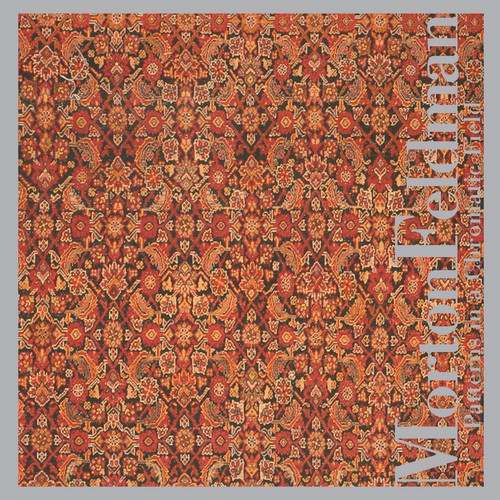
Patterns In A Chromatic Field
Performed by: Charles Curtis (cellos), Aleck Karis (piano); recorded 2003. The definitive recording of one of Morton Feldman's most important and challenging pieces, played at the composer's marked tempos, and taking all the notated repeats. Fitting …
Early Piano Works
For each ecstatic instant / We must an anguish pay / In keen and quivering ratio / To the ecstasy." It almost seems as if Emily Dickinson could have been describing the early piano music of Morton Feldman when she wrote those lines nearly one-hundred…
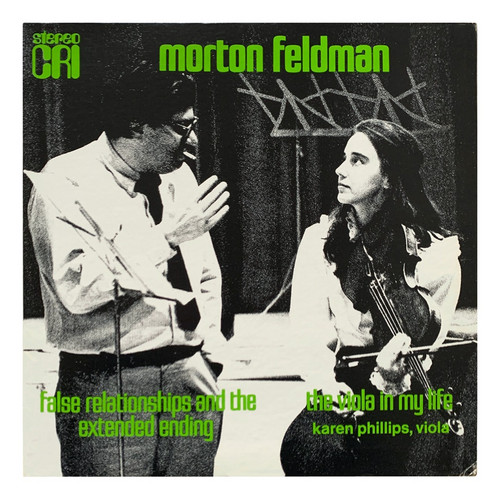
Viola In My Life / False Relationships
False Relationships and the Extended Ending" alternates between exact proportions and "free time" in the vertical style (slowly changing chords, common-tone suspensions etc. in works such as "Atlantis" (1958) and "The Swallows of Salangan" ) which ca…
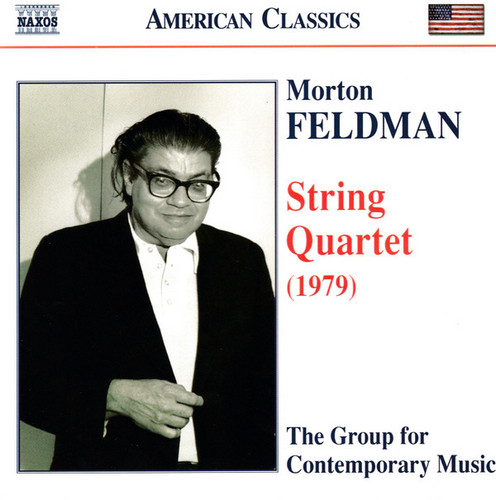
String quartet (1979)
Morton Feldman’s String Quartet (1979) follows over a decade of compositional activity where the composer was constantly occupied with a new piece for orchestra. In the eleven years before the Quartet he produced fifteen orchestral works, beginning w…
Music For Keyboard 1935-1948 / The Early Years
This double-CD set combines two of the key titles of Columbia Records's
legendary "Music of Our Time" series curated by David Behrman. Jeanne
Kirstein's recording of Cage's early keyboard works remains a touchstone
of Cagean interpretation notwith…
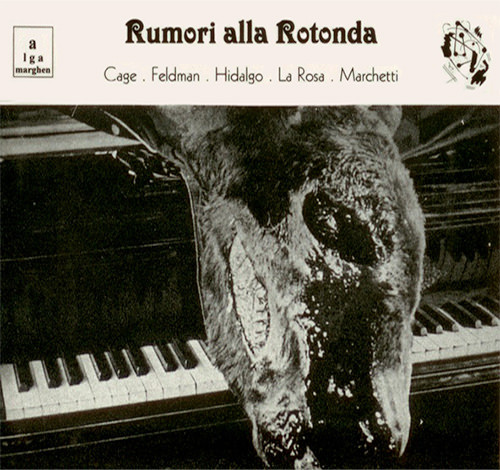
Rumori alla Rotonda
Live recording at the Rotonda del Pellegrini, Milan, January 21st, 1959 featuring John Cage, Morton Feldman, Juan Hidalgo, Leopoldo La Rosa, and Walter Marchetti. Among all the events involving John Cage during the long stay in Europe that followed h…
Silent Pieces - Live At Dacapo II
1995 release ** Special members-only edition for the sponsors' circle of dacapo. Music by: Anton Webern, Morton Feldman, John Cage, Hans Otte, Malcolm Goldstein, Dietrich Eichmann, Yoshikazu Iwamoto.
Beckett Material
Morton Feldman's 1976 trilogy Orchestra, Elemental Procedures (soprano, choir, orchestra; Beckett text) and Routine Investigations, with Claudia Barainsky, WDR Rundfunkchor and WDR Sinfonieorchester Köln under Peter Rundel; recorded 2010 and 2013.