Music from Italy

The Many Voices Of Luciano Berio (LP)
Several vocal pieces spanning from 1952 to 1972 performed by the London Sinfonietta conducted by the composer himself, released by RCA Red Seal in 1975. With insert.

A-Ronne / Cries Of London (LP)
Two great vocal pieces from the mid-1970's performed by the Swingle Singers conducted by the composer himself and released on Decca's "Headline" contemporary music series in 1976. With insert.

Nones / Allelujah II / Concerto For Two Pianos (LP)
Three orchestral pieces spanning from 1956 to 1973 conducted by the composer himself and by Pierre Boulez, released on RCA Red Seal in 1976.

Ulisse (3LP box)
Full recording released in 1973 as a lavish 3LP box set by RAI Radiotelevisione Italiana of the composer's opera completed in 1968, a summa of his art. With original innersleeves and two booklets.
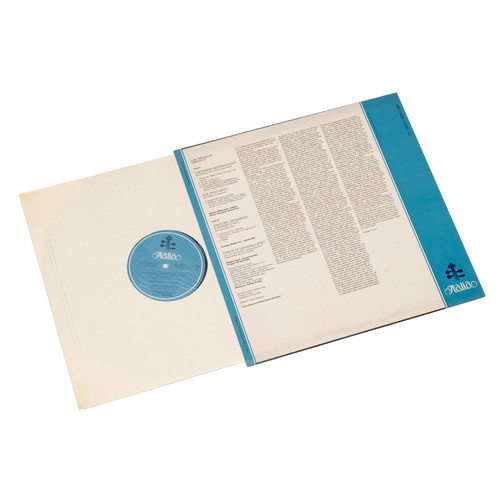
Tartiniana Seconda / Due Studi / Ciaccona, Intermezzo E Adagio / Parole Di San Paolo (LP)
Four pieces for solo (cello), duo (violin and piano) and ensemble spanning from 1945 to 1964 released on Italia in 1977.
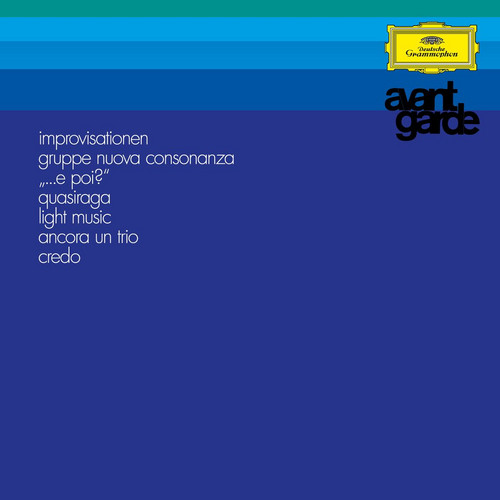
Improvisationen (LP)
The magnificent group of Egisto Macchi, Ennio Morricone, Franco Evangelisti, John Heineman, Mario Bertoncini and Walter Branchi on DGG's famed "Avantgarde" contemporary/electronic music series including a rare electronic piece, released in 1969. Essential.

La Fabbrica Illuminata / Ha Venido, Canciones Para Silvia / Ricorda Cosa Ti Hanno Fatto In Auschwitz (LP)
Three indispensable pieces for voice(s) and tape composed in the 1960's and released on Wergo's great "Studio Reihe Neuer Musik" experimental music series in the 70's. With insert.

Canti Di Vita E D'Amore / Per Bastiana / Omaggio A Vedova (LP)
First recordings of three indispensable pieces composed in the 1960's respectively for soprano and tenore solo and orchestra, magnetic tape and orchestra, magnetic tape, released on Wergo's great "Studio Reihe Neuer Musik" experimental music series in the 70's. With insert.

A Carlo Scarpa · A Pierre · Guai Ai Gelidi Mostri
Three amazingly beautiful compositions from the 1980's for orchestra, contrabass clarinet and flute with live-electronics and ensemble with live-electronics released by Edition RZ in 1990. With insert.

Recreation Concertante / Quarto Concerto (LP)
Two pieces, four orchestra and string orchestra, composed between 1952 and 1954 by the important composer and teacher (of Ennio Morricone, Franco Donatoni, Aldo Clementi and Cornelius Cardew a.o.), released on CBS / Edizioni Suivini Zerboni contemporary music series in 1973.
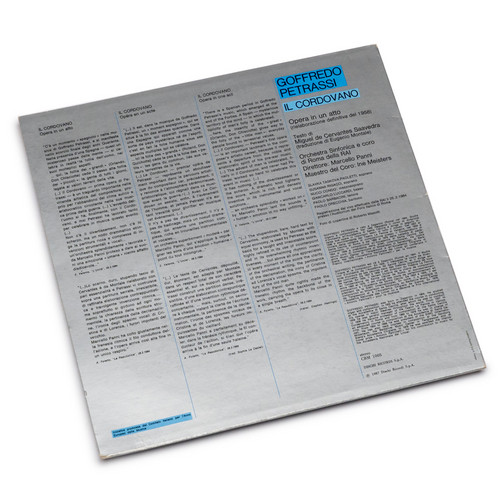
Il Cordovano (LP)
1987 LP on Ricordi's Italian contemporary music series with the 1958 opera in one act by the important composer and teacher (of Ennio Morricone, Franco Donatoni, Aldo Clementi and Cornelius Cardew a.o.). With insert.
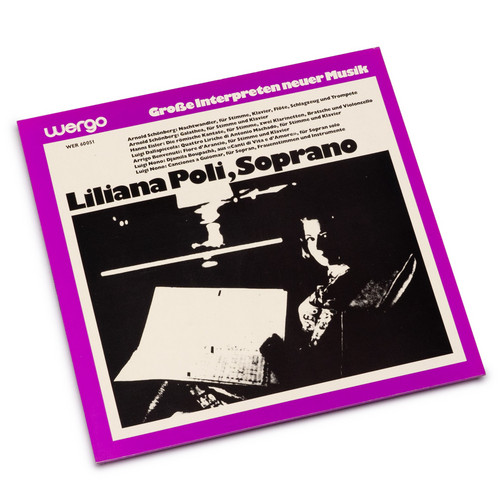
Soprano (LP)
The Italian soprano beautifully sings works for voice and instruments by Arnold Schönberg, Hanns Eisler, Luigi Dallapiccola, Arrigo Benvenuti and Luigi Nono on this 1970 LP on Wergo's great "Studio Reihe Neuer Musik" experimental music series.
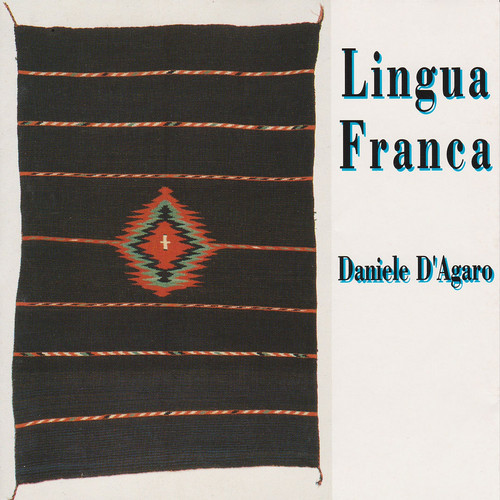
Lingua Franca
Lingua Franca: the language that allows different peoples to understand one another. And what better instrument than the clarinet - voice of klezmer, Alpine folk, New Orleans jazz - to speak across borders? Daniele D'Agaro was born in 1958 in Spilimbergo, Friuli, at the foot of the eastern Alps, where Italy, Austria, and Slovenia merge at a cultural crossroads. In 1979 he debuted with Andrea Centazzo's Mittel Europa Orchestra, then Berlin, then Amsterdam from 1983 - where the Dutch improvised sc…

Tepepa
On Tepepa, Ennio Morricone turns the Mexican Revolution into an operatic fever dream, braiding solemn mariachi‑tinted themes, mystical guitar‑and‑orchestra adagios and defiant song into a score where personal vengeance and collective uprising share the same melodic bloodline.

Lo Squartatore di New York
On Lo squartatore di New York, Francesco De Masi fuses rock‑charged aggression with aching lyricism, setting Lucio Fulci’s urban nightmare to a score where feral action cues collide with the unforgettable tenderness of “New York One More Day” and the bittersweet elegy “Fay.”
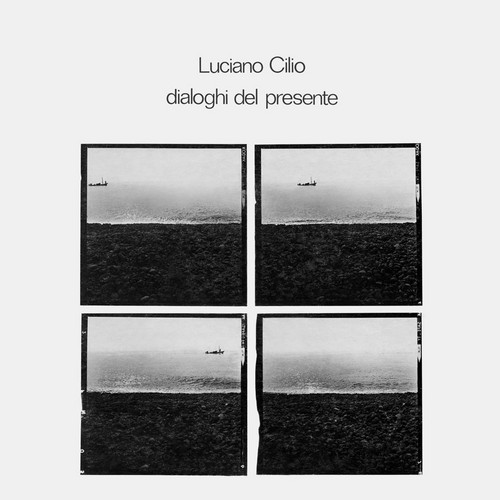
Dialoghi del Presente
Naples, 1977. Luciano Cilio's sole recorded work is pure magic - four "quadri" where strings, woodwinds, wordless voices and solitary guitar trace the edges of silence. Closer to Arvo Pärt and Morton Feldman than to any Italian prog, yet entirely its own universe. Music that breathes, suspends time, breaks your heart without raising its voice. Decades ahead of its time. First ever remaster from the original tapes.

Mimosa Pudica
Mimosa Pudica brings together two works by Luciano Maggiore, both conceived as live performances structured around the presence and behaviour of an audience. In both cases, rhythmic and formal elements arise from acts of observation and listening: eye contact, involuntary sounds, shifts of attention, hesitation, withdrawal.
Mimosa Pudica reconstructs the conditions of these works in the absence of an audience. The record operates as a displacement: a concert without spectators, a live situation…

Park Of Reason
On Park of Reason, Paul Chain loosens doom metal’s grip just enough to let in air, colour and delirium, fusing obsidian riffs, reverb‑soaked keys and his unmistakable glossolalic vocals into a wandering, lysergic meditation on faith, doubt and psychic drift.

Ash (35 Anniversary Edition)
On Ash, Paul Chain strips his sound down to its smouldering core, turning slow‑burn riffs, funereal keys and desolate vocal invocations into a stark ritual of aftermath, where every chord feels like a fragment left behind by some unnamed catastrophe.

Master of All Times
On Master of all Times, Paul Chain sinks deep into his singular doom‑psych continuum, braiding monolithic riffs, church‑organ atmospheres and glossolalic vocals into a slow, occult spiral where time feels stretched, fractured and finally irrelevant.