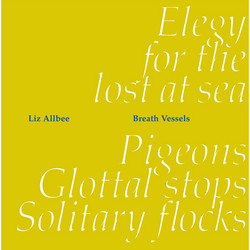
Liz Allbee
Breath Vessels (LP)
Label: Ni-Vu-Ni-Connu
Format: LP
Genre: Experimental
Out of stock
Big Tip! Edition of 300 copies, gatefold cover. Breath Vessels presents Liz Allbee in full architect-of-sound mode, building an imaginary folk music for a time still on its way. These pieces don’t look back to a mythic village past or patriotic songbook; instead they conjure an “orchestra of future souls,” a communal music with no conductor and no fixed tradition, only a shared pulse of air moving between bodies and things. The album’s instruments - breath vessels, tuning forks, sine waves, voice - behave less like a soloist’s toolkit and more like a miniature ecology, each element a way of transmitting vibration, of passing on a charge that is as social and speculative as it is acoustic, aligning Allbee’s practice with the long resonant tones of Pauline Oliveros, the just‑intonation explorations of Ellen Arkbro or Tashi Wada, and the tactile radicalism of composers such as Annea Lockwood and Alvin Lucier.
Central to the record is the idea of “electro-conductive communality for when the power goes out.” Allbee imagines a music that remembers electricity without relying on it, where the habits of feedback, amplification and signal routing are re-enacted through simple resonant systems: hollow objects that bloom when blown into, metal prongs that sing when struck, a voice that threads between pure tone and fragile noise. There is a kinship here with the breath‑driven, body‑centred work of artists like Joan La Barbara or Sainkho Namtchylak, but Allbee bends those concerns toward a collective, post‑apocalyptic imagination, closer in spirit to the speculative communalities of Matana Roberts or the ritualistic electroacoustic worlds of Okkyung Lee and Andrea Neumann. The compositions feel like rehearsals for gathering without infrastructure, sketches of how people might still find each other in sound when circuits fall silent.
The materials themselves carry that aura of salvage and re-use. “Sounding objects built with bodies and for them” suggests instruments hacked together from leftovers - pipes, bottles, offcuts, broken technology - tuned not to equal temperament but to the grain of the person holding them. Breath vessels become both instrument and metaphor: lungs extended by glass, clay, metal, the human body treated as just one chamber in a larger, many-throated organism. Tuning forks and sine waves act as skeletal frames, pure frequencies that anchor the more unruly overtones of voice and vessel, giving each piece a quiet internal physics even at its most wayward; in their focus on minute acoustic phenomena and psychoacoustic shimmer, these pieces sit comfortably alongside the micro‑attentive practices of Sarah Hennies, Olivia Block or Jacob Kirkegaard.
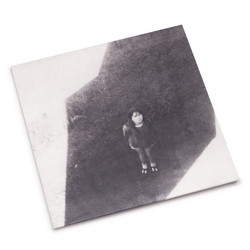
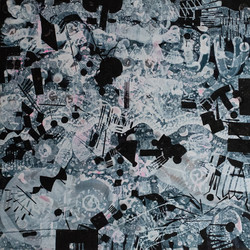
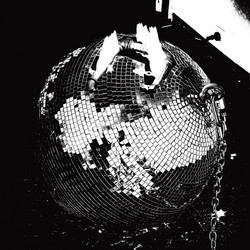
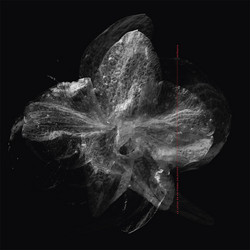
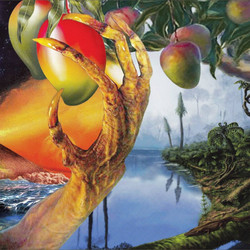
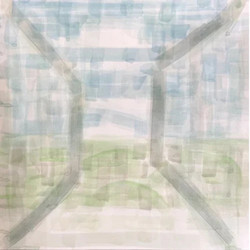
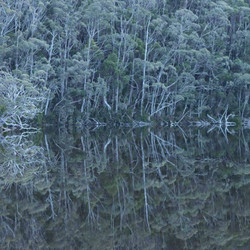
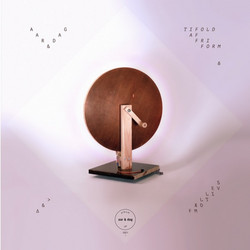
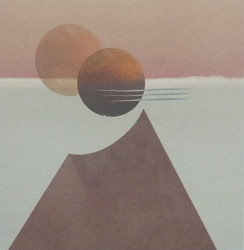
Recorded during a residency at the Cité des Arts in Paris in 2023, the album bears the imprint of a focused, almost laboratory-like solitude, but its ears are turned outward. Edits and mixes by Allbee, with a final sculpting on side B by Joe Talia and vinyl mastering by Andreas “Lupo” Lubich, keep the textures intimate and tactile: you hear air hitting surfaces, metal settling, small frictions that point back to hands and mouths rather than to invisible software. The visual world, shaped by Yaqin Si’s photography and artwork, extends the same logic into images - objects and spaces that look at once provisional and ceremonial, as if they’d been arranged for a gathering that hasn’t quite begun, recalling the object‑based sound environments associated with artists like Eli Keszler or Dominique Répécaud.
Across the record, what emerges is less a fixed style than a proposition: that folk music can be something we haven’t heard yet, a practice built from the residual hum of our present rather than a curated past. Breath Vessels invites the listener into that proposal not as a spectator but as a potential participant, asking you to imagine what you would sound like inside such an ensemble of leftover materials, ruins, memories and detritus. It’s music as blueprint and as séance, a quiet, radical glimpse of how collectivity might resonate when we’re forced to start again from breath, touch and whatever still rings when struck, offering a parallel path for anyone moved by the communal drones of Éliane Radigue, the choral imaginaries of Meredith Monk, or the textural folk‑futures of Circuit des Yeux and Mica Levi.
Recorded in 2023 at Cité des Arts, Paris. Edited and mixed by Liz Allbee. Side B final mix by Joe Talia. Vinyl master by Andreas Lupo Lubich. All compositions by Liz Allbee. Photography and artwork by Yaqin Si.