Nucleus
Elastic Rock (LP)
Tracked express shipping from Italy, no customs or import VAT in the EU. Shipping costs
*2023 reissue* Genius trumpeter and visionary composer Ian Carr was one of the most respected British musicians of his era. He was a true pioneer and saw the potential in fusing the worlds of jazz with rock, just as Miles Davis and The Tony Williams Lifetime did in the US. In late 1969, following the demise of the Rendell-Carr quintet, and tiring of British jazz, Carr assembled the legendary Nucleus. Regarding music as a continuous process, Nucleus refused to “recognise rigid boundaries” and worked on delivering what they saw as a “total musical experience”. We can get behind that.
Under bandleader Carr, Nucleus existed as a fluid line-up of inventive, skilled musicians. This constant evolution and revolution was all part of the continuous musical exploration and discovery that took jazz to new levels. And the music has kept relevant. To steal a line from a review of our re-issue of Roots, when it comes to anything Nucleus “it’s basically already hip-hop”
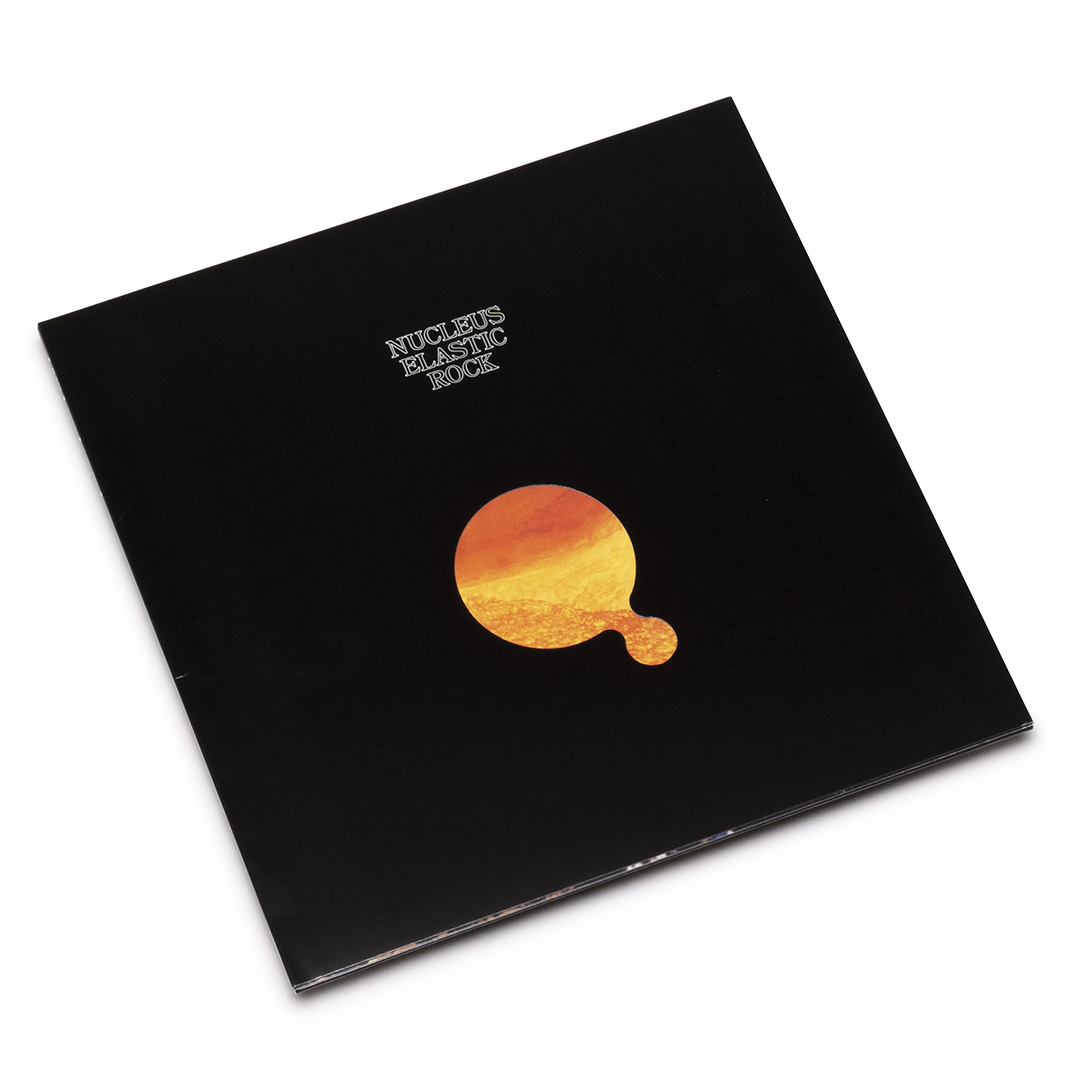
The very title Elastic Rock could be regarded as the group's MO, describing a melting point between their rock and jazz impulses. Indeed, housed in a memorable gatefold jacket designed by Roger Dean, the die cut molten teardrop shape on the front sleeve opens to reveal a fiery volcanic crater. On the back, Dean's drawing has Carr with saxophonist Brian Smith, guitarist Chris Spedding, drummer John Marshall, bassist Jeff Clyne and sax, oboe and pianist Karl Jenkins in a circle, the central core of a movement and the basis for its activity.
Recorded over four days in January 1970, Elastic Rock didn't sound like any other British jazz album. Exploding out the gate, "1916" opens with Marshall's frantic pounding before melancholic horns enter. The smooth title track, "Elastic Rock" is just a gorgeous electric blues track. Light drums, gentle melodic horns, piano and a solid bassline serve as the perfect bed for Spedding's graceful bluesy guitar melodies. The serene "Striation", a Clyne and Spedding collaboration, is led by bowed bass and is the epitome of calm before the late night laid back vibe of "Taranaki" breezes along sweetly and smoothly with great trumpet and tenor.
Format
2023 reissue, 140g vinyl, remastered from the original Vertigo Master Tapes for this edition by Simon Francis, original gatefold sleeve replicated in fine detail
Release notes
Die-cut gatefold sleeve. A Be With Records release, licensed courtesy of Universal Music Operations Ltd. ℗ 1970 Mercury Records Ltd., © 2023 Mercury Records Ltd. All music published by Pop Gun Music Limited With the exception of A5, published by Westminster Music Ltd., and B5, published by Preston Stevens Music Co. Ltd.
| A1 | 1916 | 1:11 | |
| A2 | Elastic Rock | 4:06 | |
| A3 | Striation | 2:14 | |
| A4 | Taranaki | 1:38 | |
| A5 | Twisted Track | 5:19 | |
| A6 | Crude Blues (Part 1) | 0:54 | |
| A7 | Crude Blues (Part 2) | 2:38 | |
| A8 | 1916—The Battle Of Boogaloo | 2:58 | |
| B1 | Torrid Zone | 8:41 | |
| B2 | Stonescape | 2:39 | |
| B3 | Earth Mother | 5:15 | |
| B4 | Speaking For Myself, Personally, In My Own Opinion, I Think… | 1:31 | |
| B5 | Persephones Jive | 2:14 |
- Karl Jenkins
- Baritone Saxophone [Baritone], Oboe, Piano, Electric Piano [Hohner Electra Piano]
- Roger Dean
- Design [Cover Design], Illustration
- Jeff Clyne
- Double Bass, Electric Bass
- John Marshall
- Drums, Percussion
- Chris Spedding
- Guitar
- CB
- Lacquer Cut By
- Sigurdur Thorarinsson
- Photography By
- Ævar Jóhannesson
- Photography By
- Pete King
- Producer
- Brian Smith
- Tenor Saxophone [Tenor], Soprano Saxophone [Soprano], Flute
- Ian Carr
- Trumpet, Flugelhorn


