László Sáry
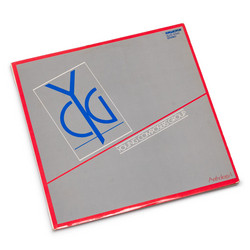
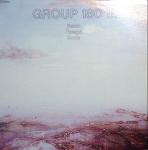
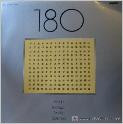
Flowers Of Heaven / Prelude For Four Keyboard Instruments (LP)
condition (record/cover): NM / NM
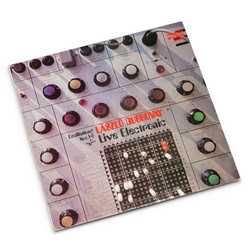
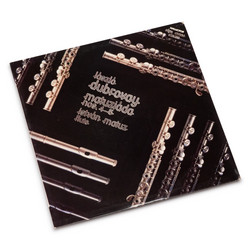
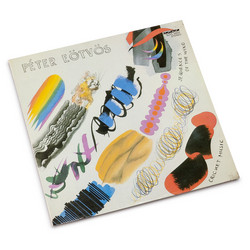
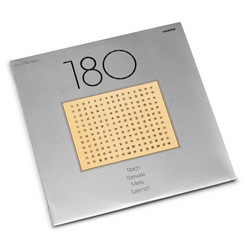
In 1970, three composers at the Budapest Academy of Music - László Sáry, Zoltán Jeney, and László Vidovszky - founded the Új Zenei Stúdió (New Music Studio), soon joined by Péter Eötvös, Zoltán Kocsis, and others. Over the following two decades, the Studio introduced more than six hundred works of contemporary music to Hungarian audiences, operating under the protection of state institutions while building connections to a world - Cage, Feldman, American minimalism, post-Webernian serialism - that the Soviet cultural apparatus had little interest in promoting. This LP is one of the primary documents of that project.
The title work, Az ég virágai (Flowers of Heaven) by Sáry, was composed in 1973 for one to four pianos - a scoring that already signals the processual, permutational thinking central to his practice. Sáry's encounter with Christian Wolff's music at Darmstadt in 1972 was decisive: what he found there was not a style to adopt but a permission to reframe the relationship between composer, performer, and material, to treat composing as a form of structured listening rather than imposition. Jeney's contribution extends this logic into more austere territory; Vidovszky's into open, indeterminate forms. András Wilheim's Prelude for Four Keyboard Instruments completes the set.
Extensive use of silence, minimal material subjected to patient transformation, the keyboard as resonating object rather than harmonic mechanism. These are not the only tools at work, but they are the common thread - a shared aesthetic that, heard here on one of the few Hungaroton documents of its kind, reveals the depth and coherence of what the New Music Studio was building. Original pressing.