Peter Eötvös
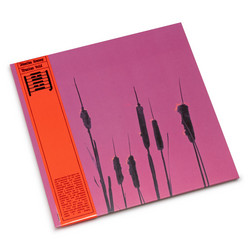
Cricket Music / Sequences Of The Wind (LP)
condition (record/cover): NM / NM Insert included.
In 1970, Péter Eötvös traveled to Japan as a member of Karlheinz Stockhausen's ensemble for the Osaka World Expo. He returned with a bag full of field recordings - birdsong, frogs, insects - and two compositional concepts that would occupy him for years. This LP, issued by Hungaroton in 1985, documents both.
Cricket Music (1970) is a tape composition built entirely from recordings of crickets - cut, layered, and organized with the precision Eötvös described as "cut and combed like Japanese gardens, a five-voiced madrigal-comedy performed by the tiniest musicians in the world." It is his only essay in tape collage: musique concrète in the strictest sense, but guided by an animist attentiveness to the material that belongs to a different tradition entirely - Shintō, not the GRM. The result is as radical as it is beautiful, forty minutes that dissolve the distinction between field recording and composition.
Sequences Of The Wind (1975, revised 1987) works from a different natural law: the phenomenon of difference tones, the phantom frequencies generated when two pitches interact. Eötvös derived the work's harmonic structure, metre, and rhythm from these acoustic properties alone - a form of natural counterpoint, invisible yet audible in the long sustained tuba line that threads through the ensemble's chromatic surface. The philosophical model is Zen: calm in motion, motion in calm. Wind imitation performed live by László Vidovszky.
Eötvös would go on to become one of the great conductors of his generation and a major opera composer. This LP preserves him at the moment of discovery - young, working at the intersection of Stockhausen's studio and the Japanese natural world, producing two works of genuine and lasting strangeness.