Kocsár Miklós, Lajos Papp
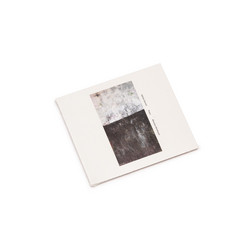
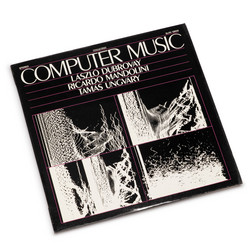
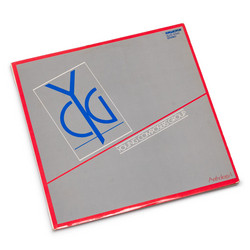
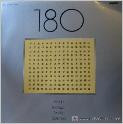
Repliche / Variazioni / Lonely Song / Dialogo / Meditations (LP)
condition (record/cover): NM / EX
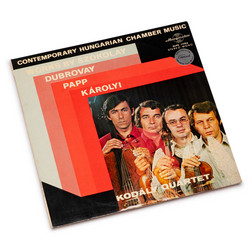
Two composers born in Debrecen within two years of each other - Miklós Kocsár (1933-2019) and Lajos Papp (1935-2019) - who followed parallel but distinct paths through the postwar Hungarian musical scene.
Kocsár studied composition with Ferenc Farkas at the Liszt Academy, graduating in 1959, then spent a decade as conductor and musical director at the Madách Theatre in Budapest before joining the staff of the Bartók Conservatory and, from 1974, the Hungarian Radio. His music sits at a characteristic mid-point of the generation trained in the late 1950s: technically assured, drawing on chromaticism without full atonality, shaped by a strong instinct for vocal and choral writing that came to define his most celebrated works. The pieces here - orchestral and chamber works from the 1960s and early 1970s - show the language of his earlier period: formal titles like Varianti, Sequenze, Formazioni that echo the Italian post-war avant-garde vocabulary while remaining rooted in a more immediately communicative mode.
Papp's formation was more solitary in one respect: twelve-tone technique and the Second Viennese School were not part of the curriculum at the Academy when he studied there, and he analysed the works of Schoenberg, Berg, and Webern on his own. He graduated as a composer in 1960 and built a parallel career as pianist and pedagogue that eventually brought him international recognition. His music on this LP reflects that dual formation - technically equipped for serial thought, temperamentally drawn toward expressive directness. Together the two sides of this LP constitute a representative portrait of the middle generation of Hungarian composition in the decades before Kurtág's ascent changed the terms of the conversation. Original Hungaroton pressing.