Half-speed mastered from the original tapes. Gatefold sleeve with archival artwork and 16-page booklet. May 25, 1973. Two records enter the world on the same day, bearing the first and second catalogue numbers of a brand new label called Virgin Records. V2001 is Mike Oldfield's Tubular Bells - a record that will sell sixteen million copies, launch an empire, and embed itself in the cultural mainstream forever. V2002 is Gong's Flying Teapot - a record about Pot Head Pixies who ride interstellar teapots and transmit cosmic messages via a station called Radio Gnome Invisible. It will sell considerably fewer copies. It will change minds.
Flying Teapot arrived with its own origin myth. Gong were under contract to the French label BYG Records when they entered The Manor Studios in Oxfordshire in late 1972 to begin recording. Midway through the sessions, BYG collapsed - offices stripped, phones dead. The band was stranded. Virgin, at that point little more than a chain of record shops and a residential studio, stepped in and absorbed the record into its fledgling catalogue. The album that resulted carries the tangled DNA of that moment: a French-Australian-English collective, exiled and improvising, making music that belonged to no country and no genre, released by a label that didn't yet know what it was.
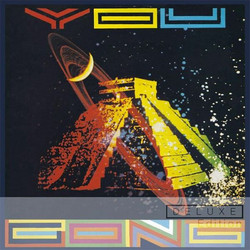
The music itself is the opening chapter of the Radio Gnome Invisible trilogy - the three-album cycle, completed by Angel's Egg and You, that constitutes Gong's central creative achievement. The mythology is gleefully absurd: Zero the Hero, a hapless earthling, encounters the Pot Head Pixies on Planet Gong. But the absurdity is a vehicle, not a destination. Underneath the cartoon narrative and the whispered incantations lies music of genuine originality and formidable instrumental power.
Daevid Allen's glissando guitar and sardonic vocal theatre. Gilli Smyth's "space whisper" - a vocal technique entirely her own invention, hovering between speech, breath, and incantation. Didier Malherbe's saxophone and flute, rooted in jazz but reaching toward something far more feral. Tim Blake's synthesizer, sculpting vast electronic spaces with the tools of early analogue technology. Francis Moze on bass, Laurie Allan on drums, Rachid Houari on congas - a rhythm section that swings between tight funk propulsion and total psychedelic disintegration. And arriving late in the sessions, a young English guitarist fresh from playing with Kevin Ayers: Steve Hillage, who contributes relatively little here but would soon become one of the band's defining voices. The whole thing was produced by Giorgio Gomelsky - the man who had managed the Yardbirds and discovered the Rolling Stones - and engineered by Simon Heyworth and Tom Newman, the same team that was simultaneously bringing Tubular Bells into the world one studio room away.
The title track is perhaps the single most thrilling piece of music Gong ever recorded - over ten minutes of interlocking rhythms, saxophone incantations, and a bass line so deep and relentless it functions almost as a trance induction. "Zero the Hero and the Witch's Spell" pushes the jazz-rock element further, the ensemble stretching out into long improvisational passages where individual contributions dissolve into collective texture. "The Pot Head Pixies" and "Witch's Song / I Am Your Pussy" occupy the opposite pole - compressed, antic, deliberately naïve, Smyth's voice phasing in and out of audibility like a transmission from another dimension. "The Octave Doctors and the Crystal Machine" bridges the two modes, moving from whispered electronics into dense ensemble playing and back again. Nothing else sounded like this in 1973. Precious little has sounded like it since.
This Record Store Day 2026 edition, mastered at half-speed by Grammy Award-winning engineer Lewis Hopkin at Stardelta Studios, delivers a level of sonic detail the album has never previously achieved on vinyl. Every layer of this densely woven music - every ripple of Blake's synthesizer, every breath of Smyth's whisper, every harmonic overtone of Malherbe's saxophone - is brought into luminous clarity. The 16-page booklet explores the storytelling and mythology of the Radio Gnome Invisible saga with archival artwork. The beginning of one of the strangest and most beautiful journeys in the history of recorded music, restored to its most vivid form.