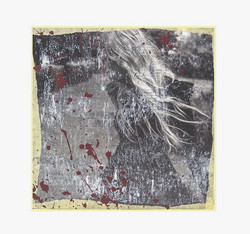
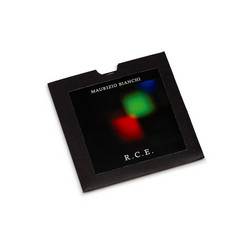
Limited edition of 66 copies in canvas bag. 1980. Working alone from his home in the Mantuan town of Pomponesco, twenty-four years old, equipped with little more than an analogue synthesiser, a tape machine, and a small bank of effects, Maurizio Bianchi closed the chapter of his earlier Sacher-Pelz project and inaugurated, almost overnight, the body of work that would place him at the heart of European industrial music. Across roughly twelve months he produced an extraordinary run of self-issued and small-label cassettes that, in their density and consistency, remains among the most singular outpourings of any artist in the post-war avant-garde. I.A.V.C. Tapes gathers the four foundational documents of that year, in chronological order: Industrial Tape, Atomique Tape, Voyeur Tape, Cold Tape.
Inspired by the early German electronic vanguard of Tangerine Dream and Conrad Schnitzler, and by the radical provocations of Throbbing Gristle, Bianchi was simultaneously beginning to correspond with Merzbow, SPK, Nigel Ayers, and William Bennett, the small network of letters and exchanged cassettes through which the sound now known as industrial first articulated itself. The four tapes gathered here are the documents of MB's arrival, fully formed, into that conversation.
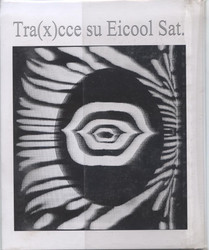
Industrial Tape, recorded in May 1980 and self-released as catalogue 01, is the founding gesture, four synthesiser-based pieces that move from proto-soundtrack territory into rhythmic loops, noise barrages, and slow corrosive drones. Atomique Tape, recorded in June, opens out into two long pieces in which low-end mass and corroded high frequencies are pulled across the tape in slow, irregular gestures. Voyeur Tape, recorded in July and issued shortly thereafter on Andrew Cox's YHR Tapes in the United Kingdom (YHR 005) as the first MB cassette to cross the Channel, leans hard into a sense of intrusion, the title declaring its own listening position. Cold Tape, recorded in the autumn and issued by YHR as the companion volume (YHR 006), emphasises out-of-phase loops and decaying tape, prefiguring by more than two decades the disintegration aesthetics later developed by William Basinski.
Together, these four tapes constitute the inner architecture of MB's 1980, the year in which Bianchi essentially codified an entire vocabulary that the wider industrial and harsh noise traditions are still drawing on, more than four decades on.
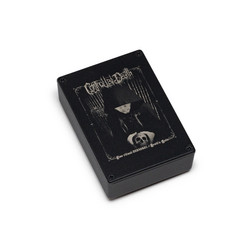
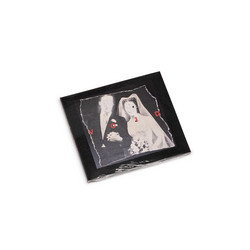
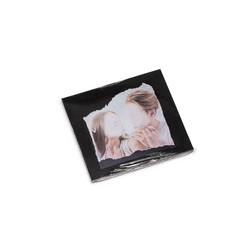
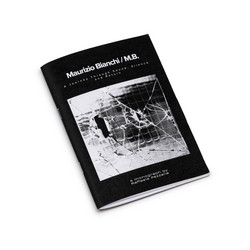
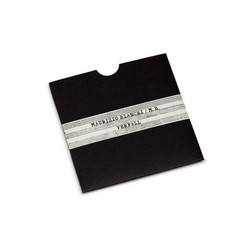
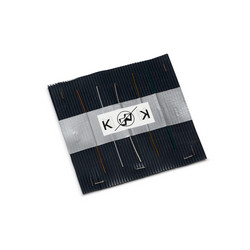
Issued by StAnDa, side-imprint of Silentes dedicated to small-run reissues from MB's tape archive, in a strictly limited edition of 66 numbered copies. Each box contains the four CDs, a piece of printed banner canvas bearing the MB logo and the I.A.V.C. Tapes title, and a special insert, all housed in a black cotton bag with a second printed canvas banner secured by metal staples. Issued in two parallel variants of 33 copies each: 33 with the bag-mounted banner in white and the loose canvas insert in black, 33 with the bag-mounted banner in black and the loose canvas insert in white.




























![The Bunker Years [2006-2014]](https://cdn.soundohm.com/data/products/2025-05/R-14433460-1574443044-2868-jpeg.jpeg.250.jpg)