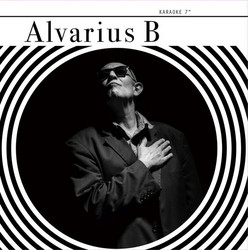
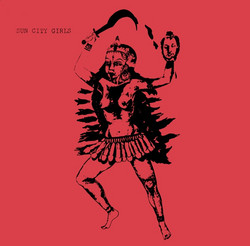
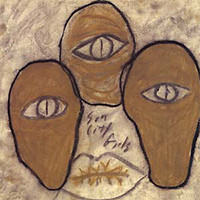
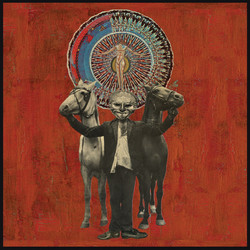
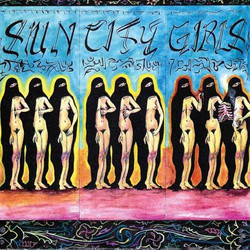
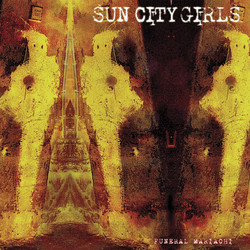
With Malarial Dream, Alvarius B. - the solo avatar of Alan Bishop - resurfaces from his adopted home of Cairo with a record that feels less like a follow‑up and more like an apparition. Tracked in and around a tangle of other projects over the past several years, it captures Bishop in a different register from his recent, caustic singer‑songwriter outings. Instead of venomous monologues and cracked torch songs, this album drifts closer to the twilight zone of late Sun City Girls - think Mister Lonely and Funeral Mariachi - where melody, atmosphere and a kind of exhausted tenderness slip in through the back door. The “malarial” in the title is apt: the music moves in waves of clarity and delirium, heat‑blurred and slightly poisonous, yet weirdly soothing.
The setting is a psych‑warped folk landscape steeped in Middle Eastern modes and the broader “beyond” that Bishop has been chasing for decades. Mostly instrumental, the record leans on winding themes and small, memorable motifs rather than song‑form in the strict sense. Two obscure covers surface like half‑remembered radio ghosts, but the bulk of the material is original, written to take advantage of a remarkable cast of players orbiting Cairo’s experimental and jazz scenes. You can hear the city in the details: stray percussion patterns that feel like they escaped from a street procession, microtonal inflections in string lines, the way drones and harmonies seem to curl around each other like incense smoke in a too‑hot room.
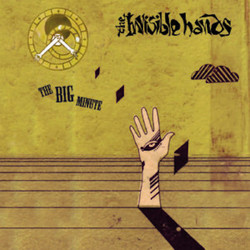
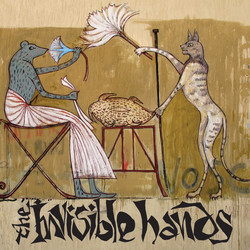
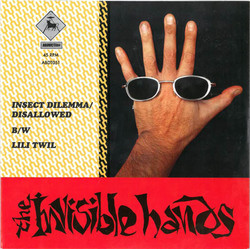
Bishop’s guitar and compositional voice sit at the centre, but Malarial Dream is very much a collaged ensemble record. Adham Zidan, Aya Hemeda, Cherif El Masri and Morgan Mikkelsen - all associated in one way or another with The Invisible Hands - bring a lived‑in flexibility, able to shift from skeletal folk frameworks to denser, almost prog‑like passages without losing the thread. Maurice Louca and Sam Shalabi, known for their work with The Dwarfs of East Agouza, help tilt the arrangements toward trance and destabilisation: keyboards, electronics and guitar colour smear the edges of otherwise simple progressions, turning them into slowly rotating mobiles of sound. Elsewhere, contributions from Amélie Legrand, Asher Gamedze, Eyvind Kang, Hana Al Bayaty, Huda Asfour and Sammy Sayed add strings, reeds and rhythmic detail, widening the palette until it feels less like a band and more like a small, shifting orchestra.
The mood throughout is nocturnal, more candlelit than sun‑blasted. Pieces often start with a bare figure - a fingerpicked pattern, a muttered line on oud or guitar, a skeletal rhythm - then accumulate detail: a bowed counter‑melody here, a percussion flourish there, faint electronics seeping up from the floorboards. The psych element is less about fuzz and freak‑outs than about subtle warping: pitches bend just off centre, tempos waver like someone breathing through a fever, harmonies resolve in slightly unexpected places. At times the music settles into a kind of desert‑chamber minimalism; at others, it hints at film score, as if these were cues for a movie that flickers in and out of existence while you listen.
Produced by Alvarius B. with Adham Zidan, Malarial Dream carries the handmade, one‑off aura that has always surrounded Bishop’s work, but it doesn’t feel minor or throwaway. Instead, it reads like a sideways summation of where he’s arrived after fifteen years in Cairo: a space where the ghosts of Sun City Girls, Arabic song, free improvisation and private‑press folk records all converse at low volume. For longtime followers, the album offers the pleasure of recognising familiar impulses - the bittersweet melodies, the taste for the obscure, the dark humour lurking at the edges - in a new, humid environment. For newcomers, it’s a gently disorienting entry point: a fever dream you step into halfway through, and leave unsure of exactly what happened, only that you want to go back in.