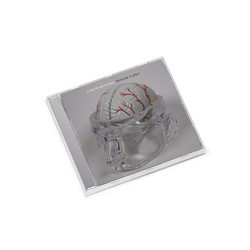
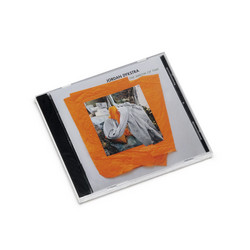
Notebook is the name Lukas Ligeti gives to an album, an ensemble and a way of working that refuses to separate composition from improvisation. Born in 1965 and long active at the crossroads of contemporary music, experimental jazz and global traditions, Ligeti has developed Notebook as an evolving practice: a set of conditions under which structure and spontaneity blur, his own compositional voice remains unmistakable, and the musicians around him are granted real agency as co‑shapers of the sound. The project is less a fixed “group concept” than a living laboratory for what happens when highly trained players are invited to think aloud.
The ensemble on this recording, Lukas Ligeti’s Notebook, is built from musicians who thrive in those in‑between spaces: Dan Blake (saxophone), Ricardo Gallo (synthesizer), Tom McNalley (guitar), Eyal Maoz (guitar), Adrianna Mateo (violin), Rick Parker (trombone), and Ligeti himself on drums, glockenspiel, pre‑recorded piano, whistling and as conductor. Each member is fluent enough to move from densely notated passages to focused improvisation and to slide between idioms as the moment requires, often within a single piece. They might pivot from brittle counterpoint to groove‑like undercurrents, from extended techniques to luminous, almost song‑form lyricism, without ever losing the thread. That flexibility is what allows Ligeti to write music that demands both precision and risk, and to trust that the band can hold these demands in balance.
All four pieces on Notebook emerge from a multifaceted compositional process. Sometimes Ligeti begins with a handwritten score that combines exactly notated pitches and rhythms with more open materials: melodies without fixed durations, rhythmic patterns without assigned notes, notated processes, lists of parameters, cues, “things to do” and “things not to do.” In other cases, the starting point might be a page of verbal instructions or a recorded sound to be answered and transformed. Over rehearsals and performances, he freely mixes these modes of transmission, reshaping material, tightening or loosening constraints, always with an ear to how best to position the players to make conscious choices while realising a very clear artistic vision.
The resulting music sits fully on the composition/improvisation continuum rather than at either end of it. There are moments where the underlying design is palpable - intricate ensemble alignments, long‑range harmonic trajectories, carefully paced textural shifts - and others where the spontaneity of individual voices comes to the fore. Much of the album inhabits the gradations in between, where you can no longer say with certainty whether a given gesture was prescribed or invented on the spot. Ligeti talks about leaving room for “an infinite amount of right”: multiple valid continuations within a defined frame, each performance a different path through the same landscape.
For listeners, Notebook offers the rare experience of hearing music that feels rigorously shaped yet disarmingly spontaneous. It has the clarity and contour of composition, the surprise and volatility of improvisation, and the pleasure of hearing musicians negotiate that terrain together in real time. As an album, an ensemble and a method, Notebook documents where Lukas Ligeti’s practice currently stands - and hints at the many directions it might still unfold.