Tying every symbol to an idea has made the world manageable, but also predictable. Suspending the pact, delaying to denominate, letting sound remain pre-conceptual for an instant leads to confusion; nameless, all things slip away, lose direction and blend in with the background noise. Here lies the danger of pure indifference where all things are indistinguishable and listening risks becoming pure perception. It is not a question of refuting meaning, but rather of embracing that latency where form organises itself before being captured by a name. It is possible, though, to start off from the contrary. From the name to then arrive at the meaning, the drift: to the thing in itself.
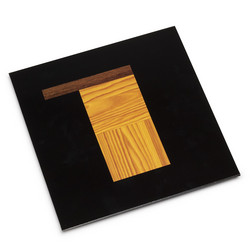
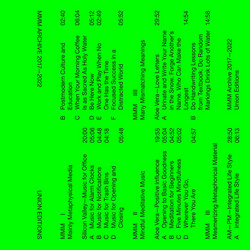
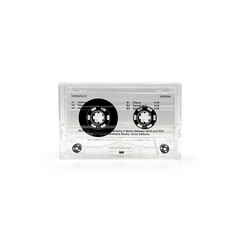
Not all music is able to come to terms with physical reality. By beginning with the name it is possible to unhinge this mechanistic dimension and arrive in another dimension that permits pushing the instruments to their limits so any grip on their voice is lost. With these seventeen incursions Panoram enters into a new and unmapped territory of defamiliarized listening to that part of a piano that doesn’t exist, beyond words and in place of composed familiarity. The result is one of sounds and rhythms emerging from thoughts which are lost for words.
Each piece of data, once transliterated on felt or wood, generates surplus: ghost harmonics, resonances that follow one another, at unusual speed. Experimentation in some ways appears out of date. In an epoch that confuses complexity with quantity, the Disklavier restores an intransitive physicality to music: a precision that doesn’t serve to dominate but rather to observe as if form, even under control, to keep on producing brief unexplored exploration thresholds. It’s enough to let a cat walk on a piano to create something: but get rid of the unnecessary. These forms created by Panoram are full of something.