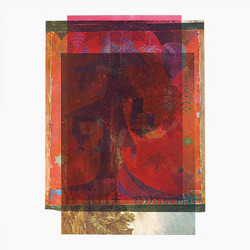
Various
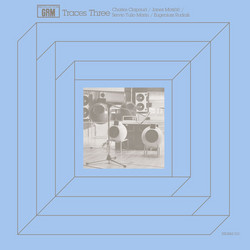
Traces One
Tracked express shipping from Italy, no customs or import VAT in the EU. Shipping costs
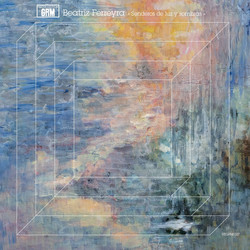
Another indispensable glimpse into the GRM archive courtesy of the mighty Editions Mego, 2014 repress. Beatriz Ferreyra's "L' Orvietan" (1970) is a work composed of two separate movements, the first drawing from electronic sounds, the second from concrète ones. These two sources do not meet, but tend equally towards sound antagonism and a complementarity of spirit. Philippe Carson Turmac's (1961) was created from machine-sounds from the Stuyvesant factories (Holland). Three movements follow one another: first, the spell of rhythms and a build-up that gradually removes the listener from mechanical reality. A more animated movement follows, full of contrasts. The third part is a long crescendo in terms of intensity, density and thickness, which results in a paroxysm. "The noise environment of the workplace is thus transposed, ennobled and magnified." (J. Roy, 1961). Edgardo Canton's "I palpiti" (1966) is described by the artist as follows: "For some time I thought that Gaetano Donizetti had written an aria called "I palpiti," but apparently this is not the case. Nevermind. This piece acquired an evocative value linked to the pleasure the music of this composer gives me. Just like the fervent 'prima donna' donizetian choirs, anything that lives, also pulses, shivers and quivers. These are the qualities of life I have tried to convey here." "Chemins d'avant la mort" (1968) is one of the few works created by Francis Régnier at the GRM, where he was technical coordinator. It is a short piece, composed as a gesture, a dramatic sound blast stretched between two sound lines rising from and returning to silence. Mireille Chamass-Kyrou's "Etude 1" (1960) consists of three sequences, the first two each develop a single sound object. The one that generates the first sequence is characterized by an asymmetrical crescendo-decrescendo and a material whose grain constantly fluctuates. The second sequence multiplies a sound object reduced to its attack in tiny elements divided into three zones that differentiate the overall density and size of the elements: Giant molecules, more defined constellations and fine dust sound. They gradually condense in the third sequence as a kaleidoscopic stretto. Cut by Rashad Becker at Dubplates & Mastering, Berlin, June 2012.
Format
Cut by Rashad Becker at Dubplates & Mastering, Berlin, June 2012
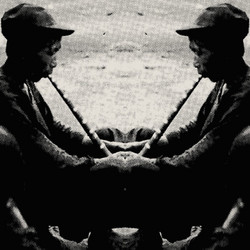
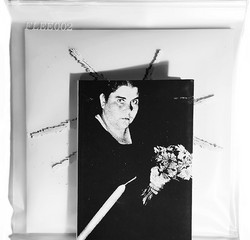
Photo: Laszlo Ruszka (07/01/1977) © Ina
Coordination GRM: Christian Zanési and François Bonnet.
1970, 1977 INA-GRM
© 2012 Recollection GRM
Released in association with Editions Mego
Courtesy of INA-GRM
Release notes
A1 - 1970 A2 - 1961 B1 - 1966 B2 - 1968 B3 - 1960 Cut at Dubplates & Mastering, Berlin, June 2012 Photos: 1962 © Ina ℗ 1960, 1961, 1966, 1968, 1970 INA-GRM. © 2012 Recollection GRM. Released in association with Editions Mego. Courtesy of INA-GRM. Packaged in embossed jacket with printed inner sleeve.
| A1 | L’Orvietan | 12:58 | |
| A2 | Turmac | 9:45 | |
| B1 | I Palpiti | 7:59 | |
| B2 | Chemins D'avant La Mort | 4:20 | |
| B3 | Etude 1 | 5:09 |
- Christian Zanési
- Coordinator [Coordination GRM], Liner Notes
- François Bonnet
- Coordinator [Coordination GRM], Liner Notes
- Peter Rehberg
- Executive-Producer [Executive Production]
- Rashad Becker
- Lacquer Cut By [Cut By]
- Stephen O'Malley
- Layout
- E.C.
- Liner Notes
- J. Roy
- Liner Notes
- Valérie Vivancos
- Liner Notes [Translations]
- Laszlo Ruszka
- Photography By [Photos]
- Jonathan Fitoussi
- Transferred By [Digital Transfer]