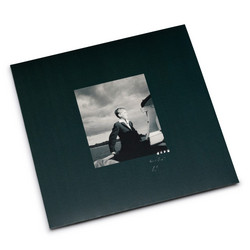
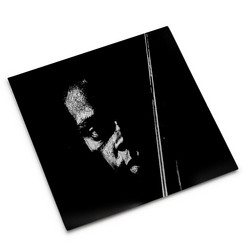
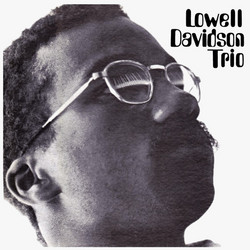
** 2026 Repress ** Trio is the kind of record that feels like a portal opening and then snapping shut. Recorded on July 27, 1965, it captures Lowell Davidson in the only session he would ever release: a single, incandescent encounter with bassist Gary Peacock and drummer Milford Graves that has echoed far louder and longer than its modest discography footprint would suggest. Davidson, then a biochemistry major at Harvard, arrived in New York on the strength of Ornette Coleman’s recommendation alone. ESP‑Disk founder Bernard Stollman signed him without having heard a note, trusting Ornette’s word that here was a pianist who thought and played at the outer edge. Within one day in the studio, that gamble paid off in a document that sits alongside the most adventurous piano statements of its era.
The trio’s chemistry is immediate and volatile. Peacock, already deep into his journey with both mainstream and free contexts, brings a bass sound that can pivot from rock‑solid ostinato to singing counter‑melody in a breath. Graves, “ever amazing,” plays the kit as a whole body instrument: polyrhythms skittering across toms and cymbals, pulses that imply time while constantly fracturing it. Yet for all their firepower, the rhythm section listens more than it leads, carving out shifting spaces into which Davidson can hurl his ideas. The interplay is dazzling, but the record is unmistakably the pianist’s stage.
It was inevitable that critics would reach for Cecil Taylor as the closest point of comparison; in 1965 there were only a handful of pianists prepared to abandon conventional swing and tonal stability so decisively. But Davidson is no clone. Where Taylor often floods the field with dense, relentless energy, Davidson cultivates an almost architectural sense of space. He is capable of long, two‑handed, interlocking runs that seem to braid around an invisible axis, and of “spicy” dissonances that jolt the ear – stacked intervals, abrupt registral jumps, harmonies that flicker between implied tonality and outright fracture. Just as crucial are the moments when he pulls back: shimmering, almost Impressionist voicings that hang in the air; brief passages of poignant lyricism where a line sings out of the surrounding turbulence with startling clarity; pockets of silence that function as structural pillars rather than mere absence.
This dynamic range gives Trio a sense of narrative without resorting to conventional themes or head–solo–head forms. Pieces feel less like “tunes” than evolving environments. A performance may begin with sparse, widely spaced notes, as if Davidson were testing the room’s resonance, then slowly accrue density as Peacock and Graves answer with their own clusters and flurries. Elsewhere, the pianist plunges in with both hands, unleashing cascades that the others catch and refract, only to suddenly strip back to a handful of isolated tones. The result is music that remains gripping not because it is uniformly “intense,” but because it constantly recalibrates its own pressure, asking the listener to follow each shift in weight and colour.