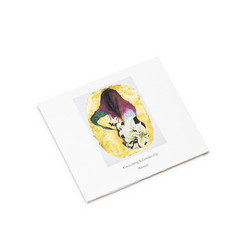
** 2026 Repress ** The Call has long been framed as the thank‑you note Henry Grimes received for a decade of service in the avant‑garde trenches. It’s a neat story, but it sells the record short. By the mid‑60s, Henry Grimes had already lived multiple jazz lives: holding down bass lines for Benny Goodman and Arnett Cobb, threading through the cool and hard‑bop architectures of Gerry Mulligan, Lee Morgan and Sonny Rollins, navigating McCoy Tyner’s harmonic weather systems, and plunging headlong into the new language with Steve Lacy, Don Cherry, Cecil Taylor and Albert Ayler (including Ayler’s Spirits Rejoice). You can hear all those experiences compressed into his playing, but The Call is not a reward for past labour; it’s a clear argument that Grimes could carry a date entirely on his own merits.
Rather than fronting a conventional horn‑plus‑rhythm quartet, Grimes opts for a trio that exposes him completely: bass, clarinet, drums. Clarinetist Perry Robinson, described by ESP founder Bernard Stollman as “a virtuoso who merits far wider recognition,” proves an inspired partner. His tone can pivot from woody lyricism to tart, microtonal smears in a breath, a flexibility that meshes beautifully with Grimes’s melodic approach to the bass. Drummer Tom Price, a stalwart presence on several ESP‑Disk releases, supplies the third voice, neither timekeeper nor mere colourist but a restless, responsive engine that constantly re‑draws the rhythmic frame.
What emerges is a record that quietly upends clichés about “free jazz” from the era. The Call is certainly open and unscripted, but it does not hew to the caricature of unrelenting full‑bore frenzy. Grimes’s lines are songful even at their most abstract, often taking on the role a second horn might occupy in a more mainstream setting. He moves in and out of arco, lets motifs recur and evolve, and treats register and dynamics as compositional parameters. Robinson, for his part, resists the temptation to simply spray notes over the top; he listens, leaves space, enters with phrases that sometimes shadow the bass, sometimes cut across it at oblique angles. Price stitches the two together with cymbal commentary, sudden snare flurries, and pulses that surface and dissolve rather than marching in straight four.
Because of that collective discipline, the album feels less like a leader date with accompaniment and more like a three‑way conversation in real time. Themes emerge and evaporate; textures thicken, then thin; moments of near‑silence give way to brief flare‑ups of intensity. The Juilliard training in Grimes’s background is audible not as classical gloss, but as a certain clarity of intention – even his wildest gestures land with a sense of placement. You’re aware, track after track, of three musicians actively listening to one another, testing responses, pulling back when needed, and allowing the music to find its own shape rather than forcing it into pre‑set forms.
The Call also sits at a poignant juncture in Grimes’s story. Around the time of its release, he was one of ESP’s most active bassists, appearing on multiple LPs in the catalogue and anchoring some of the label’s most adventurous sessions. Then, after a 1967 appearance on Marzette Watts’s album, he disappeared from the scene so completely that rumours of his death circulated for years. The eventual revelation that he was alive, and his remarkable re‑emergence in 2003 – moving back to New York and reengaging in performance and recording with undimmed curiosity – retroactively charge The Call with a sense of both loss and continuity. It captures Grimes at an early peak, fully engaged with the possibilities of free improvisation, yet also offers a glimpse of the musical personality that would resurface decades later: searching, generous, refusing to treat abstraction and melody as enemies.