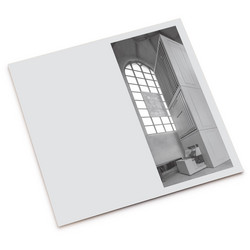
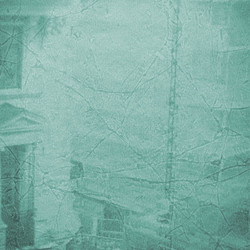
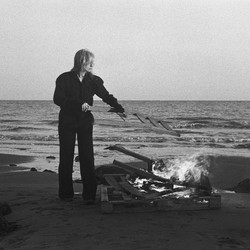
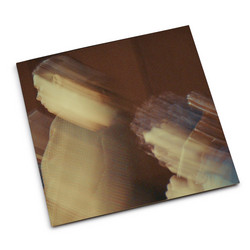
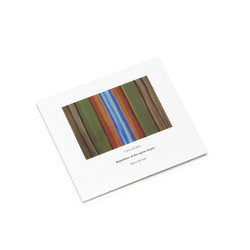
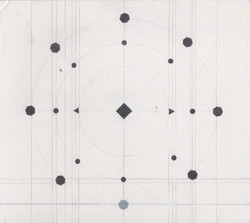
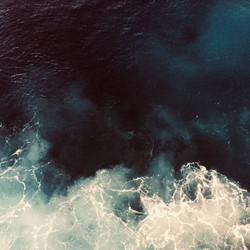
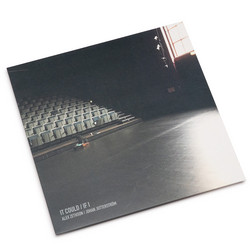
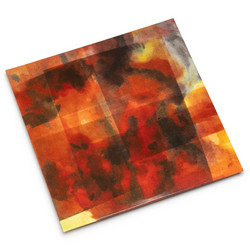
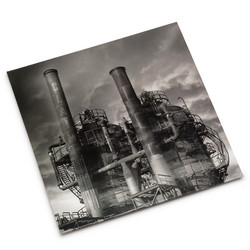
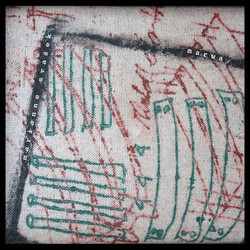
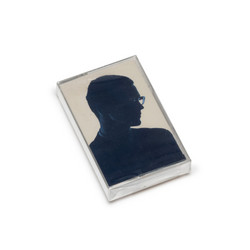
*Edition of 200* Variation for Light Waves feels like Linnea Talp opening the same door again and discovering a different universe behind it. Where Arch of Motion mapped the slow arcs and pressure systems of the pipe organ, this new album tightens the frame, doubling down on focus and intensity until the instrument all but dissolves into airflow, resonance and grain. The premise is deceptively simple: seven pieces, each homing in on a particular register, voicing or behaviour of various Swedish pipe organs, and then staying there long enough for the ear to understand how much complexity can hide inside a “single” sound. The organ isn’t treated as a majestic keyboard machine so much as a breathing body; we hear it wheeze, strain, shimmer and bloom, as if Talp were coaxing its character out of hiding rather than imposing her will on it.
That patient approach is mirrored in Talp’s own artistic path. Before organ drones and minimal forms, there was Deerest, a song project built on tapes, lyrics and the spiralling symbolism of an album called Cochlea. Even there, the real protagonist was listening – to the inner ear as much as outward sound. Since then she has moved gradually toward improvisation and composition that treat timbre and silence as primary materials. Variation for Light Waves is the clearest expression yet of that shift: a record that assumes, quietly but firmly, that the listener is willing to lean in, to inhabit the fine gradations of tone and air that less patient music would rush past.
Recorded over four years on different organs around Sweden, the album carries the fingerprint of those specific spaces. Talp speaks with particular affection of Lötsjökapellet, a small funeral chapel outside Stockholm whose modest organ and resonant room turn the faintest gesture into a kind of halo. Into this environment she invites Christer Bothén (contrabass clarinet) and Mats Äkelint (trombone), collaborators whose sensitivity to blend is such that their instruments often feel like additional organ ranks rather than separate voices. They don’t “solo” over her textures; they thicken them, shade them, extend them sideways, letting breath-driven winds and pipes melt into one another.
“Air On Both Sides,” an improvisation with Bothén recorded by John Chantler in 2022, serves as the album’s seed crystal. Across nearly eleven minutes it offers a radiant bath in glowing tonality, contrabass clarinet and organ intertwining until distinctions between human and mechanical breath blur. From that starting point, Talp explores ever quieter and more delicate territories, determined “to hear and highlight the very quiet and delicate sounds that an organ can produce.” At times she threads in Buchla recordings, placing electronic tones beside pipe timbres not as a jolt but as a sly doubling, like a reflection in slightly disturbed water.
For all its devotion to softness and intimacy, the record is shadowed by Talp’s fascination with limits, with what happens when you push sound to the point of failure. The opening miniature, “She Came Out of The White Fog,” forces the organ into a state of collapse: pipes literally gasping, denied enough air to reach their full tone, producing strangled, half-formed notes that read like the body of the instrument protesting and confessing at once. At the other end of the sequence, the title piece lets a descending progression slowly dismantle itself; chords arrive a little frayed, then more so, until the harmony feels like it is falling asleep mid-sentence. Between these poles run quieter experiments with stress and relief, with density and thinning-out.
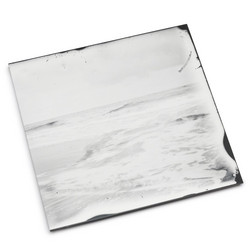
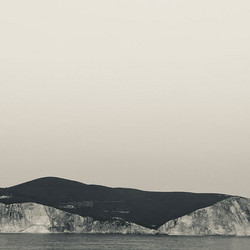
Threaded through this sonic investigation are personal and imagistic strands Talp openly names: an obsession with chords as emotional objects; a desire for subtle improvisation that retains the clarity of composition; memories of coastal landscapes, rocks and sea where she spent time with her grandparents; the birth of her daughter on a day of “thick white fog, so very bright.” Those memories don’t translate into programmatic stories so much as guide the album’s underlying metaphors. Light here is not a beam but a saturation – fog, haze, mist – something that seems to soften boundaries while altering everything it touches. The music wreathes itself around the listener in much the same way, dispersing edges while allowing new shapes to emerge inside the blur.
In the end, Variation for Light Waves is a study in sonorous potential: how much life can be found in a single held chord, in the moment when a pipe fails to speak properly, in the tender interference between organ, brass, reed and modular circuit. It is also a quietly radical proposal about attention. Talp asks us to listen at the threshold where tone becomes breath and breath becomes silence; in return she offers a body of work that feels endlessly generative, as if at any point another harmonic, another memory, another shaft of strange, bright light might suddenly step out of the fog.