
Reissues

The Edgar Broughton Band
2026 stock Originally released in 1971, The Edgar Broughton Band was the group’s third studio album and a defining statement of Britain’s underground rock scene. Sometimes referred to as “The Meat Album” due to its raw sleeve art, the record captures the band at their most uncompromising, blending heavy blues-rock with psychedelic textures, biting political commentary, and moments of fragile folk-inspired beauty. Known for their fiery live performances and countercultural spirit, Edgar Broughton…

Rainbow
2026 stock Rainbow, originally released in 1968 and reissued by the Italian label Akarma, is a psychedelic masterpiece blending raga, jazz, soul, R&B, and spoken-word meditations into a spiritually charged suite of nine tracks. Produced by Alan Lorber, the album evokes the colors of the rainbow through poetic lyrics by the enigmatic Bobby Callender, who composed most pieces and delivered recitations amid complex rhythms and improvisational flair. It features elite session musicians like Bernard …

Thi Nam
Originally released in 1981, Mr. Circle’s Thi Nam should really have been recognised decades ago as a jazz dance classic. A beautiful example of European jazz fusion at its most sophisticated and optimistic, the album is immersed in the sonics and rhythms of pan-Latin fusion and Brazilian samba, but with one foot in the upful jazz fusion exemplified by Roy Ayers or the Mighty Ryeders. Remastered from the original tapes at Abbey Road, Outernational Sounds is proud to present a true lost gem of Eu…
Poulaine
When you’re creating something loosely referred to as “art” with another person, you’re mining the depths of minds and experience, searching connections with pasts, each of us producing from a different place. Communication exists as unspoken and simultaneous, more carnal than collaborative, and dwelling rather than saying. We all miss that, wrapped up fantasies of perfectness and lovesick doves. Youth, how fleeting and naive. "Created by commission for the University of California at Irvine as …

Health & Safety
On Health & Safety, Johan Surrballe Wieth drags his post‑hardcore sensibility into a hushed, modern‑classical fever dream: 25 minutes of grief‑stricken keys, corroded drones and ghost‑violin traces that move like medicated insomnia.

Concert A Prades Le Lez Vol.2
On Concert A Prades Le Lez, Intercommunal Free Dance Music Orchestra turns Tusques’ radical internationalism into exuberant sound: a border‑smashing live suite where New Orleans, Brittany and North Africa collide in dance‑charged, militant joy.

Concert A Prades Le Lez Vol.1
On Concert A Prades Le Lez, Intercommunal Free Dance Music Orchestra turns Tusques’ radical internationalism into exuberant sound: a border‑smashing live suite where New Orleans, Brittany and North Africa collide in dance‑charged, militant joy.
Awofofora
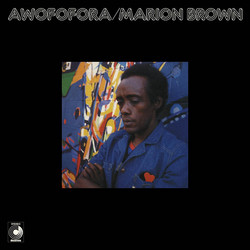
On Awofofora, Marion Brown folds funk, reggae and Afro‑Caribbean rhythm into his mature structural language, using grooves not as decoration but as architecture for golden‑toned alto lines and quietly radical collective improvisation.
XKatedral Anthology Series I
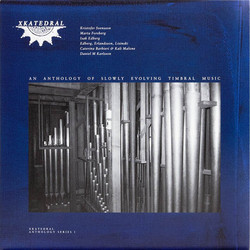
Tip Tip Tip! 2026 Repress XKatedral Anthology I is the first in a series of archival releases dedicated to presenting music by XKatedral affiliated composers working within the realm of slowly evolving harmonic and timbral music. This double-vinyl set contains an array of pieces dating from 2010 - 2020. Four of the works included here were originally released on cassette tape early on in the label’s history, while the two remaining pieces are presented by the label for the first time.
“The w…

Gas
*Back in stock* For the first time ever, this book Wolfgang Voigt – Gas presents the visual aspect of the comprehensive gas project. it is not meant to be a monolithic retrospective of his visual work, but it features a broad spectrum of photographic images taken between 1995 and 1998 showing many different moods and perspectives of Wolfgang Voigt’s Cosmos. what they all have in common, however, is the mystical focus and seemingly, the blurring of boundaries between lightness and darkness, happi…

Modern Pop from Mauritania (1984-1989)
This compilation brings together eight tracks by Yassine Nana and his group, recorded between 1984 and 1989, during a key moment in Mauritania’s musical history. A central figure of one of the country’s most respected musical families, Yassine stands at the crossroads of a long-standing tradition and a period of deep transformation in form, sound and production.
Recorded in Mauritania as well as during stays in Paris and Rabat, these songs integrate drum machines, synthesizers and electric guita…
Antoine Dougbé et L'Orchestre Poly-Rythmo De Cotonou 1977 - 1982
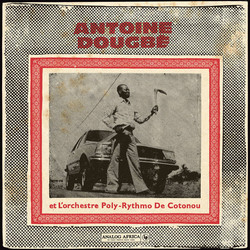
Who was Antoine Dougbé? Even the most dedicated crate-digger might go their whole life without stumbling across any of the three LPs he released in the late 1970s and early ’80s. Yet all the musicians who happened to cross paths with him remember him with a mixture of admiration and fear; for Antoine Dougbé was not merely one of the most inventive songwriters to emerge from the fertile music scene of Cotonou, but also a powerful Vodún initiate whose close connection to the spirit world allowed h…

Empac Sessions
Triple Point, featuring Pauline Oliveros, Doug Van Nort and Jonas Braasch, was an improvising trio with a core instrumentation of soprano saxophone, greis/electronics, and V-accordion. The name refers to the point of equilibrium on a phase plot, which acts as a metaphor for the group's improvisational dialogue. Triple Point's musical interaction was centered around an interplay between acoustics, physically-modeled acoustics (v-accordion), and electronics. Van Nort captured the sound of the othe…
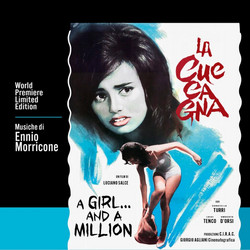
La Cuccagna
On La cuccagna, Ennio Morricone sketches early‑60s Italian life in miniature: light, bittersweet themes, small‑combo colours and gently ironic swings that mirror a young woman’s fragile hopes inside a consumerist daydream starting to fray.
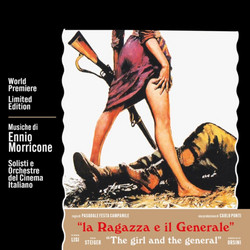
La ragazza e il Generale
In La ragazza e il generale, Ennio Morricone threads anti‑war irony through bittersweet melodies and marching figures, mixing folk‑tinged themes, choral snatches and tense orchestration into a score where tenderness and absurdity share the same battlefield.
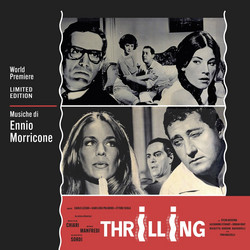
Thrilling
In Thrilling, Ennio Morricone’s widescreen sense of drama condenses into a tightly wound suite of themes: tense strings, ghostly choirs and razor‑edged rhythm figures that turn suspense into something almost voluptuously atmospheric.

Wigmore Hall 1968
*Edition of 300 copies. High thickness cardboard with opaque laminated cover. Comes with a printed insert.* John Tchicai (1936-2012) was one of the most visionary free jazz saxophonists of the 20th century - a rare artist whose voice stood apart even among giants. Born in Copenhagen to a Danish mother and a Congolese father, his path to New York came through a chance encounter at a socialist youth festival in Helsinki, where Bill Dixon and Archie Shepp heard him play and urged him to make the mo…
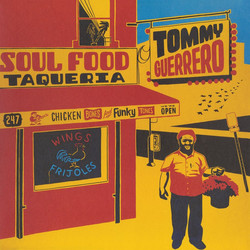
Soul Food Taqueria
Soul Food Taqueria continued Tommy Guerrero's blissful guitar soul but represented a step forward with its polished production and greater complexity of instrumentation. Denied the promotion it deserved upon release, it flew under the radar. It is now the most wanted record of Guerrero's wondrous back catalogue.

Diana in the Autumn Wind
On Diana in the Autumn Wind, Gap Mangione turns late‑60s trio jazz into a Technicolor funk miniature: short, intricate charts, molten Rhodes, and a young Tony Levin/Steve Gadd rhythm engine that future hip‑hop would mine like sacred scripture.
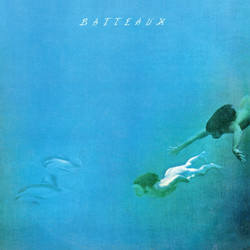
Batteaux
On their self‑titled 1973 LP, Batteaux turn baroque folk into ocean‑lit folk‑funk: lush West Coast arrangements, sky‑high harmonies and proto‑yacht grooves that feel as Balearic as they do Laurel Canyon, somehow both overlooked and timeless.

Preludes
** 2026 Repress, revised artwork ** Artist and multi-instrumentalist Flaer looks to the landscape to explore pastoral melancholy on debut release, Preludes. Ensconced in his family home in rural Leicestershire in the early months of 2020, painter and musician Realf Heygate (b. 1994) picked up his childhood cello for the first time in several years and began to play. Setting himself parameters to only record onto 4-track tape with acoustic instruments – cello, piano and acoustic guitar – he assem…
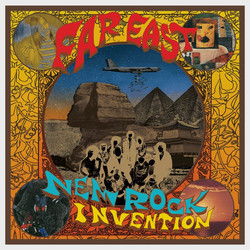
Far East New Rock Invention 1969-1975
"What strikes me again, even now, is that rock from the late '60s through the early '70s remains the most compelling — whether Western or Japanese. In the mid-1960s, British groups like The Beatles and The Rolling Stones swept across the globe, while in the United States Bob Dylan famously swapped his folk guitar for an electric one, igniting the folk-rock movement. From the surge of new energy among young people in Britain and America — entwined with hippie culture, drugs, and the radical momen…
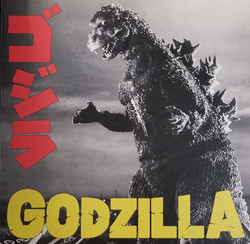
Godzilla
*2026 repress* Celebrated composer Akira Ifukube's formidable score for the legendary monster film, 'Godzilla,' continues to resonate nearly seven decades after its debut. Renowned for its groundbreaking blend of dark and evocative music, Ifukube's visionary compositions encapsulate the horror and devastation portrayed in Ishiro Honda's classic film.
As viewers immerse themselves in the unrelenting chaos unleashed by Godzilla, Ifukube’s score serves as both a powerful narrative force and an emot…
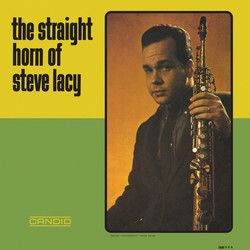
The Straight Horn Of Steve Lacy
Originally released in 1962 on Candid Records, The Straight Horn of Steve Lacy finds a young Steve Lacy stepping forward with quiet confidence and a sound unlike anyone else at the time. Stripped of excess and focused on tone, space, and intent, these sessions reveal a musician already thinking beyond convention. The soprano sax cuts clean and direct, moving between sharp angles and lyrical calm, with a small group that listens as closely as it plays. Nothing here feels rushed or ornamental, jus…
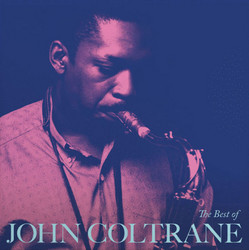
The Best Of John Coltrane
The year 2026 marks the hundredth birthday of John Coltrane, whose groundbreaking artistry as a saxophonist, composer, and bandleader made him one of the most influential musical figures of the 20th century. To honor his immeasurable impact, Craft Recordings looks back on Coltrane’s early years as a bandleader with a carefully curated collection of original compositions and standards. Produced with the full support of the John Coltrane Estate, The Best of John Coltrane draws from the saxophonist…
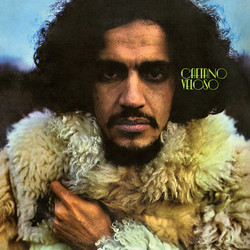
Caetano Veloso (A Little More Blue)
*2026 repress* Lilith present a reissue of Caetano Veloso's Caetano Veloso (A Little More Blue), originally issued in 1971. Often referred to as "Brazil's unofficial poet laureate" and the "Bob Dylan of Brazil", this heavyweight of Brazilian music was also a young revolutionary who used his music to protest against Brazil's oppressive military regime. This protest music, which became known as tropicalia, first earned Veloso a stint in jail, but by the time this dour album was released in 1971, i…
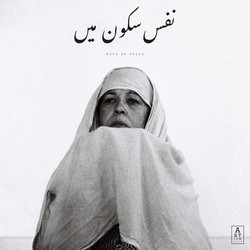
Nafs At Peace
On Nafs At Peace, Jaubi turn a Lahore jam into a spiritual suite: North Indian raga, hip‑hop pulse and modal jazz woven into a journey from turmoil to stillness, as if Coltrane’s quest had been reimagined on tabla, sarangi and MPC‑haunted drums.
Grzyby
On Grzyby, Błoto complete their mycelium cycle with a compact blast of medicinal‑and‑toxic club jazz: five mushroom‑named cuts of broken beats, sub‑heavy low end and live improvisation that argue for dialogue and interdependence in a world addicted to walls.
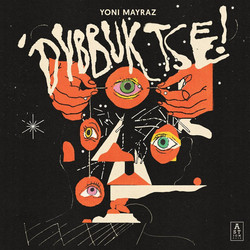
Dybbuk Tse!
On Dybbuk Tse!, Yoni Mayraz turns Jewish possession lore into a groove‑driven exorcism: live‑wire jazz, 90s NYC hip‑hop grit and Middle Eastern modes colliding in a story where a wandering spirit is forced out beat by beat.
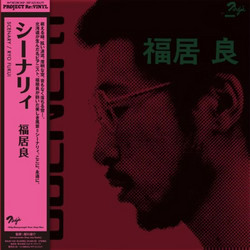
Scenery
On Scenery, Ryo Fukui turns a late‑start passion into a quietly astonishing debut: airy, confident trio swing and luminous ballads that distil a distinctly Hokkaido sense of space, light and seasonal melancholy into six perfectly breathing performances.
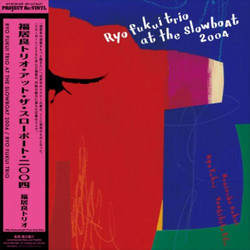
Ryo Fukui Trio at the Slowboat 2004
On Ryo Fukui Trio At The Slowboat 2004, Ryo Fukui turns the ninth anniversary of his Sapporo club into a late‑career summit: Phineas‑ and Flanagan‑inspired fire, Shorter‑charged intensity and Slowboat’s living‑room warmth fused into powerful, precise, deeply fulfilled playing.
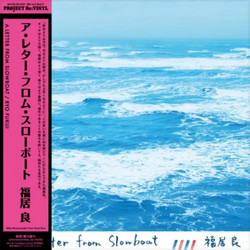
A Letter From Slowboat
On A Letter From Slowboat, Ryo Fukui makes a late‑career return to the studio that feels like a love note to his Sapporo club: standards and originals rendered with stronger touch, deeper emotion and an almost glowing lyricism shaped by a lifetime at the piano.
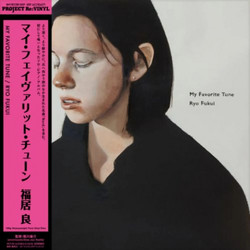
My Favorite Tune
On My Favorite Tune, Ryo Fukui steps out alone at the piano for the only time on record, revisiting “Scenery” and “Mellow Dream” while unveiling northern‑lit originals that fuse bebop depth with a distinctly Hokkaido sense of stillness and space.

Live In Pori 1984
In July 1984, the otherworldly entourage of over fifty musicians of Urban Sax swarmed across the coastal town of Pori, Finland, to perform a historic concert at the Pori Jazz Festival. The masked musicians, veiled in space suits and fencing masks, arrived at the scene of the concert in the Central Pori Church by fire engines, forklifts and water buses from all over the town, followed by an ecstatic and bewildered crowd of festival-goers and amazed locals alike. For those present, the explosively…

Bill Plummer And The Cosmic Brotherhood
"Welcome to the mind-expanding 1968 jazz recording of Bill Plummer and The Cosmic Brotherhood -- where Eastern and psychedelic influences meld together to produce one of the trippiest jazz albums on Impulse Records. This LP is a much-sought-after sonic travelogue, with the pop-psych spoken-word sitar freakout of 'Journey To The East' to Bill Plummer's swinging, rapid fire/cool jazz compositions, to his covers that go straight to the heart of any '60s genre-crossing jazz fans. Featuring an incred…
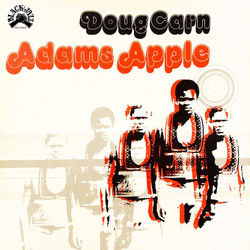
Adams Apple
2026 stock Doug Carn made four records for the Black Jazz label, more than any other artist, and each one topped the previous release's lofty standard. Adam's Apple was his last (1974) album for the label, representing the final note in his staggeringly creative crescendo. It was also the first record without Jean Carn, but Carn and crew (John Conner and Joyce Greene) don't miss a beat on the vocals. And the band is absolutely sick, featuring reedman Ronnie Laws and fellow Black Jazz recording a…
Sold Out
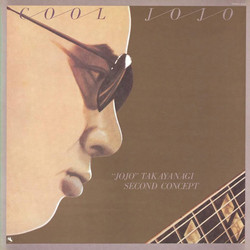
Cool Jojo
Cool Jojo was recorded from 3 to 5 December 1979 at Epicurus Studio in Tokyo under the direction of guitarist Masayuki Takayanagi. The album features the band ‘Second Concept,’ combining electric guitar, saxophone, keyboards, bass, and drums. The programme consists mainly of original compositions reflecting the band's electric jazz and experimental orientation in the late 1970s.
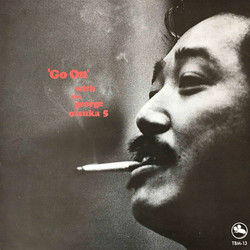
Go On
Go On with the George Otsuka 5 was recorded in 1972 in Japan for the Three Blind Mice label. The album features a quintet led by drummer George Otsuka, a major figure in Japanese jazz in the 1960s and 1970s. The repertoire includes original compositions as well as contemporary hard bop standards.

Riff Raff
Released in 1972, Riff Raff is a bold statement from a British prog quartet exploring the intersection of rock and jazz-inflected textures. The album moves between blues-tinged grooves, melodic prog passages, and expansive jazzy-rock moments, all anchored by tight rhythms, expressive guitar, and organ flourishes. Standout tracks like the opener and La Même Chose show off the band’s adventurous spirit, balancing precision with spontaneity. Though the variety of songwriters gives the album a loose…

Art Programming
We are excited to continue our work with Art P / Art Programming by finally offering the first full-length work from this Bremen-based electronic group. Originally released only on cassette in 1983, the self-titled album has now been fully restored and remastered, complete with bonus tracks and unreleased mixes unearthed from a rare demo. The LP opens with "Wesen vom anderen Stern" ("Beings from Another Planet"), a downtempo, 808-driven electro synth wave track with German lyrics telling a story…