
Reissues
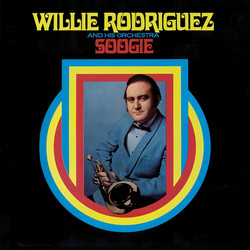
Soogie
“Soogie” (1969) was Willie Rodríguez’s first album for Mary Lou Records. Mary Lou Records, at that time, was also one of the labels in the right place at the right time, just before Fania smashed almost all the competition. The album is mostly comprised of guaguancós, boleros, and improvised-space-filling descargas (jam sessions). This is remarkable, as it hardly includes boogaloo, which was still prevalent during those years, yet already on the way out.
According to Bobby Marín, its musical dir…
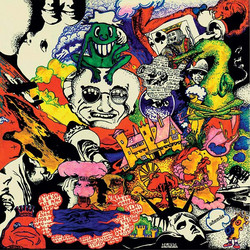
Etcetera
In 1970, after four fantastic singles under the name New Juggler Sound, the Peruvian band formed by Saúl Cornejo (guitar), David Levene (lead guitar), Ernesto Samané (bass), Carlos Salom (organ) and Manuel Cornejo (drums) changed their name to Laghonia and recorded their debut LP "Glue" for the MAG label. It was an album influenced by the British rock of the era to which they added fiery guitars full of fuzz and wah-wah, the omnipresent and hypnotic Hammond organ sound and Latin American percuss…
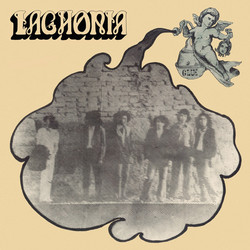
Glue
After four brilliant singles, in 1969 the Peruvian band New Juggler Sound, formed by Saúl Cornejo (guitar), David Levene (lead guitar), Ernesto Samané (bass), Carlos Salom (organ) and Manuel Cornejo (drums), changed their name to Laghonia and released their debut LP "Glue" on the MAG label. The album included those previously released tracks, which were very influenced by the British rock scene of those years, to which they added fiery guitars bursting with fuzz and wah-wah, the ever present and…

Opal
A cornerstone in European experimental and popular modern composition ! Formed around the core of jazz vibraphonist Christian Burchard and drummer Dieter Serfas, the group started his career in Munich in 1969. More than 300 musicians have passed thru' their ranks, from their colleagues in Amon Duül II (Lother Meid, Chris Karrer, Jimmy Jackson), Xhol (Hansi Fischer), Between (Roberto Detree, Peter Hamel) to renowned jazzmen (Charlie Mariano, Mal Waldron) and countless musicians from around the wo…

High Contrast
This 1971 album by the Hungarian jazz guitarist Gábor Szabó is a smooth jazz-fusion record blending psychedelic jazz, pop, and Latin influences. It includes one of Szabó’s best-known tracks, "Breezin’", later famously reworked by George Benson. The album is marked by melodic guitar lines, cinematic arrangements, and a polished, atmospheric sound typical of early-70s jazz fusion. Szabo also delivers a few stellar originals, showcasing his signature fusion of Hungarian folk music, jazz, psychedeli…

Dino Valente
Dino Valente (1968) is the first and sole solo album by American singer‑songwriter Chester (Chet) William Powers Jr., widely known as Dino Valenti or Valente and celebrated as a founder and early leader of Quicksilver Messenger Service. Blending rock, folk and country with psychedelic undertones, the record pairs introspective, evocative lyrics with the quintessential West Coast sound of the era. Though it was largely overlooked upon its original release, the album has since been embraced as a c…
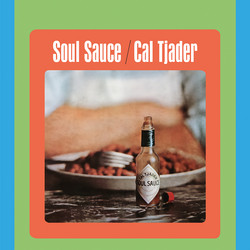
Soul Sauce
Get ready to ignite your turntable: Cal Tjader's seminal 1965 Latin jazz masterpiece Soul Sauce is back on vinyl for the first time since 1993. This vibrant reissue celebrates the album's enduring groove, fusing the vibraphonist's shimmering melodies with irresistible Afro-Cuban rhythms like mambo and boogaloo.
A cornerstone of Latin jazz, Soul Sauce captivated audiences with its tight, danceable grooves and accessible yet sophisticated arrangements. Tjader, the vibraphone virtuoso who bridged j…
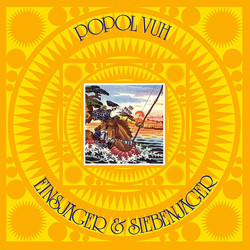
Einsjaeger & Siebenjaeger
Among the most luminous records ever issued by Popol Vuh, and one of the high points in the singular spiritual arc traced by Florian Fricke across more than three decades of work. Esoteric, reissuing the album on vinyl on July 31st, 2026 in a fresh cut prepared at AIR Studios, London, returns to print one of the essential statements of 1970s German music.
By the time Fricke entered the studio in Munich in 1974 with Daniel Fichelscher on guitars and percussion, Djong Yun on vocals, and Olaf Küble…
Sold Out
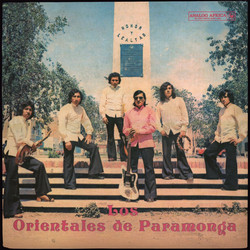
Los Orientales de Paramonga 1972-1976
In the late 1960s, the coastal city of Paramonga, just a three-hour drive north of Lima, gave rise to a vibrant music scene shaped by surf, rockabilly, and tropical sounds. Among its protagonists were two musicians, Víctor Ramírez and Maximiliano Chávez, who, with their psychedelic guitars, Fender amplifiers, and wah-wah pedals, would define not only their own sound but also shape the musical identity of the region. Under the mentorship of their manager, Néstor “Romanito” Robles, the two guitari…

Hadayro
* Edition of 199 copies * Originally released on cassette in 1985, H·A·D·A·Y·R·O is a landmark of Japanese noise music. It documents the early vision of Solmania and the singular sonic approach of Masahiko Ohno. For years, it remained a cult artifact among collectors and underground enthusiasts. This vinyl edition renews its impact, feeling more like a rebirth than a simple reissue. Solmania was far more than a band; it was Masahiko Ohno’s personal sound laboratory. At the heart of the album are…

The Human Race Was Restored To Life Repeatedly
* Edition of 199 copies * Government Alpha, the project of Yasutoshi Yoshida, is one of the central figures in Japanese harsh noise, emerging from Tokyo's early 1990s underground scene. Through his Xerxes label, he developed a style that is both extreme and meticulously constructed, balancing ferocity and precision with remarkable control. Even at its most chaotic, every sonic eruption feels carefully placed.
Originally released on cassette in 1994, The Human Race Was Restored To Life Repeatedly…
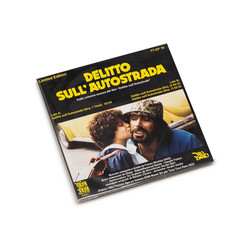
Delitto sull'Autostrada
Tava Tava Rare is pleased to announce the first release on 7" of Franco Micalizzi's main theme to the film “Delitto Sull'Autostrada”, directed by Bruno Corbucci and starring the Italian-Cuban-American actor Tomas Milian. Eclectic, innovator, full of life and energy, out of the ordinary, the composer is best known for his scores in poliziotteschi films such as “Roma A Mano Armata”, “Napoli Violenta” or “Italia A Mano Armata”, whose theme was used also in Quentin Tarantino's “Death Proof”. The mus…
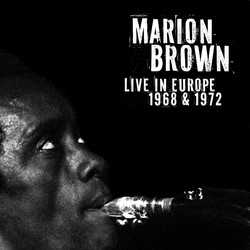
Live in Europe 1968 & 1972
On Live in Europe 1968 & 1972, Marion Brown leads a borderless quartet through two rare European concerts, pairing his singing alto with Gunter Hampel's vibes, Barre Phillips' bass and Steve McCall's drums in a sound that hovers between lyrical free jazz and chamber‑like intimacy.
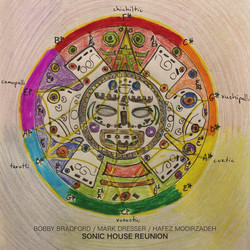
Sonic House Reunion
On Sonic House Reunion, Bobby Bradford, Mark Dresser and Hafez Modirzadeh reconvene a long‑running alliance, turning cornet, five‑string bass and hybrid reeds into a quietly radical chamber unit where Ornette‑rooted lyricism, spectral tuning and deep listening pull the music in multiple directions at once.
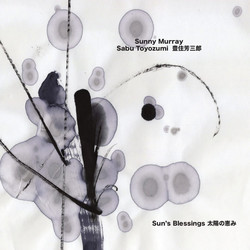
Sun's Blessings
On Sun’s Blessings, Sunny Murray and Sabu Toyozumi meet as a double‑drum frontline, turning a 1999 Sapporo concert into a two‑part ritual where clattering polyrhythms, rolling thunder and sudden hollows of space make free improvisation feel both volcanic and oddly tender.
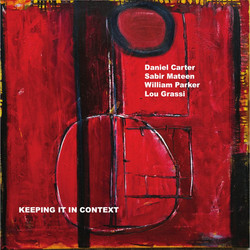
Keeping It In Context
On Keeping It In Context, Daniel Carter, Sabir Mateen, William Parker and Lou Grassi turn a 1996 Context Studios session into a blazing, deep‑listening workshop, with twin reeds, singing bass and restless drums stretching free jazz language without losing its earthy pulse.

Schema 1+2
Dowser was formed in the late 1980s by Hiroyuki Nagashima. After numerous lineup changes, the current members are Hiroyuki Nagashima (instruments), Masateru Terai (instruments, voice), and Takashi Miyagawa (design). Dowser combines vintage synthesizers such as Buchla and EMS with virtual instruments to construct a distinctive sonic landscape that merges electronic music, rock, noise, and ambient textures.
Founder and leader Hiroyuki Nagashima is also an accomplished film composer, having created…

Wembley 1974
Pink Floyd’s legendary Wembley 1974 performance captures the band at one of the most pivotal moments in their career, as they toured in support of the groundbreaking The Dark Side Of The Moon. Recorded during a period of extraordinary creative momentum, this historic show offers a powerful snapshot of Pink Floyd at the height of their artistic vision, blending atmospheric soundscapes, immersive instrumentation, and the unmistakable sense of experimentation that would come to define an era.
Set a…
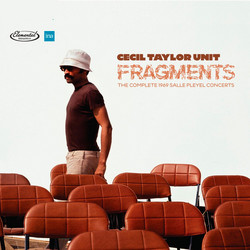
Fragments: The Complete 1969 Salle Pleyel Concerts
On Fragments: The Complete 1969 Salle Pleyel Concerts, The Cecil Taylor Unit detonates across two uncut Paris sets: a newly unearthed, vividly mastered document of Taylor, Sam Rivers, Jimmy Lyons and Andrew Cyrille stretching free jazz into an overwhelming, architectural storm of sound.
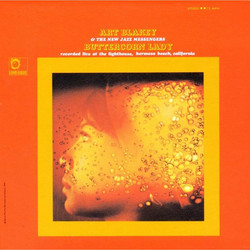
Buttercorn Lady
On Buttercorn Lady, Art Blakey leads a brief but blazing mid‑60s Jazz Messengers lineup at The Lighthouse, launching a young Keith Jarrett and Chuck Mangione in a hard‑bop set that feels both like a proving ground and a joyous passing of the torch.
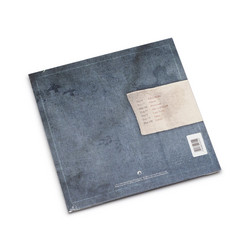
Found Songs
In April 2009, Iceland’s neo-classical export Ólafur Arnalds created the 7-song series Found Songs – recording a song a day for 7 days and instantly making each track available via Twitter. With artwork contributions from fans via Flickr, this modern release awakens memories of a tradition that seemed lost in the digital age we live in. Born in 1987, Ólafur hails from the suburban Icelandic town, Mosfellsbær, just a few kilometres outside of Reykjavík. He has immersed himself completely in a wor…
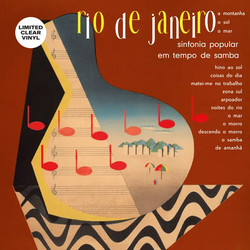
Sinfonia Do Rio De Janeiro
Dive into the roots of Brazilian musical innovation with the reissue of Antonio Carlos Jobim's Sinfonia Do Rio De Janeiro, a visionary work composed by the legendary Brazilian masters Tom Jobim and Billy Blanco. Originally released in 1954, this album stands as an early, bold experiment in fusing jazz, classical, and pop elements into a vibrant Latin soundscape—years before the bossa nova revolution took the world by storm.
Lavish string arrangements weave seamlessly between sweet choral melodie…

Concert A Prades Le Lez Vol 1 & 2
On Concert A Prades Le Lez, Intercommunal Free Dance Music Orchestra turns Tusques’ radical internationalism into exuberant sound: a border‑smashing live suite where New Orleans, Brittany and North Africa collide in dance‑charged, militant joy.

Dossier
100 copies. Six volumes in a slipcase (I–VI) plus a multiple, signed & numbered. English/German. A singular act of archival reconstruction, mounted in faithful keeping with the wayward spirit of its subject. Edited by An Paenhuysen, Die Tödliche Doris - Dossier gathers six independently bound volumes inside a slipcase to assemble one of the most thoughtful and idiosyncratic portraits yet attempted of the legendary West Berlin group and conceptual constellation.
Among the most enigmatic figures t…

A Song For Lost Blossoms
Darla is pleased to offer A Song For Lost Blossoms, a record of ambient melody and transcendental mood portals from minimalist/modernist master Harold Budd and friend guitarist/composer/producer Clive Wright. A Song For Lost Blossoms nicely builds on both artists’ previous ambient work. A Song For Lost Blossoms was recorded live and in studio at different locations including the artists’ homes, at REDCAT (Roy E. Disney Concert and Theater), Los Angeles, and Clive Wright's Desert Sky Studio, Josh…

Little Windows
Darla is pleased to offer a new album from Harold Budd and Clive Wright. Little Windows completes the trilogy begun with A Song for Lost Blossoms and carried through their previous album Candylion. Part of Little Windows was recorded especially for Echoes, the nightly music soundscape from Public Radio International heard on over 120 public radio stations and online at www.echoes.org. These recordings were first heard on Echoes Radio in Fall 2009. The other part of Little Windows was recorded…

Jane 12-21
Jane 12-21 is the companion to Jane 1-11. Minimal, modern classical piano and avant-garde electronics by the master. "It's simple. I broke out and broke back to my earlier days: A triangle of risk, improvisation and joy -- as I say, very simple. My rules to myself were: No plan, no notes, no ideas, no microphones; except for Jane 1 I stuck to it. My other rule -- the most important one -- was: At least one piece per day, finished, mixed and not to be revisited again. Jane 7, 8, 9 were done in o…

ИМА (イマ)
Tip! ИМА (Ima) is a work by KiMiMi, the solo project of musician Shin-ya Ohno, which captures the layers of time and the presence of people inhabiting ‘Arimasuton Building’—a self-built structure created over 20 years by architect Keisuke Oka, located in Mita, Tokyo, and reconstructs them into music. A multi-instrumentalist who masterfully handles a diverse range of instruments, with the gaida (an ancestor of the bagpipes) – which he studied in Bulgaria – at the core of his sound, KiMiMi has pre…

Rubycon (50th Anniversary Edition)
50th Anniversary edition of the legendary album ‘Rubycon’ by Tangerine Dream. Widely regarded as one of their finest albums, ‘Rubycon’ was the band’s second album for Virgin Records and comprised two long pieces which pioneered the use of sequencers and synthesiser technology and produced some of the finest ambient music ever recorded. The record was also their highest UK charting release, reaching number 10 on the UK charts.
This new edition features the remastered original stereo mix, along wi…

Piano Piano
Stunning collection of quiet and soft piano pieces by the legendary German keyboardist Hans-Joachim Roedelius co-founder of seminal krautrock bands as Cluster and Harmonia. Inspired by the monumental work of Eric Satie, the album was originally released in 1991. Roedelius exhibits an unexpected subtlety on the keys which lighten these pieces lovingly and pointedly. It’s hardly surprising that the name of the album is a reference to the term ‘pianissimo’, which means to play softly. These are aft…
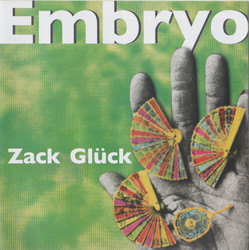
Zack Gluck
Effortlessly fusing krautrock with jazz and ethnic music, Embryo were unparalleled in the world of progressive fusion and 1984's Zack Glück is one of their most ambitious and rewarding LPs. Flutes and saxophones mix with oud, marimba and violin to make an intoxication concoction.

Africa
Africa, originally released in 1992 on Materiali Sonori, may be a late entry in the Embryo catalog but it is one of their most ambitious and truly progressive albums to date. As the name implies, the Munich group not only draws influence from the continent to their south, but also employs an African percussion ensemble on many tracks.
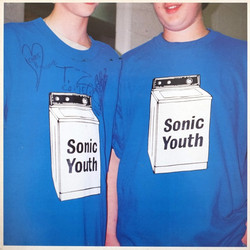
Washing Machine
Washing Machine is the ninth studio album by the American experimental rock band Sonic Youth, released on September 26, 1995 by DGC Records. It was recorded at Easley Studios in Memphis, Tennessee and produced by the band and John Siket, who also engineered the band's previous two albums. The album features more open-ended pieces than it's predecessors and contains some of the band's longest songs, including the 20-minute ballad "The Diamond Sea", which is the lengthiest track to feature on any …

A Thousand Leaves
A Thousand Leaves was Sonic Youth's 10th studio album and the group's first major effort to be recorded at their own Echo Canyon studio in NYC. Free from the constraints of paying for costly studio time, the band was able to work at their desired pace and experiment at will. The result was an album born out of improvisation, chiefly characterized by the guitar interplay between guitarists Thurston Moore and Lee Ranaldo. The album title was inspired by Walt Whitman as Moore explained, "The same w…
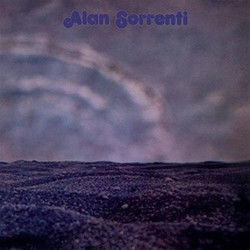
Come Un Vecchio Incensiere All'Alba Di Un Villaggio Deserto
Come un vecchio incensiere all’alba di un villaggio deserto is Alan Sorrenti’s second album, released in 1973 by Harvest Records. This album marks an evolution in his musical exploration, continuing the experimentation begun with his previous album "Aria" and solidifying his position in the Italian progressive rock scene.
The centerpiece of the album is the lengthy suite that gives the record its title, a track lasting over twenty minutes that explores psychedelic, jazz, and folk sounds. The com…
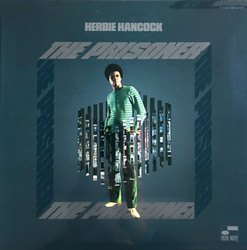
The Prisoner
Recorded and released in 1969, Herbie Hancock’s last Blue Note album The Prisoner is a powerful but overlooked masterpiece. A moving tribute to Dr. Martin Luther King, this nonet session features some of the most exceptional instrumentalists in jazz including Joe Henderson, Johnny Coles, Hubert Laws, Garnett Brown, Buster Williams, and Albert “Tootie” Heath. Hancock said of The Prisoner: “I've been able to get closer to the real me with this album than on any other previous one.”
Blue Note Tone …
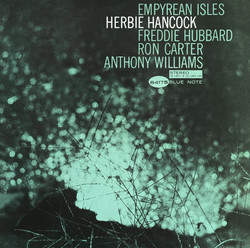
Empyrean Isles
Herbie Hancock debuted on Blue Note in 1962 and quickly established himself as both a remarkable pianist and a brilliant composer with three excellent albums—Takin’ Off, My Point Of View, and Inventions & Dimensions—before making what is widely considered to be his first masterpiece: Empyrean Isles. Recorded in 1964, the album seemed to distill the full breadth of Hancock’s artistry into a sweeping 35-minute musical journey. Joining Hancock on the voyage were three of his closest collaborators: …
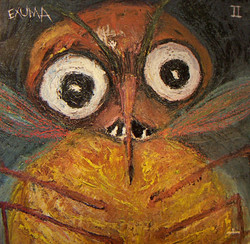
Exuma II
Exuma returns with Exuma II, the hypnotic follow-up that deepens the spellbinding fusion of Bahamian folk traditions, mystical storytelling, and raw, soulful performance. First released in 1970 on Mercury Records, Exuma II expands the singular vision that introduced the world to Exuma’s otherworldly sound earlier that year.
On Exuma II, the artist refines the eccentric, ritualistic atmosphere of his debut while offering moments of greater restraint and melodic clarity. Where the first album dazz…

Bangor Flying Circus
Bangor Flying Circus, the self-titled debut from the short-lived but influential Chicago progressive rock trio, is a striking document of late-1960s American psychedelia and ambitious musicianship. Formed in mid-1967 and active through 1969, Bangor Flying Circus brought together seasoned players from the Shadows of Knight and H.P. Lovecraft to create a sound that bridged blues-rooted rock, baroque psychedelia, and forward-looking progressive arrangements.
Recorded and released during a moment of…
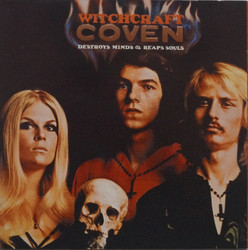
Witchcraft Destroys Minds & Reaps Souls
Coven’s groundbreaking debut album Witchcraft Destroys Minds & Reaps Souls (often shortened to Witchcraft) is reissued in a newly remastered edition, bringing renewed clarity and presence to one of the most infamous and influential records in occult rock history.
Originally released in 1969, Witchcraft Destroys Minds & Reaps Souls confronted the era with overt occult and satanic imagery and lyrical themes that were unprecedented in popular music at the time. The album’s controversial content—arr…