John Cage
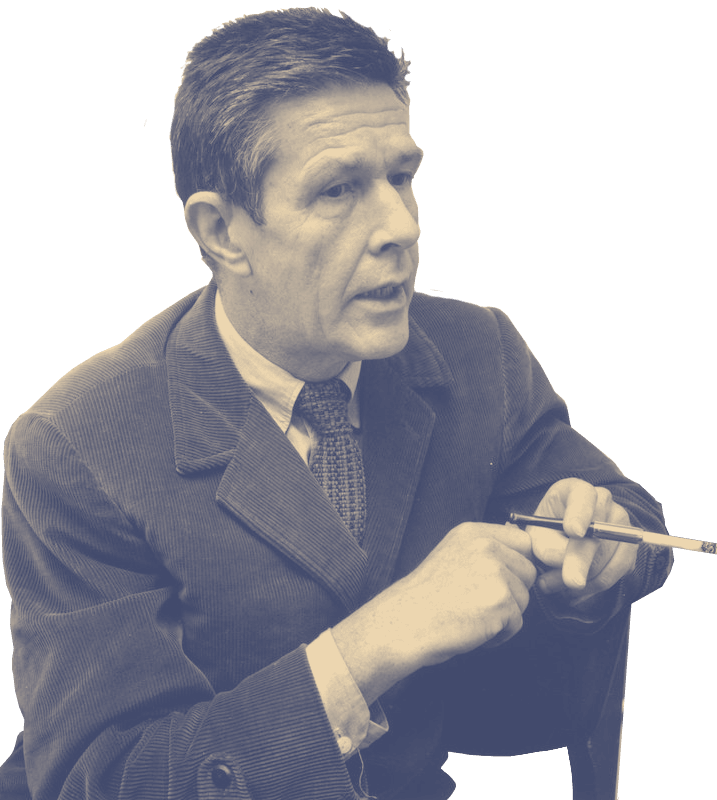
John Cage (1912 to 1992) was an American composer, writer, philosopher and printmaker. He studied with Henry Cowell and Arnold Schoenberg, gave up painting for music in 1934 and in 1940 devised the prepared piano, inserting bolts and rubber between the strings. From Music of Changes (1951) he composed with chance operations drawn from the I Ching, and with 4'33" (1952) he framed silence and the sounds around it as a piece.

The Number Pieces 5 - Two2
John Cage's Two2 (1989) for two pianos, a renga-based number piece built on time brackets, played in a 74-minute performance by Rob Haskins and Laurel Karlik Sheehan, from the Complete John Cage Edition.

Number Pieces 4
First recording of John Cage's Three (1989) for three recorder players, with his early Solo with Obbligato Accompaniment of Two Voices in Canon (1933-34), performed by Trio Dolce. The Number Pieces 4.

Aus Aller Welt Stammende / Transfiguration Of The Moon / Hymnkus
CP² Recordings presents Zygmunt Krauze: Aus Aller Welt Stammende, Toshi Ichiyanagi: Transfiguration Of The Moon, John Cage: (1912 - 1992) Hymnkus (version for violin). The Krauze was recorded at Hip Pocket Studios, N.Y.C., on Dec. 10 1993. It was mix…

16 Dances / Sonata No.2 for Violin and Piano
CP² Recordings presents John Cage: 16 Dances; Armin Loos: Sonata No.2 for Violin and Piano. Performed by New Music Concerts, Paul Zukofsky, Conductor; Paul Zukofsky, Violin, Michael Torre, Piano. This recording was originally released as an LP (CP2…

Chorals / Cheap Imitation / Freeman Etudes I-VIII
CP² Recordings presents John Cage: Chorals / Cheap Imitation / Freeman Etudes I-VIII performed by Paul Zukofsky, violin. The original recording of the Freeman Etudes was supported in part by public funds from the New York State Council on the Arts.…

Every Mushroom Is a Good Mushroom
Every Mushroom Is a Good Mushroom includes recipes by John Cage alongside original artworks and texts from Cage and mushroom enthusiasts Isabelle Bucklow, Francesca Gavin, Jason Fulford, Polly Geller, Erik Kessels, Phyllis Ma, Katty Maurey, Michael P…

Radio Happenings
** 224-page hardcover book with audio DVD of the complete 5-hours of audio from the radio broadcasts** In 1966-67, radio station WBAI in New York City invited composers John Cage and Morton Feldman to make 5 one-hour radio conversations. Unscripted …

Diary: How to Improve the World (You Will Only Make Matters Worse)
"Over 16 years, beginning in 1965, John Cage compiled anecdotes, observations and koanlike tales, originally typing everything on an IBM Selectric and using chance methods to determine the formatting of texts that twist down each page. The Siglio edi…

Desert Plants
Facsimile reprint of Walter Zimmermann's book Desert Plants, his interviews with American experimental composers from a 1976 trip to America

The Works for Piano 10
Volume 10 of Mode's John Cage piano series, with Thomas Schultz playing Two Pieces for Piano (1935), Solo for Piano from the Concert for Piano and Orchestra, Two Pieces for Piano (1946) and Swinging (1989).

Solo for voice 58 : 18 microtonal ragas
The world premiere recording of Solo for Voice 58 by legendary American avant-garde composer John Cage. Italian-German dhrupad singer Amelia Cuni is the ideal interpreter, trained in classical Indian singing but also able to improvise on ragas in a n…

John Cage Meets Sun Ra: The Complete Film
* Restocked, reduced price * The never-before-seen in its entirety, visual documentation proving this avant-garde collaboration of mythic proportions did indeed occur. Recorded at Sideshows by the Seashore along the Coney Island boardwalk on June 8th…

The 25-Year Retrospective Concert Of The Music Of John Cage (2Lp
Recorded live at Town Hall, NYC in May of 1958, this historic concert (organized by Jasper Johns and Robert Rauschenberg) was a retrospective of Cage’s work from 1934 to the present. The set documents the concert held in the town hall of New York Cit…

John Cage Meets Sun Ra: The Complete Concert
If you were going to envision the ultimate avant-garde meeting-of-the-minds jam session, who would you pick? Even the most hopeful fan of strange and innovative music couldn't have seen this one coming: on one afternoon in 1986, at Coney Island's dil…
Sold Out

A Cage of saxophones 1
Cage's late works for saxophones, Four5, Five4 and Hymnkus, with Ulrich Krieger's arrangements of Ryoanji and Five, played by Krieger and German new music performers. Volume 24 of the Complete John Cage Edition.

The Number Pieces 2: Five³
John Cage's Five³ (1991), one of the late number pieces, for trombone and string quartet, played by Monique Buzzarté and the Arditti String Quartet. Cover etching by Cage, liner notes by James Pritchett.

Cage Edition Vol.52 : The Works for Percussion 4
John Cage works for a speaking percussionist, including Bonnie Whiting's realization 51'15.657" and Music for Two (By One), the early voice and piano songs, and a piece by Allen Otte built on Cage's methods.

Klang Der Wandlungen
From the liner notes by Jakob Ullmann (translated by Peter Gebert and Molly McDolan): "It was during a break in the inaugural meeting of the East German section of the IGNM (International Society for Contemporary Music) in March of 1990 when Reinhard…

Variations IV, Vol. II
A 1965 journey into found sound; this is John Cage. Another seminal volume of indeterminate music, from an icon of experimental sounds. Reissued for the first time and thematically on gorgeous clear vinyl! It could be argued that there is no more …
Sold Out

Variations IV, Vol. I
"Due to unprecedented demand" for the first volume of Everest's 1965 release of John Cage's Variations IV (perhaps unique at the time given the experimental nature of the material), a second selection of music culled from Cage and associate David Tud…
Sold Out

John Cage / Christian Wolff
Jeanne Dielman present a reissue John Cage and Christian Wolff's self-titled album, originally released in 1963 on legendary Times Records. This album was an early showcase of both 20th century composers's experimental chops, and is highly regarde…

Complete Song Books
... to consider the Song Books as a work of art is nearly impossible. Who would dare? It resembles a brothel, doesn't it?" --John Cage. Complete Song Books, volume three in the Perihel series on Karlrecords, along with La Legende d'Eer and Douze Inv…

Early Electronic & Tape Music
2016 repress. "I believe the use of noise to make music will continue and increase until we reach a music produced through the aid of electrical instruments which will make available for musical purposes any and all sounds that can be heard." --John …
Sold Out

San Francisco Museum Of Art, January 16th, 1965
Recorded live by KPFA Radio in the halls of the sculpture court of the San Francisco Museum of Art on January 16, 1965, the day of 39th birthday of fellow pianist and longtime associate David Tudor, this historic concert with John Cage opens with a d…

Variations IV
Anything can happen and often does. This is John Cage. A seminal example of indeterminate music from an icon on experimental sounds. This work was originally used as music for the choreographed piece by Merce Cunningham, "Field Dances," with stage an…

The 25-Year Retrospective Concert Of The Music Of John Cage
Recorded live at Town Hall, NYC in May of 1958, this historic concert (organized by Jasper Johns and Robert Rauschenberg) was a retrospective of Cage’s work from 1934 to the present. The set documents the concert held in the town hall of New York C…

John Cage Anniversary 1912-2012, The Number Pieces
Some of the most mysterious and meditative pieces by the legendary John Cage’s (1912-1992) performed by The Barton Workshop, an Amsterdam-based ensemble founded by the legendary American composer-trombonist James Fulkerson. Number Pieces, fortyeight…

Hildegard von Bingen : John Cage
2012 release **
"Combining the deep voice of Hildegard von Bingen and the inner song of John Cage (or vice versa)—what a wonderful idea, isn't it? And it's Irene Kurka herself who seems to have come up with it. She performs Hildegard nine times and g…

for seven players
Seven (1988), 15 similar events (2002) Let’s assume, that art music as a field of creative cognitive activity is interrelated with the scientific paradigm and that its structure, therefore, at least partially reflects the contemporary way of lookin…

One9
“sounds brushed into existence as in oriental calligraphy" (Cage) the sounds in one9 are single tones and chords, up to six part harmonies. how do sounds come into existence, how do they gain focus, how do they resolve, how do they merge into one…

early music
“The room I entered was a dream of this room.” “It wasn't the hole in the landscape that gladdened us, it was the invitation to the weather to drop in anytime.” John Ashbery (both quotations from: Your Name Here 2000) “...all the hard dry …

Empty Words
"Empty Words" begins by omitting sentences, has only phrases, words, syllables and letters. The second part omits the phrases, has only words, syllables and letters. The third part omits the words, has only syllables and letters. And the last par…

Beuger.Cage
2004 release **
Few composers have the self-control seen here to allow the silence that surrounds all we do to be so present, to bring to the forefront that which is covered by all of our daily activities, only present when we let ourselves realize t…

Accordion Music
2007 release **
Fold in; fold out: the breathing of the accordion. On this CD the accordion unfolds in a very special way, unusually close to the instrument. Four works, four worlds that seem to know each other; refer to each other like a greeting fr…

Die Natur der Klange: Neue Musik fur Harfe
Gabriele Emde-Hauffe was born in 1953 in Darmstadt, Germany. She received a humanistic education at a local grammar school in Darmstadt and started studying the harp after her A-levels, first in Darmstadt and finishing in Cologne. Conducted by Pét…

A composer's confessions
"A single sound by itself is neither musical nor not musical. It is simply a sound. And no matter what kind of a sound it is, it can become musical by taking its place in a piece of music. This point of view requires some adjustment of the definit…

Music from the Tudorfest: San Francisco Tape Music Center, 1964
In the spring of 1964 Pauline Oliveros organized a festival celebrating the work of pianist David Tudor, which featured compositions by Oliveros, George Brecht, Toshi Ichiyanagi, Alvin Lucier, and John Cage. The Tudorfest was a watershed event in …

The American Avant-Garde in the 20th Century
Following on from our popular primer A Young Person's Guide to the Avant-Garde, LTM now offers a more comprehensive overview of American avant-garde music in the 20th century.Commencing with early pioneers Charles Ives and George Antheil (including t…

Electronic music for piano
Agostino Di Scipio (computer e live electronics), Ciro Lombardi (piano).

The Piano Works 9
First recordings of two major piano works by John Cage from 1950-51 found at the New York Public Library: Haiku and the solo piano version of Sixteen Dances, played by Jovita Zähl, with Thomas Meixner on percussion in two alternate dances.