Back in stock
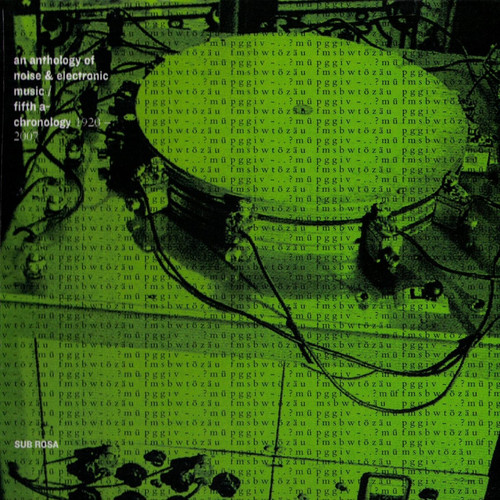
An Anthology Of Noise & Electronic Music vol. 5
Sub Rosa presents the fifth volume of the highly-acclaimed and successful Anthology of Noise & Electronic Music series. This installment highlights pieces illustrating a technique (Claude Ballif's "Points, Mouvements"), a country ("Shur, Op. 15" by Alireza Mashayekhi), a studio (Helmut Lachenmann at the IPEM), and historic (François Bernard Mâche's "Prélude"), and radical ("Spectrum Ripper" by Masonna/Yamazaki "Maso" Takushi) works that have ripped apart ancient definitions. All this organized …
My Heart's In My Hand, And My Hand Is Pierced, And My Hand's In
**in stock, very last ones** This double LP, released by NERO magazine and Shady Lane Productions, gathers selected materials, both texts and audio recordings, from Phil Collins's project of the same name, for which Collins collaborated with guests of Gulliver, a self-described "survival station for the homeless" in Cologne, Germany. There, Collins installed a phone booth for free and unlimited local and international calls, on the condition that the conversations would be recorded and ano…
1975/1978 LP
**restocked, very last copies** "two things make this record so special: it fills a void in Miles' discography as during this period he stayed away from the scene for a while and 2nd these unissued tracks have such an unique sound that you'll not hear anything like that on any other Miles Davis albums (here he plays mostly organ). so futuristic and ahead of it's time (as it'll probably be also in the next few years)." punzmann
Lest We Forget
"Lest We Forget" is a collection compiled from the earliest recordings by Nocturnal Emissions, a group founded by Nigel Ayers, his brother Daniel Ayers and Caroline K in 1980. It comprises of material previously only available on cassettes as well as tracks recorded under their earlier name, The Pump. The Nocturnal Emissions were active in what has been known as “cassette culture” and explored the medium of underground cassette exchange in parallel with their better known vinyl releases and live…
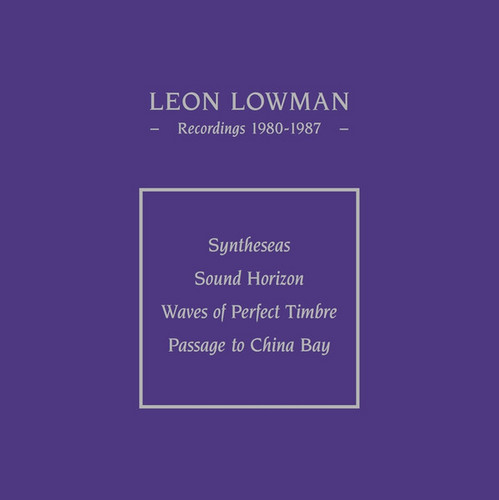
Recordings 1980-87
** restocked, last copies around ** Multi-talented, autodidact musician and devoted painter Leon Lowman became interested in synthesizers when he heard ELP’s Lucky Man in 1970. At that time Leon was working for various recording studios and sound companies in California and with his first paycheck he took a down-payment for the ARP 2600-Sythesizer (as well as a Mediamix Joystick for pitch bending) which he still uses until today. Ever since he used whatever money he could spare towar…
Recordings 1971-1983
** restocked, last copies around ** The new VOD American Cassette Culture box set documents American artists who were pioneers and protagonists of the late 70’s/earlry 80’s cassette-culture. It includes composers such as Steve Roach, Don Slepian, K.Leimer, Galen, Ken Moore, Young Scientist, Marc Barreca, Anode
While rock-music of the 70’s and 80’s became a worldwide mainstream corporate business the creation of the cassette format and a network in the late 70’s opened music production up to ev…

Charlemagne Palestine, The golden sound
**restocked**mAnne Maregiano's documentary about Charlemagne Palestine, The Golden Sound (2011), allows the artist to tell his own story while putting his music and performance, in long, unedited takes, at the centre of the film…Born in New York City, composer, performer, and visual artist Charlemagne Palestine was a contemporary of Steve Reich and Phillip Glass in the avantgarde classical music scene of the 1960s and 1970s. On stages filled with his own home-made stuffed animals, Pales…
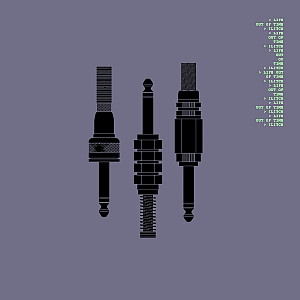
Life out of time
LP album, numbered and stamped vinyl limited edition of 215 copies. Ilitch is a french artist out of the ordinary making music directly coming out of his states of mind, not taking only one path: it can be dark and merry, difficult or bouncy, satisfying different audiences. He consistently associates his music to imagery and tells stories, with wide influences: Philip Glass, quality popular music, contemporary music, Pink Floyd... Ilitch is part of the artists considered as influential in the fr…

Astro Love & Infinite Kisses
**restocked** Kawabata Makoto emerges from a period of relative quiet with his first widely available solo release in several years, the blockbuster Krautrock-flavored Astro Love & Infinite Kisses. This lovely and impressionistic record showcases the other side of Makoto's outrageous works with Acid Mothers Temple. Taking cues from classics of the genre like Tangerine Dream's Phaedra and Steve Hillage's Rainbow Dome Musick, 'Dos Nurages' is the album's centerpiece, a 41-minute hypnotic epic, wit…
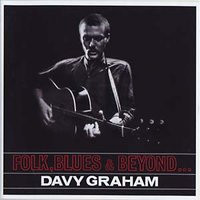
Folk, Blues & Beyond...
Reissued in 2005 by Fledg'ling. Folk, Blues & Beyond was first released on Decca Records in 1965, and is one of the most important recordings from the 1960s folk revival. Davy Graham was a UK guitarist, multi-instrumentalist and serviceable-to-perfunctory vocalist, setting standards for succeeding generations. Graham was the first guitarist to emerge from Britain whose work combined stylistic elements from Julian Bream, Big Bill Broonzy, Blind Lemon Jefferson, Ali Akbar Khan, Leadbelly, Joe Pass…
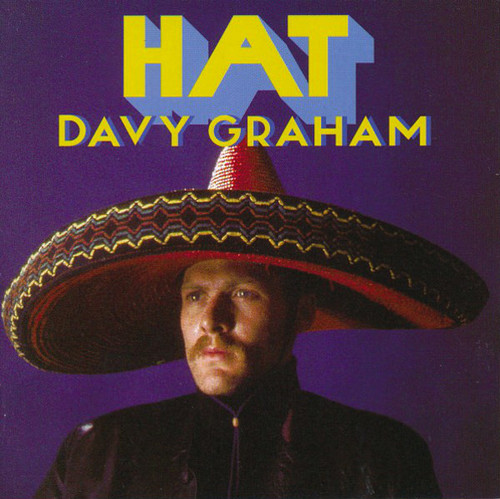
Hat
Reissued by Fledg'ling in 2005, originally released in 1969 on Decca Records, Hat. The album is a rounded portrait of Davy Graham's remarkable guitar style -- drawing together Willie Dixon, Charles Mingus, The Beatles, Henry Purcell and Indian raga on one splendid record. Fledg'ling have carefully remastered this album from the original master tapes, adding new sleeve-notes and previously unpublished photographs.
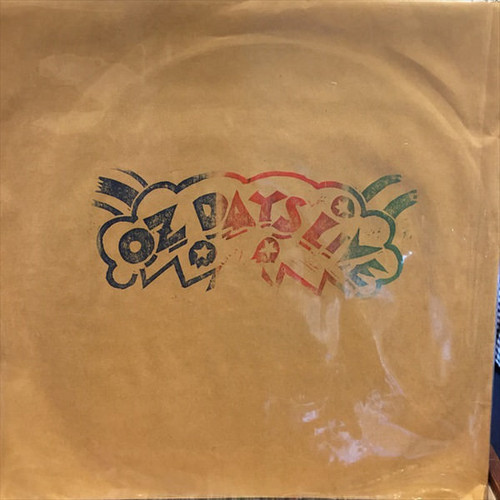
The OZ Tapes
Ltd pressing of only 300 copies, long gone and sold out. This is the reissue of this legendary LP – with Taj Mahal Travelers, Minami Masato, Acid Seven and Hadaka no Rallizes aka Les Rallizes Denudes. Without a single doubt, this bloodsucker of a disc is one of THE holy grails of the Japanese early seventies lysergic psych scene, together with Speed Glue & Shinki, Sato Masahiko & Soundbreakers and People/Ceremony. Privately released in a tiny edition on the OZ Days label way back in 1973, the re…
Live at the Shaboo-Inn (part II)
***restocked, very last copies** "2nd and final set from that legendary concert, here's a review i found on the net about part I: Unbelievable previously unreleased live electric Miles blow-out from January 1974: this is a mind-blower, with the electric group at an insane high energy over-amped peak. Not many live recordings exist from 1974, the same era as Dark Magus etc. Here Miles is paired with Dave Liebman, guitarist Pete Cosey, Reggie Lucas, Michael Henderson, Al Foster and Mtume and the f…

La Mutazione
**Few copies back in stock, sold out at source** A milestone originally released in 1985 on the legendary Broken Flag label, Giancarlo Toniutti's La Mutazione is renowned in certain circles as a classic and with good reason. The album comprises two subtle and haunting side-long explorations of dark cosmic electronics akin to Klaus Schulze, Cluster, Tangerine Dream, and Conrad Schnitzler filtered through the lens of Maurizio Bianchi, Whitehouse, Nurse With Wound, and The New Blockaders. At the …
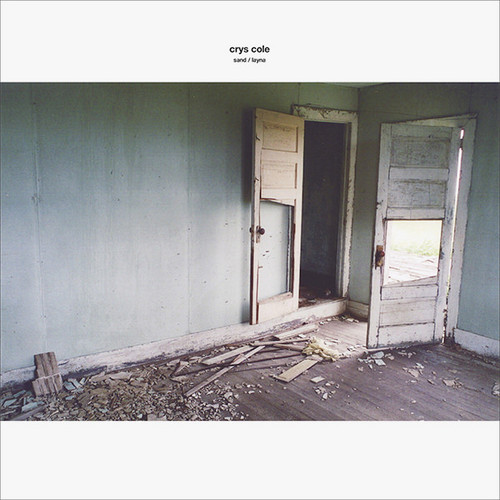
Sand/Layna
"Sand/Layna is the first full-length solo release by Canadian sound artist crys cole. While cole is known to many through her collaborative work with a host of Canadian artists and internationals such as Oren Ambarchi, Keith Rowe, and James Rushford, this LP presents the first opportunity for an extended appreciation of her singular approach to amplified sound. Using contact and other microphones to amplify her interactions with small objects and the surfaces on which they rest, cole's work …
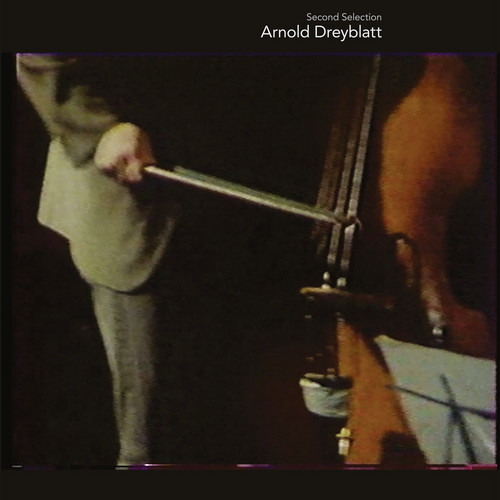
Second Selection
**restocked, last copies** Oren Ambarchi's Black Truffle dig out a masterclass in minimalism from the extensive, unreleased archive of seminal American composer, Arnold Dreyblatt A major collection of archival recordings by seminal minimalist composer, performer, instrument builder and visual artist Arnold Dreyblatt. Following on from the archival compilation Choice (Choose Records, 2013), Second Selectionpresents eleven pieces selected by Oren Ambarchi from Dreyblatt's extensive archive of pr…
The Glitter of the City
**very last copies** Ultra limited exacte replica reissue, a beat-digger's delight with loads of excellent drum breaks in this far out ghetto Jazz album."Ron left this plant in 1989 and his wife Linda don't have anymore the original master tapes. to my knowledge only 3 persons have the original: one fella in the US of A, an Italian DJ and a Japanese (who got multiple copies ?!). master used for this reissue comes from an original copy and it came out simply AMAZING (considering also that it'…
Die Unsichtbare
**restocked, very last copies copies*Mindblowing!! Truly an amazing edition, and finally the mythical 'invisible' LP is here! The music tracks on the two records "Unser Debut"-LP (1984) and "Sechs"-LP (1986) were composed in such a way that by playing them simultaneously on two record players a new unity came about. The invisible LP is literally invisible, immaterial and only heard when the two records Text, music and rhythm of the tracks of both records complemented, doubled and shifted one an…
Disqualifier
The 6th full-length studio recording and first since his move to Baltimore, Disqualifier steps beyond the shadow of Ottoman Black to yield a programmatic, mature and vulnerable setting. Dense brass, concrete sounds and mutated noise reveal a pointed narrative & unmatched compositional stroke. Equal parts harsh and ambient, Disqualifier is an exemplar for the American underground. Recorded from nothing November, 2012 through July, 2013 in Baltimore, MD. Additional musicians: Jeff Stockham french …
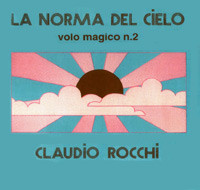
La norma del cielo
Special price, limited stock. Always influenced by eastern doctrines (he later became a Hare Krishna), Rocchi was also active in anti-war movements and always present at various italian pop festivals during the early 70's. His second album, released in 1971 and titled "Volo magico n.1", is usually considered as his best effort, in much the same style as Alan Sorrenti's "Aria" with a side-long title track and softer tracks on the other side. "Volo Magico n.1" features a 18 minute long title…