Music from Italy
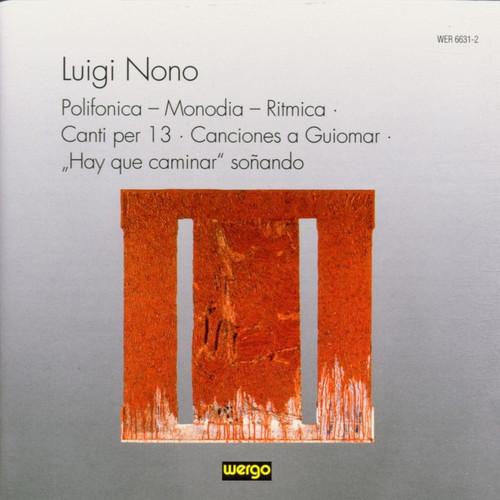
Polifonica - Monodia - Ritmica / Canti per 13 / Canciones a Guiomar / Hay Que Caminar Soñando
Four works by Luigi Nono from 1951 to 1989: Polifonica-Monodia-Ritmica, Canti per 13, Canciones a Guiomar and his last work, "Hay que caminar" soñando for two violins, with Ensemble UnitedBerlin, United Voices and Angelika Luz under Peter Hirsch.
Genocidio 20
Italian composer maurizio bianchi (1955) produced his first tapes of noise in the early 1980s, at the peak of the industrial scene, but his chaotic dissonant orgies harked back to the musique concrete of the 1950s, despite similarities with Nocturnal Emissions, Metabolist, Whitehouse, early Throbbing Gristle.
Men\'s True Hated
Menstrualrecordings is proud to start it's activities with the album by the Italian underground legend and Industrial-Noise Music pioneer Maurizio Bianchi (M.B.). 'Dysmenorrhoeic dissonances for floating keyboards, diagnostic modulations and absorbent strings, discharged during the autumn of 2005.' Edition of 300 numbered copies in handmade tri-fold cardboard sleeve with pasted photograps and handstamped MB logo. Edition of 278 numbered copies in handmade tri-fold cardboard sleeve with three pas…
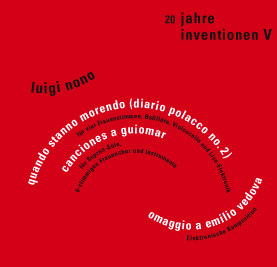
20 Jahre Inventionen V - live electronic
The live electronics that Nono worked with for the first time in the early 1980?s at the Freiburg Experimental Studio also serves the musical displacement: the music moves away from clear spatial and timbral assignations. Due to electronic processing, the sonic characteristics of both instruments, bass flute and cello, can hardly be recognized. Tones and gestures are lengthened into seeming infinity and move in space

Acousmatrix 7
Seventh volume in the Acousmatrix series. "In 1955, Luciano Berio and Bruno Maderna founded a Studio di Fonologia at a Milan radio station; it was the first electronic music studio in Italy. Berio became very active there, organizing concerts and also publishing a new music journal, both under the name Incontri Musicali. Berio explored the frontiers of sound, particularly vocal sound, thanks to his association with Cathy Berberian. She was willing and able to produce a remarkable variety of exte…
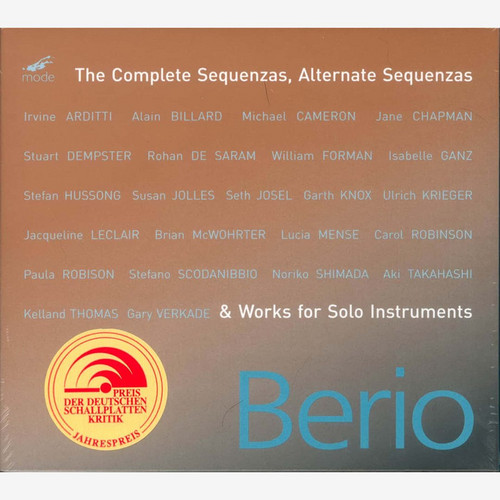
The Complete Sequenzas, Alternate Sequenzas
The first complete recording of Luciano Berio's Sequenzas for solo instruments, with the alternate versions and nine further solo works, on four CDs with verses by Edoardo Sanguineti and a 104-page book.
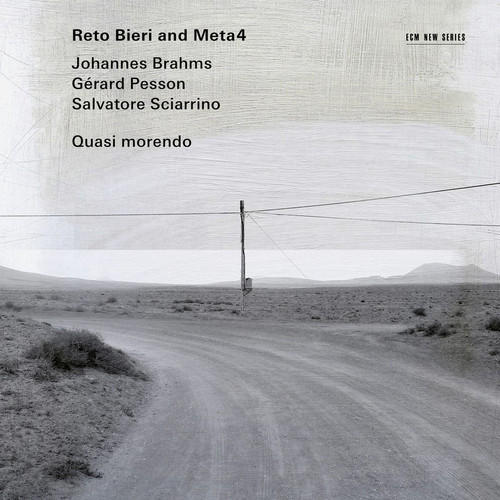
Quasi morendo - Johannes Brahms, Gérard Pesson, Salvatore Sciarrino
Brahms's Clarinet Quintet Op. 115 framed by Sciarrino's solo Let Me Die Before I Wake and Pesson's Nebenstück, played by clarinettist Reto Bieri and the Finnish quartet Meta4; recorded at RSI Studio Zürich, produced by Manfred Eicher.
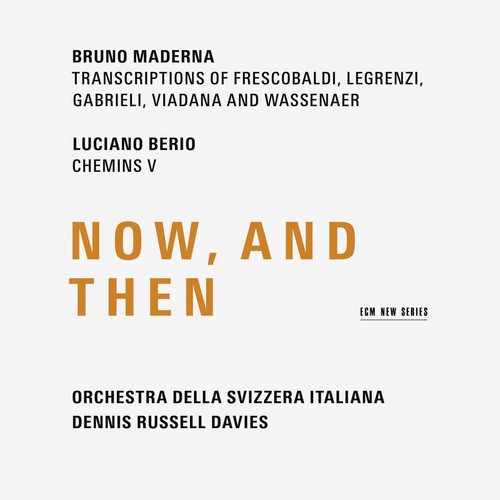
Giovanni Legrenzi, Luciano Berio, Giovanni Gabrieli, Orchestra della Svizzera italiana, Dennis Russell Davies
Now, And ThenBruno Maderna's chamber orchestra transcriptions of Frescobaldi, Legrenzi, Gabrieli, Viadana and Wassenaer, with the first recording of Luciano Berio's Chemins V (Pablo Márquez, guitar); Orchestra della Svizzera italiana, Dennis Russell Davies, recorded in Lugano in August 2015.
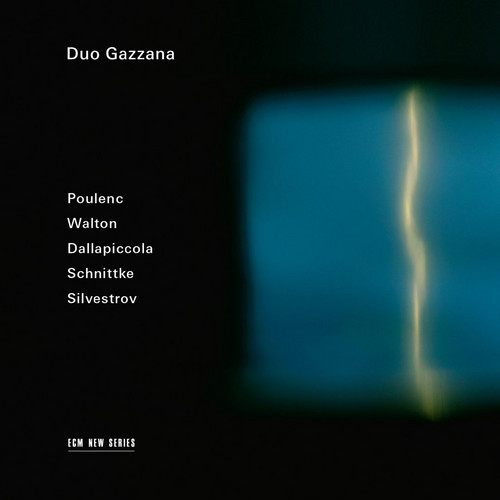
Francis Poulenc, William Walton, Luigi Dallapiccola, Alfred Schnittke, Valentin Silvestrov, Duo Gazzana
Poulenc, Walton, Dallapiccola, Schnittke, SilvestrovDuo Gazzana (Natascia Gazzana, violin; Raffaella Gazzana, piano) play Schnittke, Poulenc, Silvestrov, Walton and Dallapiccola, recorded in June 2013 at the Auditorio Radiotelevisione svizzera, Lugano, produced by Manfred Eicher.
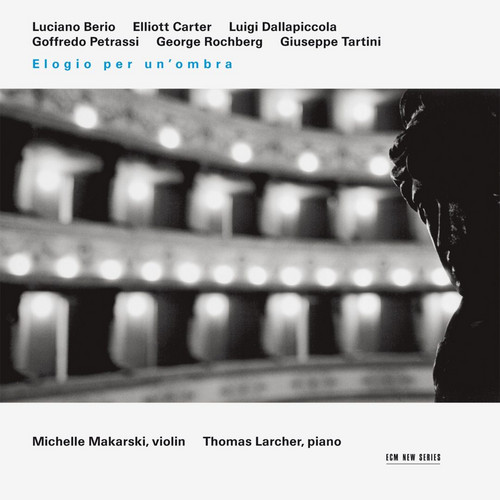
Elogio per un'ombra
Violin recital by Michelle Makarski, with Thomas Larcher on piano in Dallapiccola and Berio, setting Tartini's Sonata No. 7 among works by Petrassi, Carter, Rochberg and a 14th-century Lamento. Recorded May 1999 at Radio DRS, Zürich.

Moltitudine in Labirinto
Moltitudine in labirinto is a poetic journey drawn with sound. An unveiled meeting. The minimal sequences, the recognizable character of Gigi Masin’s music, here are fused with the electronic “vision” of Giuseppe Caprioli, more harsch, materic. The result is a fascinating hybrid, a new modern music, leaden and grieved, lost voice in the maze of memories. This CD, at the same time the new work of Masin and the “first time” for Caprioli, stands as a high expression in the lineage of evolution of t…
Sold Out
Giacinto Scelsi
**Comes in glossy gatefold sleeve with 20-page booklet ** Features 6 works by the influential Italian avant-gardist of the 20th century, dating from 1961-1990. Pranam I (for voice, 12 instruments and tape, 1972); Anagamin. Celui qui choisit de revenir ou pas (for 12 strings, 1965); Quattro pezzi su una nota sola (for chamber orchestra, 1959); Quartetto n. 4, (1964); Okanagon (Tam Tam and double bass, 1968); Quartetto n. 2 (1961). "For Giacinto Scelsi, music was above all a manifestation of the e…
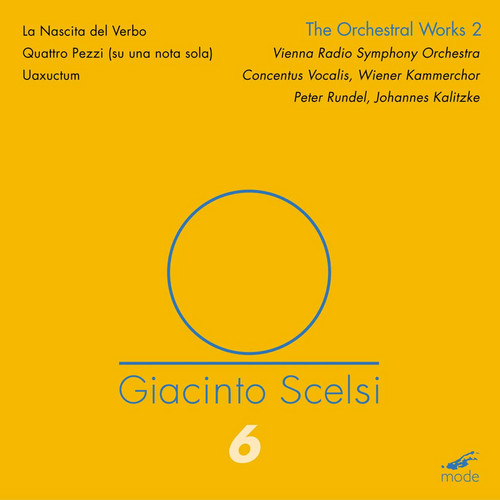
The Orchestral Works 2
Three orchestral works by Giacinto Scelsi recorded in Vienna in 2005: Quattro Pezzi (su una nota sola), Uaxuctum, and the first recording of La Nascita del Verbo, with the Vienna Radio Symphony Orchestra and choirs.
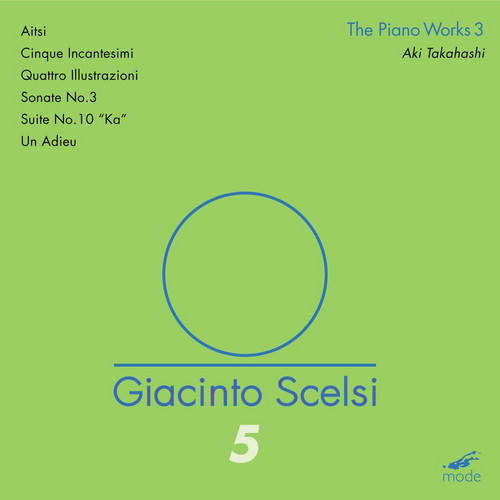
The piano works 3
Aki Takahashi plays Giacinto Scelsi's piano works in 2005 recordings, mostly pieces she prepared with the composer, including the Quattro Illustrazioni depicting the incarnations of Vishnu.
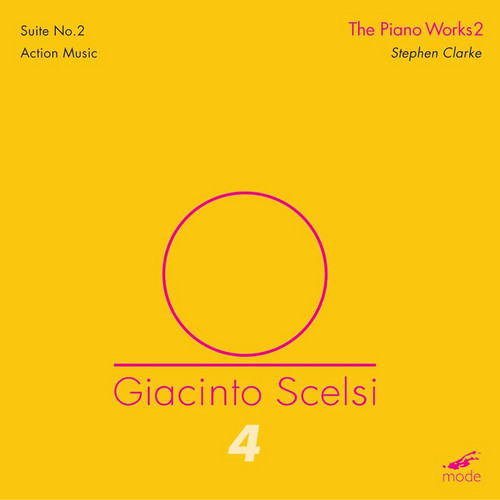
The piano works 2
Two Scelsi piano works played by Stephen Clarke: the first recording of the 1930 Suite No. 2 and Action Music (1955), in the second volume of Mode's Scelsi Edition devoted to the piano.
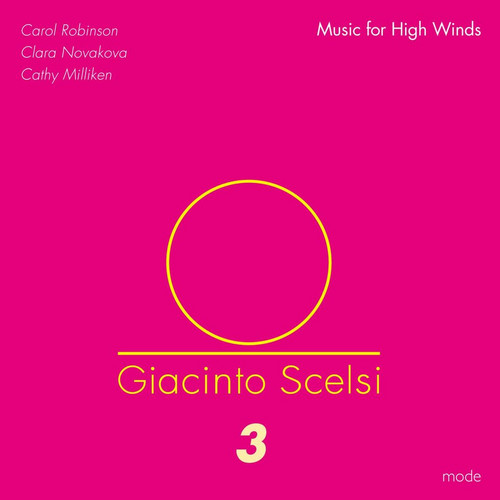
Music For High Winds
Giacinto Scelsi's music for woodwinds, mostly from the 1950s, for solo clarinet, flute and duos with oboe and piccolo, played by Carol Robinson, who worked with the composer, with Clara Novakova and Cathy Milliken.
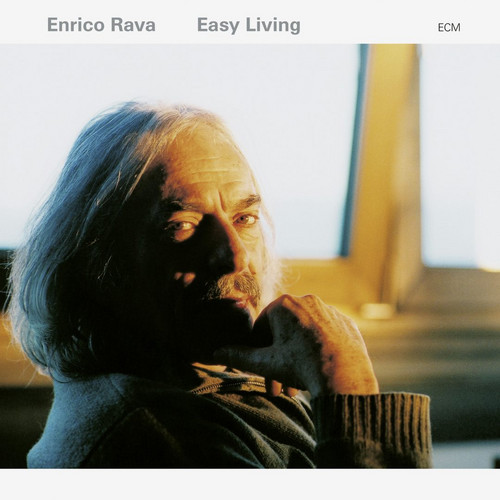
Easy Living
Easy Living is Enrico Rava's 2004 ECM album with his Italian quintet: Gianluca Petrella (trombone), Stefano Bollani (piano), Rosario Bonaccorso (double bass) and Roberto Gatto (drums), recorded in June 2003 at Artesuono Recording Studio, Udine, produced by Manfred Eicher.
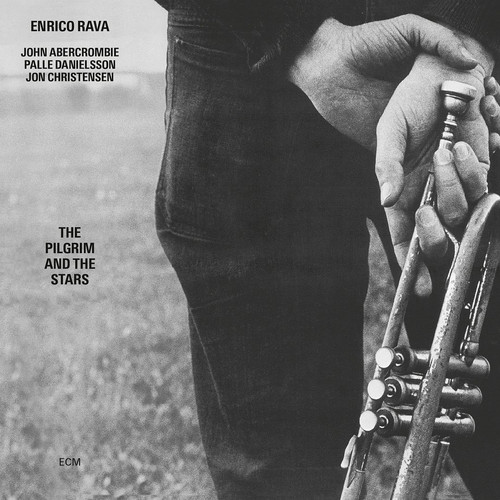
The Pilgrim And The Stars
Enrico Rava's first ECM album, seven of his compositions played by a pianoless quartet with John Abercrombie (guitar), Palle Danielsson (double bass) and Jon Christensen (drums), recorded in June 1975 at Tonstudio Bauer, Ludwigsburg.
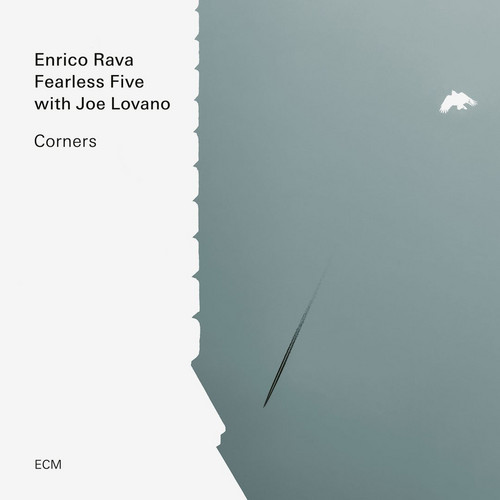
Corners
Corners (ECM, 2026) is the first ECM album by Enrico Rava's Fearless Five (Paggi, Diodati, Ponticelli, Polidoro) with guest Joe Lovano on tenor saxophone: nine originals recorded in July 2025 at the Auditorium Parco della Musica in Rome, produced by Manfred Eicher.
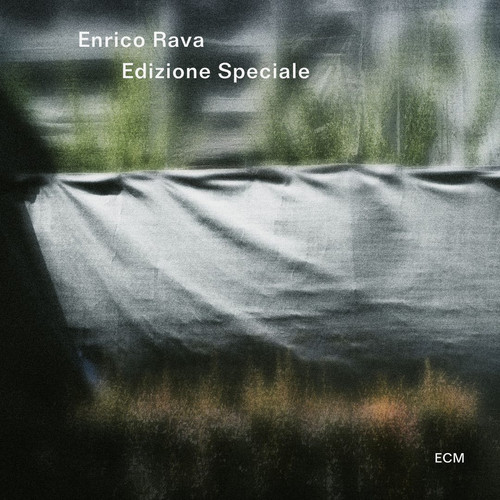
Edizione Speciale
Live sextet recording by Enrico Rava (flugelhorn) with Francesco Bearzatti, Francesco Diodati, Giovanni Guidi, Gabriele Evangelista and Enrico Morello, recorded on 18 August 2019 at Jazz Middelheim, Antwerp. ECM 2672, 2021.