Enrico Rava, John Abercrombie, Palle Danielsson, Jon Christensen
The Pilgrim And The Stars
The Pilgrim And The Stars is the first album Enrico Rava made for ECM, recorded in June 1975 and released that November. The Italian trumpeter leads a pianoless quartet with guitar, bass and drums, playing seven pieces he wrote or co-wrote. Strong melodies sit next to long, open solos, and the ballad Blancasnow has since become one of his best-known compositions.
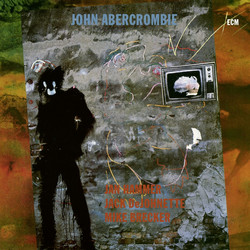
Rava arrived with a long road behind him. Born in Trieste in 1939, he had worked with Gato Barbieri and Steve Lacy and had lived in New York since 1969, playing with Roswell Rudd and the Jazz Composer's Orchestra. Here he is joined by John Abercrombie on guitar, Palle Danielsson on double bass and Jon Christensen on drums, a rhythm team already heard with Keith Jarrett on Belonging. The session took place at Tonstudio Bauer in Ludwigsburg, with Martin Wieland engineering and Manfred Eicher producing.
The title track opens on a breathy, half-whispered trumpet that gains strength once Abercrombie takes over the rhythm. Bella, over nine minutes long, starts on a gentle groove and grows more heated as Christensen pushes the pulse, with solos from guitar and bass before the theme returns. Parks is a duet for trumpet and acoustic guitar lasting under two minutes. Blancasnow closes the album, its loose introduction floating over dark textures from the rhythm section before Rava brings in the melody. By The Sea, the one piece co-written with Graciela Rava, is the most spacious.
In AllMusic, Matt Collar called the album "a stellar progressive jazz effort" and placed it among the contemplative, experimental Euro-jazz on which ECM made its name. Pianist Ethan Iverson, revisiting Rava's early ECM records, heard Italian melody close to film music by Ennio Morricone or Nino Rota, paired with serious blowing. The same four musicians met again in Oslo in August 1976 for Rava's next ECM album, The Plot.
This CD edition of ECM 1063, first issued in 1975, was reissued on 24 October 2008 in the Touchstones series. ECM launched the series that year to bring key catalogue albums back into circulation in cardboard sleeves.