Jan Garbarek, Bobo Stenson, Palle Danielsson, Jon Christensen, Terje Rypdal, Arild Andersen
Dansere (3CD)
Dansere brings together on three CDs three of the early albums Jan Garbarek made for ECM Records in the 1970s: Sart, Witchi-Tai-To and Dansere. Heard in sequence, they follow the Norwegian saxophonist from the knotted, free-leaning group playing of 1971 to the spacious, folk-inflected sound of the mid-decade. Two bands are involved, a quintet on Sart and the Jan Garbarek-Bobo Stenson Quartet on the other two. The box returns music that had gone out of print to the catalogue.
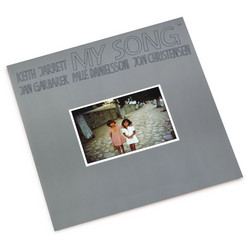
Sart was recorded in April 1971 at Arne Bendiksen Studio in Oslo. Garbarek plays tenor and bass saxophones and flute, Stenson piano and electric piano, and Terje Rypdal adds guitar over double bass and Jon Christensen's percussion. Witchi-Tai-To followed in November 1973 in the same studio, with Garbarek on soprano and tenor, Stenson on piano, Palle Danielsson on double bass and Christensen on drums. The same quartet made Dansere in November 1975 at Talent Studio, Oslo. Manfred Eicher produced all three and Jan Erik Kongshaug engineered them, and the booklet carries notes by Michael Tucker.
The first disc is dominated by the title track of Sart, almost fifteen minutes of open, argumentative ensemble improvisation built on a Garbarek theme. Witchi-Tai-To is the album of other people's tunes: Carla Bley's A.I.R., Carlos Puebla's Hasta Siempre, Jim Pepper's title song and a twenty-minute reading of Don Cherry's Desireless that lets the quartet stretch out at length. Dansere returns to Garbarek's own writing, from the fifteen-minute title piece to Lokk, a traditional Norwegian melody he arranged after Thorvald Tronsgård. In Die Zeit, Manfred Sack heard crystal-clear piano, a vibrating bass and glittering drums, with the saxophone circling above them like a dreaming buzzard.
Writing on Dansere in Melody Maker, Steve Lake called the quartet "one of the most democratic and quietly outrageous acoustic music groups this side of the Atlantic". He added that Christensen, were he American, would be spoken of in awe. Stereo Review found "hauntingly beautiful music that is derived from jazz but goes beyond any meaning of that word", and praised ECM's recorded sound. Reviewing the box for the Something Else website in 2012, S. Victor Aaron described each album as a complete, standalone work and saw Dansere as the moment the group arrived as a major force in European jazz.
This 3CD box (ECM 2146-48) was released in June 2012 in ECM's Old & New Masters series, which returns earlier albums from the label's catalogue in compact multi-disc sets. Each disc keeps its original phonographic date: 1971, 1974 and 1976.