Saxophone
All records with saxophone · Solo saxophone only
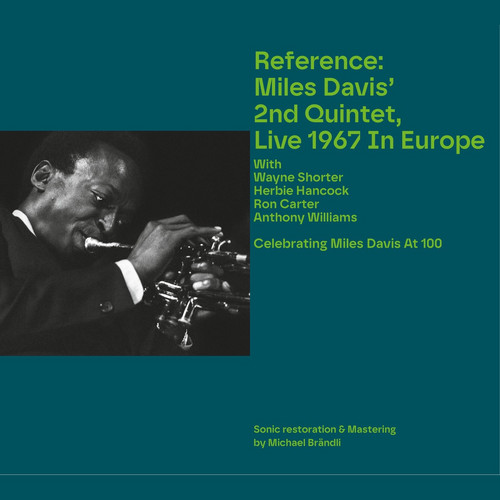
Reference: Miles Davis’ 2nd Quintet Live 1967 in Europe
The Second Quintet with Shorter, Hancock, Carter and Williams on its autumn 1967 European tour: Antwerp, Copenhagen, Paris and Karlsruhe on three CDs, restored by Michael Brändli, with an essay by Art Lange.
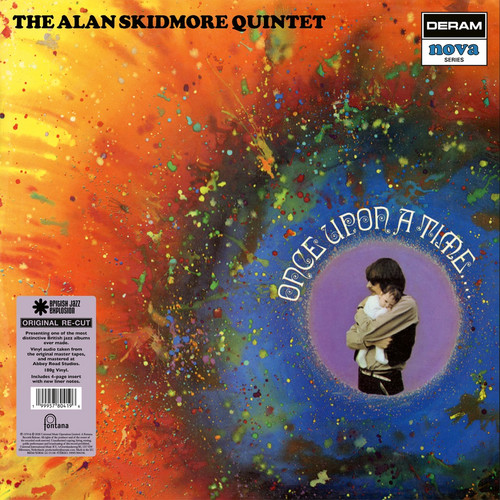
Once Upon a Time
Alan Skidmore's 1970 Deram Nova album with Kenny Wheeler, John Taylor, Harry Miller and Tony Oxley, fresh from their Montreux triumph: a jazz waltz, long suites and free passages, back on vinyl from the stereo masters.
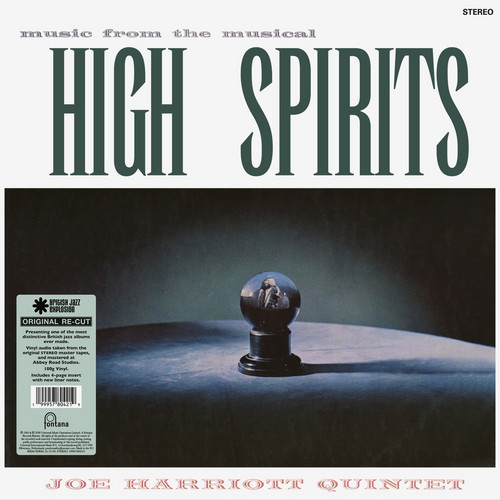
High Spirits
Joe Harriott's 1964 quintet with Shake Keane, Pat Smythe, Coleridge Goode and Bobby Orr turns songs from the Broadway musical High Spirits into lyrical, swinging jazz, now on vinyl in stereo for the first time.
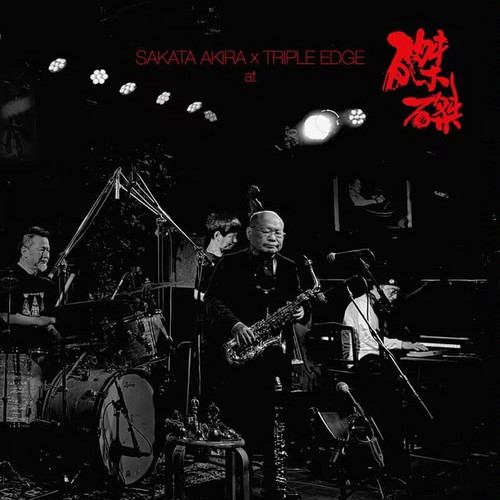
At Takutaku
Akira Sakata x Triple Edge live at Takutaku, Kyoto, February 2024: 65 minutes with Tsuboguchi, Hayakawa and Fujikake, plus Takayuki Kato on guitar and Hiroshi Funato on contrabass, built around the two-part Takutaku Suite.
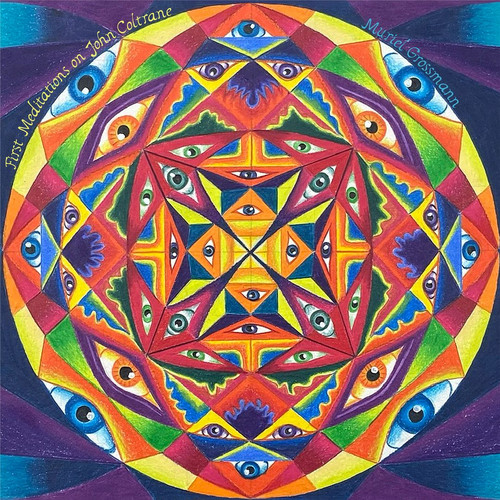
First Meditations on John Coltrane
CD version. This album is a tribute to the person and spirit of John Coltrane. It was produced by musicians who not only admire Coltrane but embody similar values.While it’s always a good time to honor Coltrane’s memory, this particular moment seems to carry an increased urgency of remembering his message and mission.Since some owners of this amazing record may be unfamiliar with Coltrane’s character, it’s worthwhile to briefly state a few biographical details.First, Coltrane was a compassionate…
Ascending the Depths
Ithaca trio of Sarah Hennies, Willie B. and Keir Neuringer, three percussionists reaching into vibraphone, saxophone and piano. Eight studio improvisations, playful and energetic, held against a meditative core.
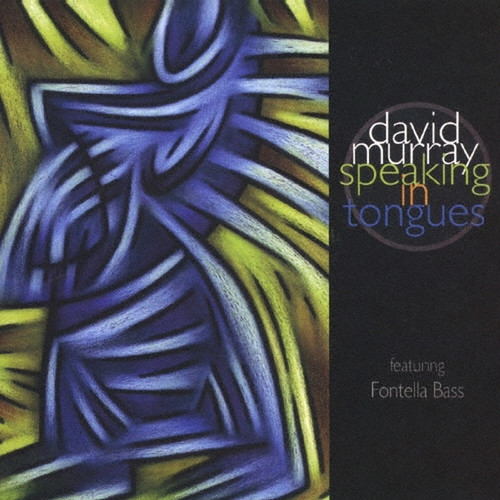
Speaking In Tongues
One day in a Paris studio, December 1997. David Murray goes back to the gospel church of his Berkeley childhood with Fontella Bass, the voice of Rescue Me and the Art Ensemble's Theme de Yoyo, over Hammond B3, electric bass and guitar. Amazing Grace, How I Got Over, and Murray's own twelve-minute Missionary.
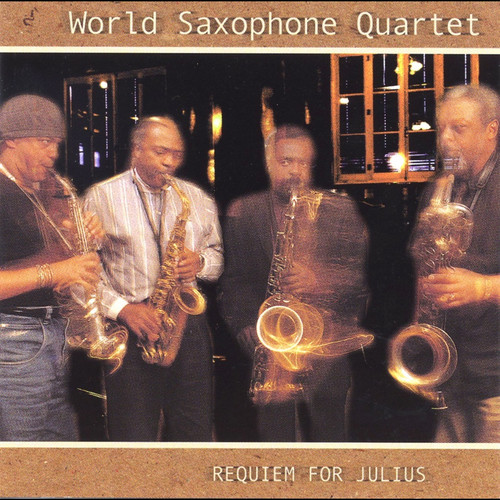
Requiem For Julius
Five years after Julius Hemphill's death, the World Saxophone Quartet records its farewell to him: four horns alone, no drums, at Studio Victor in Montreal in 1999. David Murray's title piece, three Oliver Lake tunes, a Jack DeJohnette opener. The Penguin Guide calls it one of the group's most accessible records.
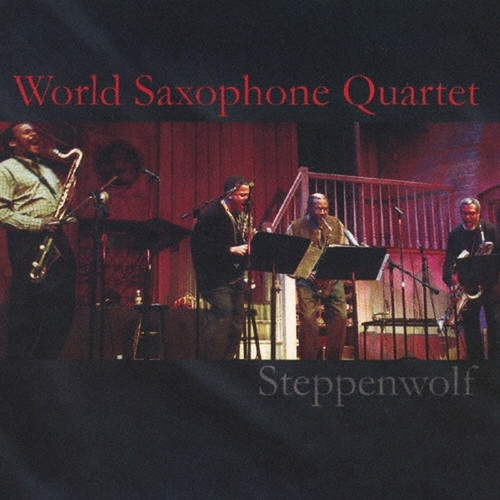
Steppenwolf
Chicago, Steppenwolf Theatre, 1 March 1999. The World Saxophone Quartet plays a full concert and the tape stays in a drawer for three years. Justin Time released it in 2002 as Steppenwolf, and it turned out to be the last record John Purcell made with the group.
The WSQ mostly recorded in studios. A live album from this period is a different animal: the pieces stretch out, the four players introduce their own tunes at the microphone, and Oliver Lake reads a spoken narrative. Jim Santella at All …
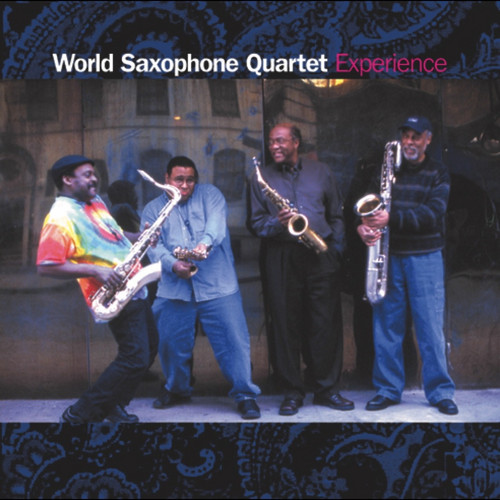
Experience
Eight Jimi Hendrix songs for four saxophones, plus trombone, violin, electric bass and drums. Experience was recorded over three days, 13 to 15 March 2003, and released by Justin Time in 2004.
By then the World Saxophone Quartet had a new fourth voice. Bruce Williams, on alto and soprano, had replaced John Purcell alongside the three founders, Hamiet Bluiett, Oliver Lake and David Murray. For the Hendrix material they brought in a rhythm section: Matthew Garrison on electric bass, Gene Lake (Oli…
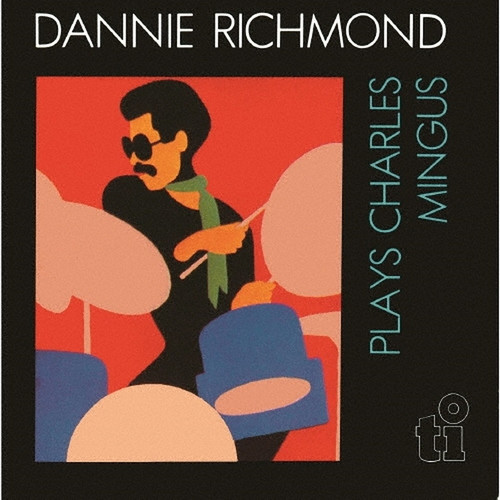
Plays Charles Mingus
Charles Mingus died in January 1979. Nineteen months later, on 18 August 1980, his drummer of more than twenty years took what was left of the last Mingus band into Fonoprint Studio in Bologna and recorded six tunes for the Dutch label Timeless.
Dannie Richmond had rarely led a date. Here he heads the quintet that had backed Mingus at the end: Ricky Ford on tenor, Jack Walrath on trumpet, Bob Neloms on piano, and Cameron Brown in the bass chair the leader had vacated. The record was co-produced …
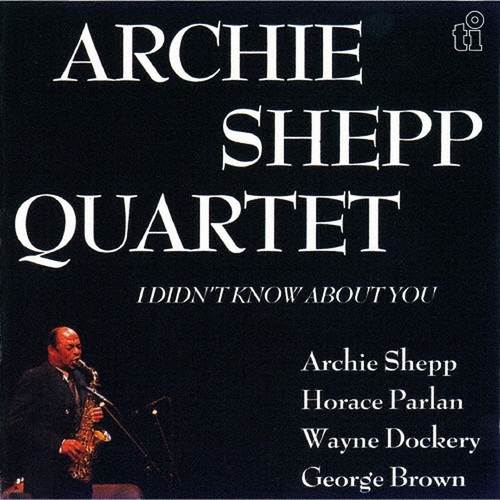
I Didn't Know About You
Munich, Studio Meilhaus, 6 November 1990. Archie Shepp on tenor and alto, singing on three tracks, with Horace Parlan on piano, Wayne Dockery on bass and George Brown on drums. One day of work for the Dutch label Timeless, released the following year.
Shepp and Parlan had recorded the spirituals of Goin' Home and the blues of Trouble in Mind as a duo for SteepleChase in the late 1970s. This quartet session comes out of the same relationship, a decade on, and the material tells you where Shepp wa…
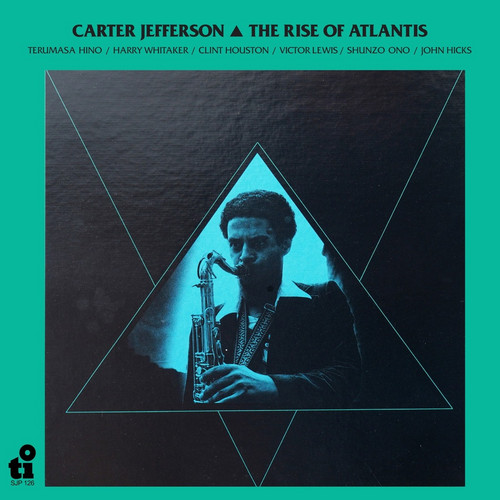
The Rise Of Atlantis
The only album under Carter Jefferson's name, produced by Woody Shaw and recorded in New York over two days in December 1978. Terumasa Hino, Harry Whitaker and Steve Thornton on the first side, Shunzo Ono and John Hicks on the second, Clint Houston and Victor Lewis throughout.
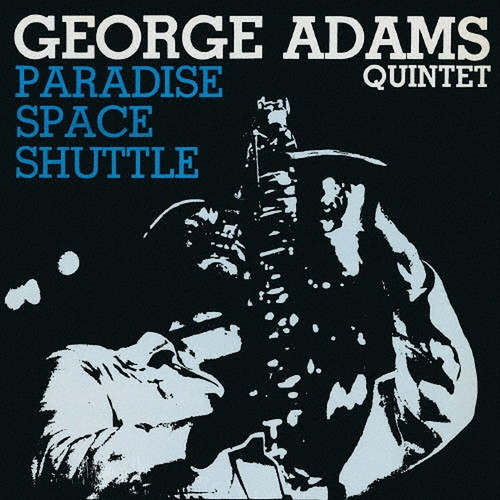
Paradise Space Shuttle
George Adams' first record under his own name for a US audience, cut in one day in New York, 21 December 1979, with Ron Burton, Don Pate, Al Foster and Azzedin Weston. Hard bop, a Sondheim ballad, a Mingus tribute, and the fourteen-minute Funk-a-Roonie Peacock with Adams on flute and voice.
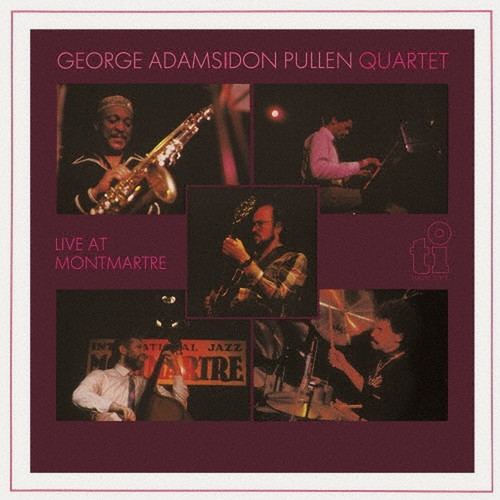
Live At Montmartre
Jazzhus Montmartre, Copenhagen, 4 and 5 April 1985. The George Adams - Don Pullen Quartet with Cameron Brown and Dannie Richmond, and a guest who changes the sound: John Scofield on guitar.
This was the rhythm section of Mingus's Changes One and Changes Two, minus Mingus, and between 1979 and 1989 it was one of the best working bands in jazz. JazzTimes, looking back, wrote that no group before or since bridged avant-garde abandon and gutbucket groove so convincingly, and that everyone who heard …
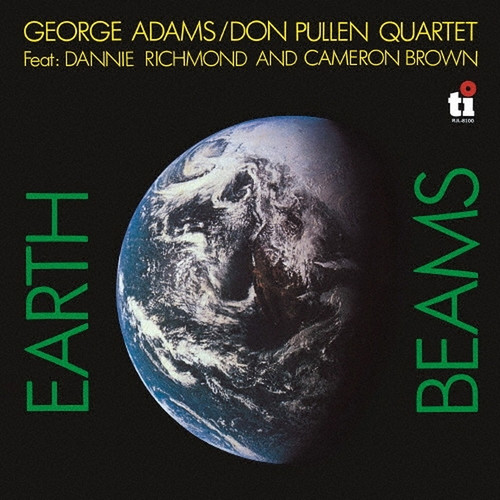
Earth Beams
The first studio album by the George Adams - Don Pullen Quartet, recorded at Fendal Sound Studio in Loenen aan de Vecht, in the Dutch countryside, between 3 and 5 August 1980, and produced by the two leaders themselves for Timeless.
Adams on tenor and flute, Pullen on piano, Cameron Brown on bass, Dannie Richmond on drums. Neil Tesser, in the Playboy Book of Jazz, wrote that the presence of Richmond, Mingus's drummer and protégé for over two decades, made it clear that this band saw itself as ca…
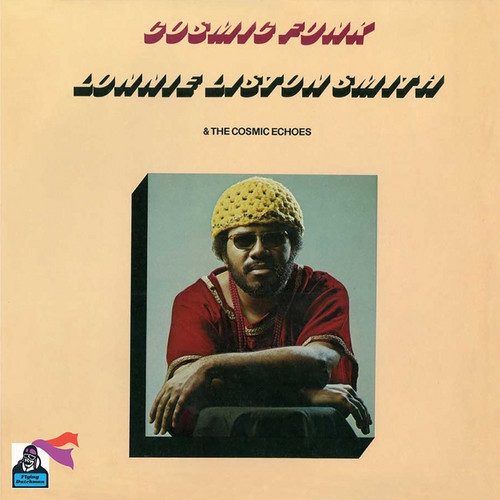
Cosmic Funk
Lonnie Liston Smith's second Flying Dutchman album, April 1974, and the first with the Cosmic Echoes and his brother Donald's voice. Produced by Bob Thiele. Electric piano funk on the title track, Shorter's Footprints, Mtume's Sais, and a sung version of Coltrane's Naima to close.
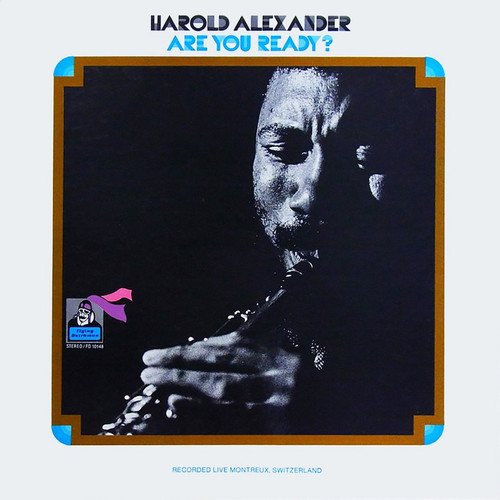
Are You Ready?
Three long tracks, thirty-six minutes, cut live in front of a Montreux crowd. Are You Ready? is Harold Alexander's second and last record for Bob Thiele's Flying Dutchman, released in 1972.
Alexander, from Charlotte, North Carolina, had played with Big John Patton and with Elvin Jones before Thiele signed him. His flute is the main voice here, with soprano saxophone in reserve, and the band around him is the New York session pool of the period: Neal Creque on piano, Cornell Dupree on guitar, Vic…
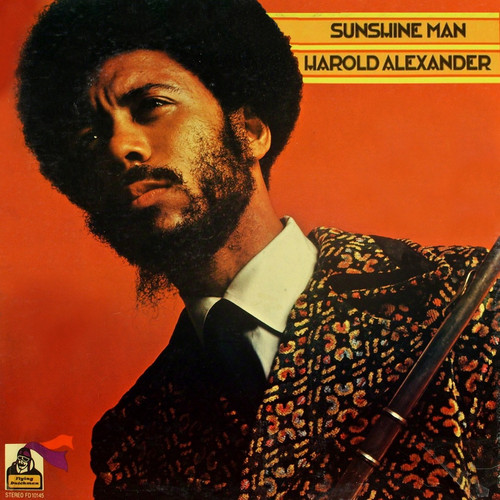
Sunshine Man
Two days in May 1971, produced by Bob Thiele for Flying Dutchman. Harold Alexander on flute and soprano over Neal Creque's electric piano, Richard Davis's bass, Pretty Purdie's drums and Richard Landrum's congas. Contains Mama Soul, the scat-flute track that got him into DJ sets decades later.
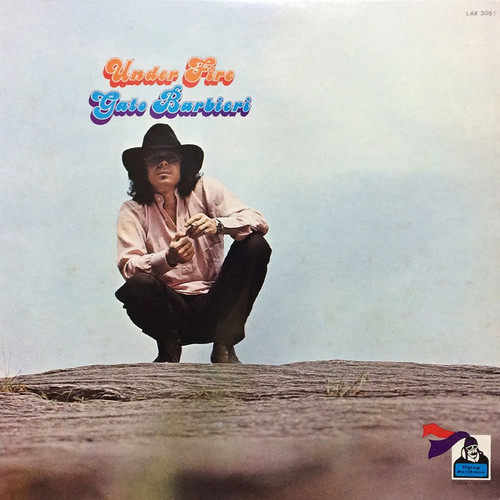
Under Fire
Recorded in New York in 1971, held back by Flying Dutchman until 1973, Under Fire sits between the Montreux live album and Bolivia in Gato Barbieri's run for the label, the years when he was moving away from free jazz and toward the folk material of his continent.
The band is the one AllMusic calls stellar: Lonnie Liston Smith on piano and electric piano, John Abercrombie on guitar, Stanley Clarke on bass, Airto Moreira, James Mtume and Moulay Ali Hafid on percussion, and Roy Haynes on drums for…