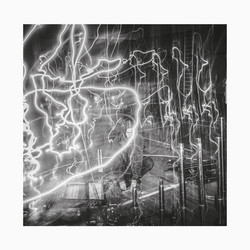
Thomas Peter
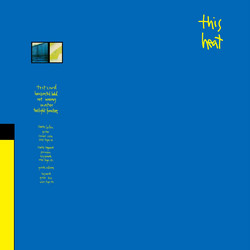
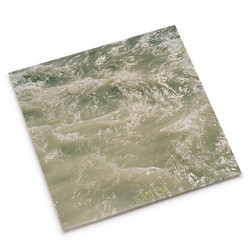
Changing Bodies (LP)
LabelHallow Ground
FormatLP
GenreExperimental
Arriving from the supplier: On backorder: usually ships within a few days.
Tracked express shipping from Italy, no customs or import VAT in the EU. Shipping costs
Changing Bodies marks Thomas Peter’s debut on Hallow Ground and presents him as a composer who thinks with his ears as much as with any theoretical framework. The album’s title points to its core preoccupation: the way objects react to sound and, in turn, become sources of vibration themselves. Over five pieces shaped across four years, the Swiss sound artist works with field recordings, materials like wood, stone and metal, and a palette of analogue and digital synthesizers to build music that feels both acutely physical and quietly introspective. Each track moves through subtle twists and turns, with even silence treated as an active agent rather than a mere absence.
The foundations of changing bodies were laid in constant, attentive recording. Peter carried microphones into closed rooms, city streets and rural spaces, capturing the particular acoustic fingerprint of each environment. Alongside these documented spaces, he generated “organic” tones on synthesizers and coaxed sound from objects – scraped wood, struck stone, resonant metal – treating them all as if they were speaking in related dialects. “I viewed all these sounds as a kind of language that I was trying to understand,” he notes, describing how he focused on differences between sounds in motion, emerging rhythmic patterns and dense, evolving textures. The work was as much corporeal as conceptual: a practice of becoming all ears, letting the body register and internalise each nuance.
From that concrete harvest, Peter then moved toward abstraction. The raw recordings, and the psycho‑physical reverberations they provoked, were translated into new musical structures through processes of repetition, densification and recombination. Motifs recur in altered guises, textures slowly thicken or thin, and seemingly incidental noises are brought into focus until they become central. Across the five tracks, unheard‑of sound combinations are set into motion, yet the pacing remains measured; intricate dynamics unfold without tipping into overload. The listener is given time to notice how a rustle becomes a pulse, how a hum turns into harmony, how a pause can reset the entire field.
In this sense, changing bodies is both the document of a process and an invitation to share its method. It was born from listening intently and physically, from treating the material world as a collaborator rather than a backdrop. The album asks to be approached in the same spirit: not as background, but as a space to inhabit, where each resonance, shift and moment of quiet can be felt as well as heard.
Release notes
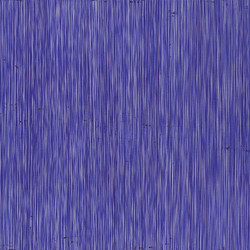
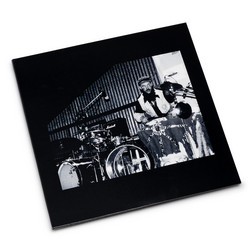
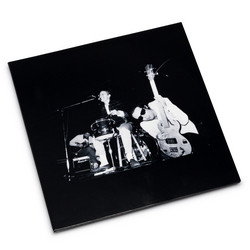
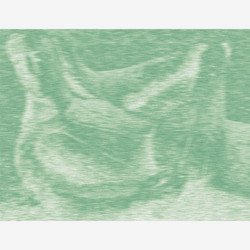
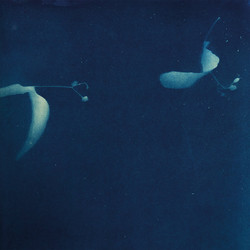
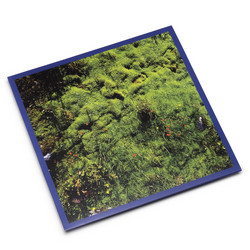
Blue vinyl with 16-page booklet with introduction by the artists and documentary photos.
| A1 | Drift | 6:46 | |
| A2 | Niebla | 5:20 | |
| A3 | Bending Myself | 4:27 | |
| B1 | Something That Is There, Something Similar | 5:49 | |
| B2 | Changing Bodies | 8:21 |
- Remo Seeland
- Design
- Andreas Lubich
- Lacquer Cut By
- Tomas Korber
- Mastered By
- Thomas Peter
- Music By
- Olivia Wiederkehr
- Photography By