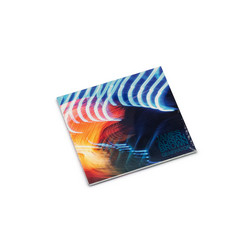
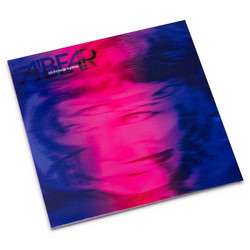
With Forever Neon Lights, James Adrian Brown steps out from the serrated shadow of Pulled Apart By Horses and into a world lit by memory, circuitry and sheer bloody-minded persistence. After years of chart success, world tours and four critically acclaimed albums as the band’s guitarist, this debut solo record doesn’t try to translate that noise into a new idiom; it starts somewhere else entirely. Brown has been quietly building a parallel practice in instrumental electronic music, and here that work comes into sharp focus: a lush, meticulously hand‑built sound world driven less by riffs than by texture, pulse and the grain of analogue signal.
Brown’s solo practice is grounded in electronics but resolutely physical in its methods. Instead of a screen‑based, in‑the‑box approach, he leans into analogue synths, tape machines, piano, strings and a tangle of outboard hardware. The emphasis is on capture as much as composition: how a filter sweep actually feels under the fingers, how tape compression rounds off transients, how a synth detunes as it warms, how a piano note decays into a bed of hiss. These choices give Forever Neon Lights a tangible presence; even at its most celestial, the album never loses the sense of hands on knobs, bodies in rooms, currents flowing through coils and caps. It’s electronica as craft, not preset theatre.
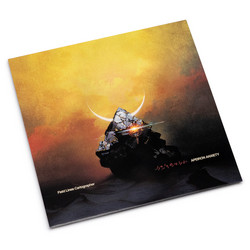
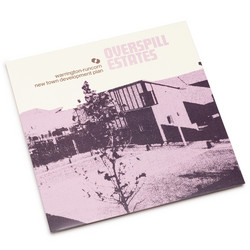
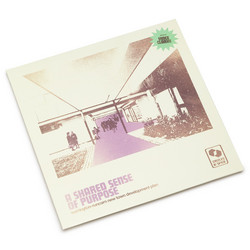
The record arrives hot on the heels of a prolific period that has seen Brown operating on multiple fronts. Earlier in the year he produced Benefits’ widely praised album Constant Noise, a ferocious document of class rage and overload, while continuing a steady run of live shows, singles and EPs under his own name. Along the way he has built up a dense web of production and remix work with artists including Warrington‑Runcorn New Town Development Plan, Field Lines Cartographer, James Welsh, Werra Foxma, Hayden Thorpe, Blood Red Shoes and Benefits. Those collaborations have sharpened his ear for atmosphere and dynamics, and you can hear that experience in the way Forever Neon Lights balances intimacy with scale, detail with impact.
At its core, the album is an exploration of memory, movement and transformation. The seed lies in childhood trips to the Blackpool Illuminations, where brightness, motion and imagination fused into a single overwhelming experience: seafronts turned into electric rivers, colours that seemed too saturated to be real, moving light sculptures that suggested worlds beyond the everyday. Those nights lodged themselves deep, and Forever Neon Lightstraces the long echo of that first encounter with man‑made wonder. Across its tracks, Brown revisits childhood awe, the headrush of possibility, and the later realities of chasing a creative life - the doubts, detours and small triumphs that don’t make it into tour posters.
The Illuminations function on two levels throughout the record. Literally, they’re the remembered spectacle that Brown keeps circling back to, down to the childish belief that the lights “wrapped right around the entire country every Christmas and went on forever.” Metaphorically, they stand in for the stubborn persistence of creative energy itself: dazzling and unending on the surface, powered by vast, unseen infrastructures behind the scenes. The music mirrors this tension. On the surface you hear slowly evolving melodies, surging pads, ticking arpeggios and crescendos that feel like the moment a street of lights flicks on at once. Underneath, there is a dense, carefully engineered interplay of analogue hardware and immersive electronics, shaped in collaboration with long‑time ally James Mottershead. Together they merge modular warmth, tape‑softened edges and detailed sound design into a vivid, continually shifting landscape.
Brown describes making the album as a kind of personal excavation: “This album is me laying everything out, the things I’ve carried since being a child, the hopes, dreams, and doubts I’ve felt as an adult, and the stubbornness to see things through. Writing and recording it felt like reconnecting with that wide-eyed version of myself who thought the lights back in Blackpool wrapped right around the entire country every Christmas and went on forever. It’s about taking that feeling and turning it into something lasting and real.” That statement is key to how Forever Neon Lights operates. These are not nostalgic postcards; they are attempts to convert a half‑mythic emotional charge into sound that exists in the present tense.