Gino Conte
Nell'Anno della Luna (LP + CD)
Tracked express shipping from Italy, no customs or import VAT in the EU. Shipping costs
A deep mystery surrounds both the film Nell'anno della Luna and its beguiling 1970 soundtrack, a work that hovers somewhere between the elegant swing orchestrations of an earlier era and the more adventurous sonic territories being charted by Italian composers at the close of the 1960s. Even in our current age of instant information and exhaustive online databases, almost nothing is known about the movie itself. What remains is the music: ten tracks of remarkable sophistication and inventiveness composed and conducted by Gino Conte for director Romolo Marcellini's final film.
Marcellini had built his reputation on documentary filmmaking. Born in Montecosaro in the Marche region in 1910, he specialized in capturing reality with an almost lyrical eye, culminating in La Grande Olimpiade (1961), his celebrated document of the 1960 Rome Summer Olympics. That film, with its sweeping aerial shots of St. Peter's Basilica and the Colosseum and its intimate portrayals of athletes like the barefoot Ethiopian marathon runner Abebe Bikila and American sprinter Wilma Rudolph, earned a nomination for Best Documentary Feature at the 34th Academy Awards. Marcellini employed 35 cameramen and a crew of nearly 300 people, using over 80,000 metres of negative film to create what one critic called a stunning example of Cold War-era Italian state-sponsored filmmaking. Before turning to documentaries, he had directed adventure pictures such as I pirati del golfo and Sentinelle di bronzo. By 1969, with Nell'anno della Luna, he had apparently turned his attention to... what, exactly? The film's subject remains unknown. Perhaps a documentary about the Apollo moon landings of that year? A fictional drama set against the backdrop of the space race? Even the Internet Movie Database offers no synopsis. The film exists only as a title, a director credit, and this haunting soundtrack.
The music itself is a gorgeous anachronism. While Italian film composers of 1969 were experimenting with fuzz guitars, electronic effects, and the aggressive sounds of the burgeoning library music scene, Conte chose a different path. The album opens with the title track "Nell'anno della Luna," a theme of shimmering orchestral elegance. "Tema Giochi" follows with playful melodicism, while "Swing for Six" and "Magico 2 E 2 Bis" evoke the sophisticated big band arrangements that had defined Italian light music a generation earlier. "Alla brasiliana" and "Samba Querida" bring Latin rhythms into the mix, nodding to the bossa nova craze that had swept through Italian popular music in the wake of Antônio Carlos Jobim's international success.
But it is on the more experimental tracks that Conte reveals his awareness of contemporary currents. "Afro Swing," "Underground," and "Beat Mania" push beyond easy listening conventions, incorporating psychedelic textures and the unmistakable presence of I 4+4 di Nora Orlandi, the legendary vocal ensemble that defined the sound of Italian television and popular music throughout the 1960s and 1970s. Nora Orlandi, born in Voghera in 1933, had created her first vocal group, the Quartetto 2+2, in 1952 while working as a violinist for the RAI orchestra in Rome. By the end of the decade, she had doubled her forces to create I 4+4, a flexible ensemble of four male and four female voices that would become fixtures at the Festival di Sanremo, Canzonissima, Un disco per l'estate, and countless other Italian television programs. The group collaborated with virtually every major Italian popular singer of the era: Adriano Celentano, Domenico Modugno, Mina, Gianni Morandi, Lucio Battisti, Mia Martini, Lucio Dalla.
Orlandi was also Italy's first female film composer, scoring Spaghetti Westerns, Eurospy films, and gialli throughout the 1960s. Her most enduring composition, "Dies Irae," written for Sergio Martino's giallo Lo strano vizio della Signora Wardh (1971), would find new audiences decades later when Quentin Tarantino included it in Kill Bill: Volume 2 (2004). On "Afro Swing," "Underground," and "Beat Mania," her vocalists add layers of rhythmic complexity and wordless melody that transform Conte's already sophisticated arrangements into something genuinely progressive, bridging the gap between easy listening and the more experimental library music that Italian composers were producing for labels like Omicron, Liuto, and CAM.
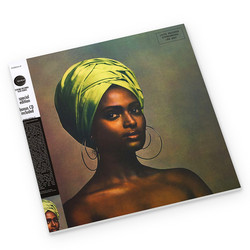
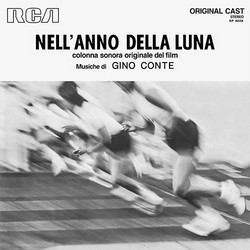
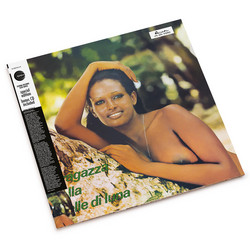
The original LP was released by RCA Original Cast in 1970, a year after the film's premiere, and quickly disappeared into obscurity alongside the movie it accompanied. For decades it remained a coveted rarity, known only to the most dedicated collectors of Italian soundtrack and library music. This Schema Records reissue, presented in a gatefold LP with bonus CD, restores this enigmatic work to circulation. The CD version includes five additional alternate takes, offering further glimpses into Conte and Orlandi's creative process.