Nate Morgan
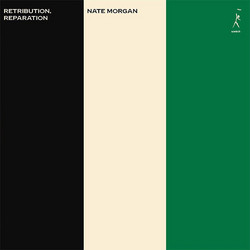
Retribution, Reparation
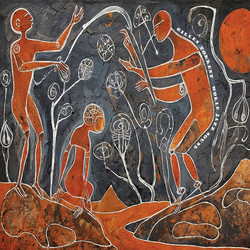
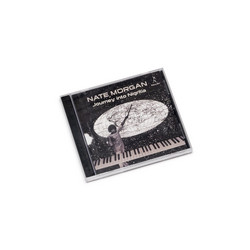
One year after his debut Journey Into Nigritia, Nate Morgan returned to Tom Albach's Nimbus West studio with a statement so direct it left no room for ambiguity. The album's title alone - Retribution, Reparation - announced its politics. Where the first record had been a declaration of arrival, channeling Cecil Taylor's angularity and John Coltrane's spiritual seeking, this 1984 session was something else: a confident distillation of the Pan Afrikan Peoples Arkestra's communal fire into a surging, restless quintet.
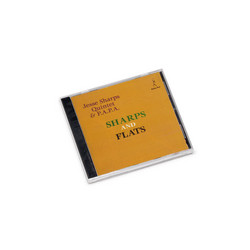
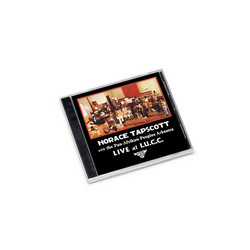
Morgan had been part of UGMAA since his teens, when he walked up to Horace Tapscott and announced - not asked - that he would be playing with the Arkestra. Through the 1980s and 1990s he became the movement's organizational backbone, running legendary jam sessions, cataloguing the Ark's sprawling songbook, keeping South Central's deep jazz roots watered through lean years. A musician's musician at the beating heart of a radical, community-minded network. For Retribution, Reparation he assembled a quintet of Arkestra veterans. Jesse Sharps - the Marshall Allen to Tapscott's Sun Ra, the man who would become PAPA's bandleader, born in Watts in 1953, who first heard the Arkestra on 103rd Street as a teenager and knew immediately what his future would be - handles the saxophone chair. "It's not really a band; it's a movement," Sharps has said of the Arkestra. This is one of the few places you can hear him in a small group setting. Danny Cortez brings the trumpet. The rhythm section pairs Fritz Wise on drums with Ark regular Joel Ector on bass.
The album opens with "U.G.M.A.A.GER" - a poised, dramatic dedication to Tapscott's Union of God's Musicians and Artists Ascension. "Impulse" and "Mass Madness" build the pressure. The title track brings propulsive militancy, Morgan's forceful McCoy Tyner-like chords binding the ensemble's collective force. Then two covers that place the music in broader context: Herbie Hancock's "One Finger Snap" and Duke Ellington's "Come Sunday" - nodding to tradition while the original compositions charge forward with pan-Africanist and Black nationalist sentiments drawn from Marcus Garvey.
Morgan's playing throughout is technically flawless but never cold - virtuosic solos emerging from and returning to the group's surging modal pulse. Sharps and Cortez trade fire on the frontline. The whole thing feels like the Arkestra's sprawling ensemble sound focused through a burning glass.
This was spiritual jazz with a political edge that cut. In 1984, the Reagan years were deepening. Morgan and his collaborators answered with music that demanded justice - the title itself a call that has only grown more resonant.