Various
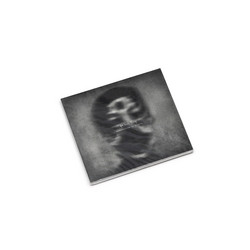
Ubikuitous - Music inspired by Philip K. Dick's dystopias
Tracked express shipping from Italy, no customs or import VAT in the EU. Shipping costs
*200 copies limited edition.* Philip K. Dick's narratives are a cornerstone of dystopian literature, delving into complex and unsettling visions of the future where the boundaries of reality blur, personal autonomy is undermined, and humanity is redefined. His worlds are characterized by an intricate exploration of societal control, the fragility of identity, the consequences of drug use, and the implications of virtual reality. These themes, often presented with a prophetic tone, resonate with contemporary anxieties and challenge the reader to confront unsettling questions about existence and power. In Dick’s dystopias, control manifests in both overt and covert forms, often executed by shadowy corporations or authoritarian governments. The oppressive mechanisms in his stories are not limited to physical coercion but extend deeply into psychological and technological domains.
In A Scanner Darkly (1977), for instance, surveillance is depicted as a pervasive force that erodes privacy and individuality. Similarly, Minority Report (1956) examines pre-crime policing, where individuals are apprehended for crimes they have not yet committed based on predictive technologies. Dick’s prescient depiction of predictive surveillance technologies foreshadows modern debates over data privacy, algorithmic governance, and the balance between safety and liberty. A recurring theme in Dick’s works is the elusiveness of reality. His characters frequently grapple with the question: What is real? This ontological crisis is central to Do Androids Dream of Electric Sheep? (1968), where the distinction between humans and androids becomes increasingly ambiguous. In Ubik (1969), reality itself becomes a mutable construct, shifting and deteriorating in ways that disorient both characters and readers. The titular substance, Ubik, represents a stabilizing force amidst this chaos, yet its true nature remains enigmatic. Dick’s exploration of reality extends beyond philosophical musings; it serves as a critique of consumer culture, media manipulation, and the fragility of consensus reality in an age of rapid technological change.
Dick’s personal experiences with drug use inform much of his work and play an important role in examining the previous themes, lending authenticity to his depictions of altered states of consciousness and their societal implications. Drugs in Dick’s narratives often serve as a means of exploring alternative realities or as tools of control. In The Three Stigmata of Palmer Eldritch (1965), the hallucinogen Can-D allows users to escape their grim existence in a dystopian off-world colony, yet its promise of transcendence is complicated by the emergence of a rival drug, Chew-Z, which binds users to the will of the enigmatic Palmer Eldritch. In this regard the concept of virtual reality is central to Dick’s exploration of identity and control. In The Penultimate Truth (1964), humanity is deceived into living underground, believing the surface world is uninhabitable, while a privileged elite manipulates them through fabricated media. This narrative anticipates concerns about the power of virtual environments to shape perceptions and obscure truths. We Can Remember It For You Wholesale (1966), adapted into the film Total Recall, investigates memory manipulation, where implanted memories blur the line between genuine experience and artificial construction. The protagonist’s struggle to discern his authentic identity highlights the vulnerability of the human psyche in the face of advanced technologies. Dick’s dystopias resonate because they reflect not only a fear of technological overreach but also a deep understanding of human frailty. His exploration of control, reality, drug use, and virtual environments serves as a mirror to contemporary anxieties, urging readers to question the systems that shape their lives and the definitions of humanity they take for granted. In the end, Philip K. Dick’s work remains a cautionary beacon, warning of the perils of unchecked technological and societal evolution while affirming the enduring complexity and resilience of the human spirit.
In this compilation of disorienting aural landscapes, Unexplained Sounds Group and the contributing musicians pay a heartfelt tribute to the dystopian visions of the great American writer. A guiding light for current and future generations of artists, his work challenges all who seek to uncover the hidden layers beneath the surface of apparent reality.
Release notes
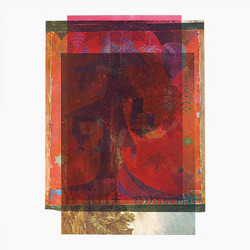
6 panel matt digipak with clear tray (no booklet). "Non Psychogenic Ambivalence", a track courtesy of Adi Newton (2024, Anterior Research London; Published by Mute Song, London). Track durations are not printed on the release.
| 1 | The Sheep’s Electric Dream | 5:47 | |
| 2 | Non Psychogenic Ambivalence | 6:52 | |
| 3 | Mind Switch | 5:45 | |
| 4 | Half-life | 5:40 | |
| 5 | High Castle | 5:23 | |
| 6 | The Nature Of Reality | 5:51 | |
| 7 | The Battle Of The Inertials | 4:50 | |
| 8 | The Infinites | 6:25 | |
| 9 | Something Wrong | 6:10 | |
| 10 | What The Dead Men Say | 4:05 | |
| 11 | The Empire Never Ended | 5:10 | |
| 12 | Precognitive Informations | 6:02 | |
| 13 | Mind-Wipe | 4:16 | |
| 14 | Cryonic Resurrection | 5:04 |
- Raffaele Pezzella
- Curated By, Mastered By
- Matteo Mariano
- Layout