Back in stock

The Forest, The People And The Spirits
Originally released as a limited tape in 2015. This vinyl reissue of O Morto's (aka Mestre André) immersive electronic tryptic piece dedicated to the Ba'Aka people and its spirits is remastered here on green vinyl . Albeit, his music is now closer to a soundscape composition approach, O Morto actually started as a free improv/noise project in 2012. However, after releasing his debut Memento Mori (2012), O Morto slowly began to drift away from the harshest soundscapes to seek a new directi…

Il Giro del Mondo degli Innamorati di Peynet
An obscure but excellent soundtrack from an even more obscure 1974 Italian cartoon movie, ‘Il Giro Del Mondo Degli Innamorati Di Peynet’ (Around The World with Peynet’s Lovers), starring the “Lovers” of French cartoonist Raymond Peynet.The soundtrack is a cooperation between childhood friends Ennio Morricone and Alessandro Alessandroni, better known as the “whistler” in Morricone’s Spaghetti Western soundtracks.‘Forse Basta’ is Morricone at his best, , according to his die-hard fans it’s also on…
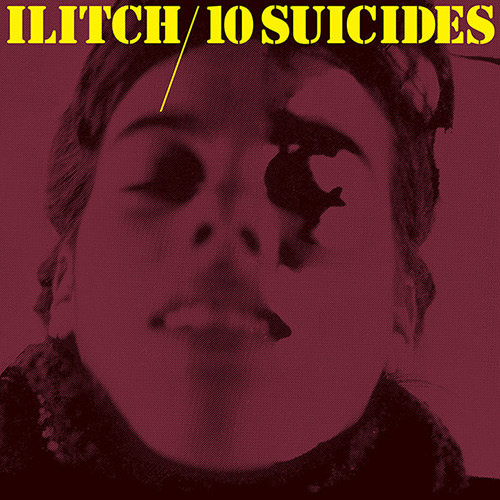
10 Suicides
In 1980 Ilitch mastermind Thierry Müller released his second LP, 10 Suicides, on the French imprint S.C.O.P.A. Unlike his debut Periodikmindtrouble (also available from Superior Viaduct), which featured intricately layered instrumentals, 10 Suicides explores a more art-damaged pop sensibility. While distorted guitars and atmospheric synth workouts remain a part of Müller's signature sound, several songs credit the mysterious Ruth Ellyeri, who was not an actual person, but rather Müller's female …
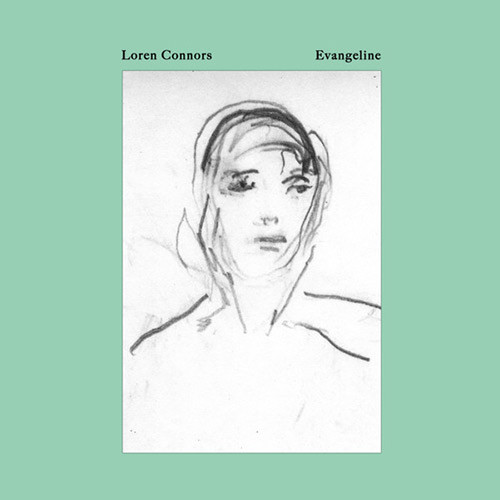
Evangeline
First-time available on vinyl (pressed as a limited CD in 1998), Evangeline finds Connors working in a narrative structure. This album trails the story of Evangeline, the heroine of an epic-poem written in 1847. Loren’s guitar tone follows the weary landscapes and mournful souls of the characters. Thematically Evangeline falls in line with the other romantic Loren Connors LPs Recital as published, Airs and Lullaby, though with a defining arc in direction. Parallel guitar preludes begin this…
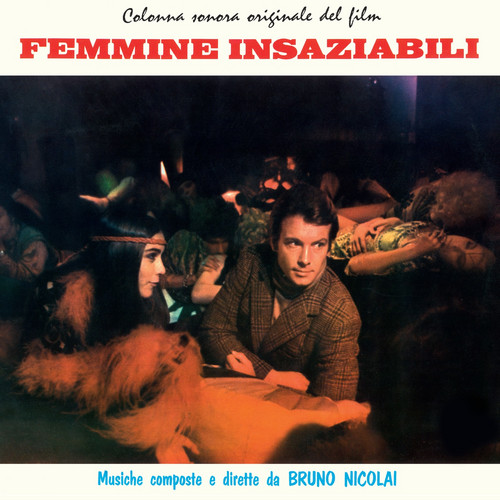
Femmine Insaziabili
180 gram audiophile vinyl LP; Gatefold sleeve + movie poster. Second release from the vaults of Spettro and another classic Italian gem of the late Sixties, a wonderful score from the genius of Bruno Nicolai, renowned for his long collaboration with Ennio Morricone and for countless and beautiful works for tv and cinema. Femmine insaziabili – also known as Carnal Circuit – is a 1969 Alberto De Martino giallo flick (with a young Romina Power) whose best part is without doubt the original soundtr…
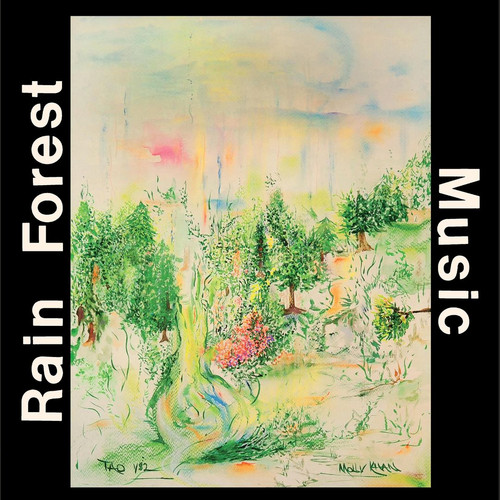
Rain Forest Music
1981 debut album by new age pioneer JD Emmanuel. Texan musician JD Emmanuel's career story is, in a way, a story about how the passion of fans can make a difference; about a gifted musician whose music may have been lost to the ages had it not been for the efforts of a new generation of vintage electronic and new age music enthusiasts and collectors. The tale begins in 2005 when young music journalist, collector and record label owner Douglas Mcgowan stumbled on several dusty boxes of two JD Emm…
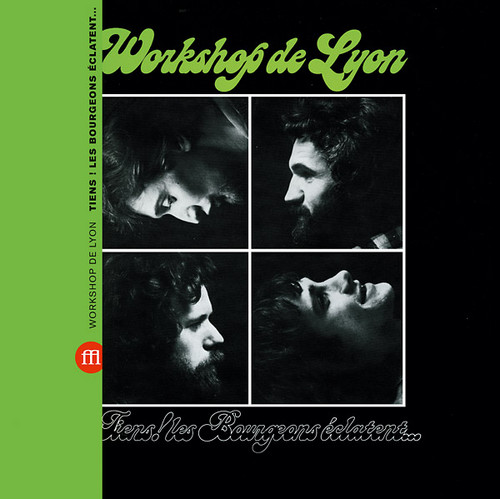
Tiens! Les Bourgeons Eclatent...
Souffle Continu Records present the first ever reissue of Workshop De Lyon's Tiens! Les Bourgeons Eclatent..., originally released in 1978. The collective methodology of the Workshop De Lyon led to the creation of the Association Searching for an Imaginary Folklore (ARFI) in 1977, their aims were very much a mission statement "encourage improvisation, spread diverse musical styles and provide means of expression to others with similar ideas, establish a folklore..." Their reference was the As…
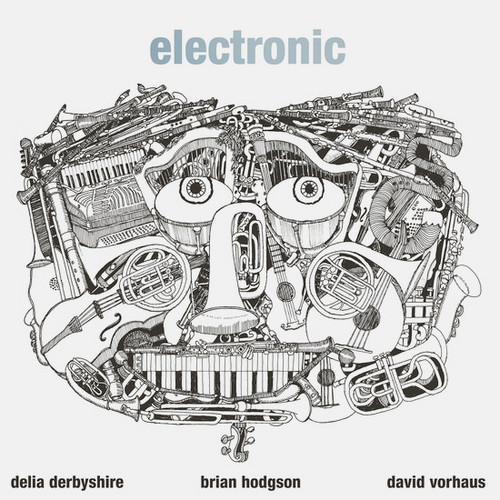
Electronic
Originally released in 1969, this LP features music by BBC Radiophonic Workshop members Delia Derbyshire and Brian Hodgson alongside David Vorhaus, an American born composer and musician with whom they formed the experimental electronic cult band White Noise. It was put out by the Standard Music Library label, set up in 1968 by Bucks Music and London Weekend Television, which supplied production music for use in TV, commercials, radio and film. Many of these tracks were used in the 1960…

Transreplica Meccano
Hungarian composer and musicologist László Hortobágyi, took his first expedition to North India in the late 1960's to record music, study philosophy and learn traditional instruments such as the rudra-vina, sitar, surbahar and tabla. These ongoing trips heavily influenced his musical style and much of his recorded work. LFI is happy to announce the reincarnation of one of his most illustrious works, Transreplica Meccano originally released by Hungaropop in 1988. As a child László fantasise…
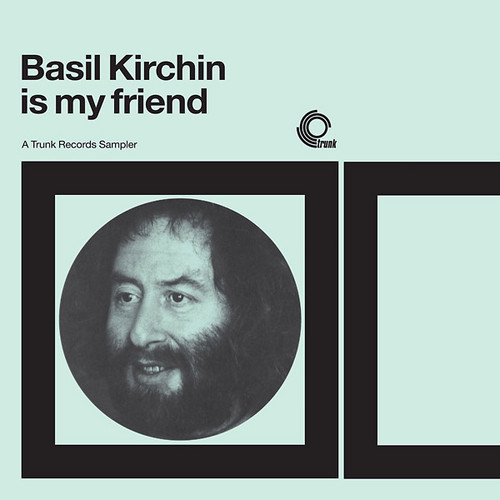
Basil Kirchin Is My Friend: A Trunk Records Sampler
An awe-inspiring sampler of the late, great musical polymath's music. From pop punk pop to field recordings, jazz, horror film music, ambient sounds, experimental ideas and all points in between. Many tracks have not been released before. Basil Kirchin was a unique talent. A man brought up as a drummer in the post-war big band era, he soon shunned the sounds of London ballrooms for world travel, marijuana, and spiritual enlightenment. On his return to London in the mid-1960s, he started w…
Cphon
This single composition, lasting slightly over its 20-minute pre-set constraint, comes up just short of John Wall’s longest piece to date, ‘Fractuur’. Given its constructive process: the patient and precise piecing together of thousands of heavily worked minute samples, each one with the potential to exert a generative pull on the caring listener, demanding listening is our diet here. The reward: an intense engagement with a bizarre and various compositional soundfield whose restless agit…
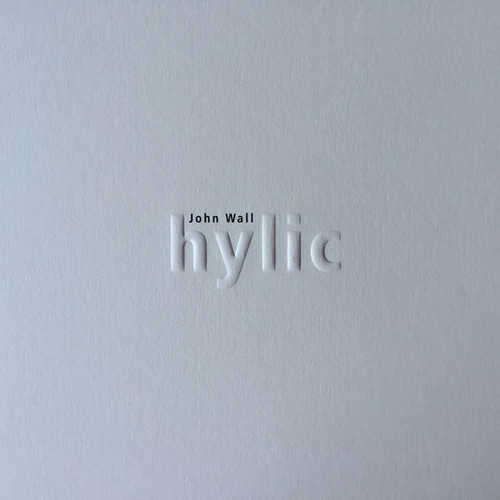
Hylic
John Wall likes to deliver his work in small portions. Hylic is only 20 minutes long, but this third of an hour can keep you busy for much longer than that. These three tracks are not titled in continuation with the Constructions series, but they seem to come from the same working method. Wall has collected sound matter from four London-based free improvisers: trumpeter Matt Davis, electronician Knut Aufermann, percussionist Mark Sanders, and bassist John Edwards. Then he has obliterated …
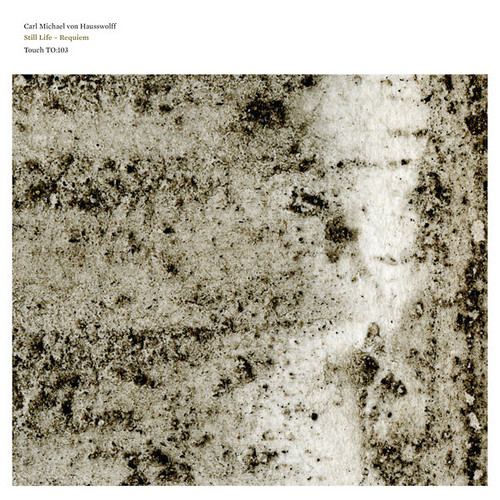
Still Life - Requiem
Conceptualized (2010-2013), composed and produced (2014-2017) by Carl Michael von Hausswolff in Palma (Majorca) and Stockholm. Still Life - Requiem is a musical piece consists only of sounds emitted and extracted from physical matter using emission spectroscopy as the sole basic technology. Acknowledgements to Linköping University (IFM), Sweden. Still Life - Requiem consists of one piece with the same title and is divided up into two to fit the LP format. The piece is, as the title suggests,…
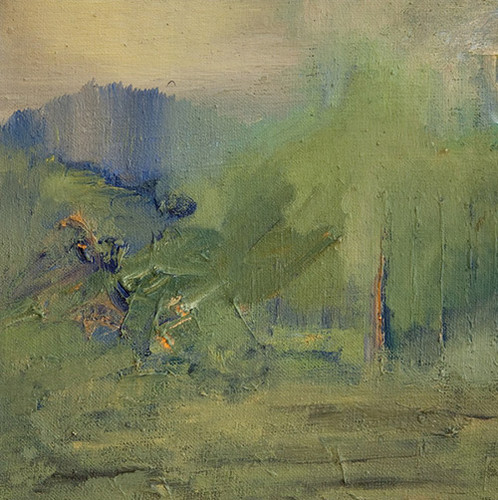
Sadly, The Future Is No Longer What It Was Pt.1
The first part of Leyland Kirby, aka The Caretaker's, 'Sadly, The Future Is No Longer What It Was' series, originally released back in 2009 and now finally reissued. It's a prescient hauntological elegy somewhere between Vangelis’ Bladerunner OST, Lynch & Badalamenti’s Twin Peaks score, Erik Satie’s solo Piano works, William Basinski’s gradual tape decompositions and James Ferraro’s washed out visions, like a slowly abstracted Berlin/Manchester night-scape. Tbh it seems to have even more …
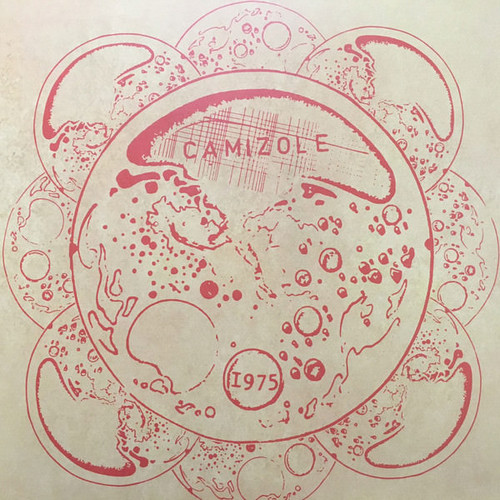
Camizole 1975
When the legendary psych / krautrock inspired french act group Camizole was only a duo with Bernard Filipetti and Dominique Grimaud on analog synthezisers, farfisa organ and other instruments, recorde in 1975 this cassette, that was sent to Klaus Schulze who wanted to produce it but the duo stopped before! 42 years later, this sought-after tape resurfaces on a limited vinyl edition for the first time ever

On Mandorla Awakening II: Emerging Worlds
Blurring the edges between philosophy and mysticism, modern art and radical political critique, the Afrofuturist impulse has been a cultural force since the mid-20th century. That’s when jazz visionary Sun Ra Arkestra first touched down on Planet Earth and told humanity that space (outer and inner) is indeed the place. It’s an impulse that in the new millennium has only grown more diverse thanks to a proliferating number of African-American musicians who use Afrofuturism as a platform to launch …

Silicon Chip
"So, who knew that Basil Kirchin - the ‘father of ambient music’ and a big influence on Brian Eno and Nurse With Wound - also recorded some freaky electro and disco zingers?! Patently Trunk did, and now cough up these tiny wonders from the pioneering artist behind seminal slabs such as Abstractions Of The Industrial North and Quantum. Far as we can tell, with thanks to Google and YouTube user Bernie Dolman, who claims to play bass on the track, Silicon Chip was written and produced by Kirchin, a…
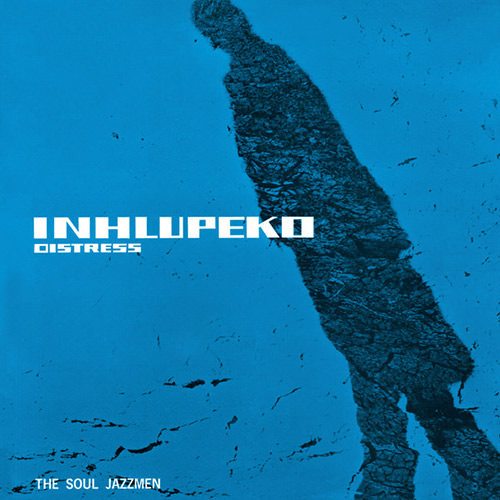
Inhlupeko (Distress)
Another unmissable, scorching Matsuli revive! Tete Mbambisa and co, chasing the mbaqanga in Trane. Five originals and Love For Sale, from Johannesburg, 1969. 'Both urban Africans and urban Americans were consciously crafting 'modern' music -- and in South Africa's case, it was a modernism deliberately and defiantly set in opposition to the narrow, backwards-looking parochialism of apartheid, where some white universities did not even permit gender-mixed dancing until the 1970s. The sophisticated…

Batsumi
Back in stock! 2016 repress of this landmark afro-jazz album from South Africa! Matsuli follow up their brilliant Dick Khoza reissue with a deep spiritualised afro-jazz album from 1974! An urgent Batsumi sound, reverbed-drenched, propulsive, tight-locked drums and mesmerising bass. Some of the tracks here featured on Strut's fabulous 'Next Stop To Soweto' compilation. Out of print since the 1970s, and never issued outside of South African in its entirety.

One Night on Earth: Music from the Strings of Mali
Matsuli Music presents an album of kora interpretations that astonished John Williams into saying he thought it was “absolutely impossible until I heard Derek Gripper do it”. When Kora maestro Toumani Diabate heard these recordings he disbelievingly asked his host and producer Lucy Duran to confirm that she had actually seen one guitarist play this music on just one guitar. Recorded at an all-night session Gripper’s guitar magically counjures anew a centuries-old ancient African musical heritage…